Global Surface Treatment Equipment & System Solutions — Since 2002

久昌机械
Get a Quote
Global Surface Treatment Equipment & System Solutions — Since 2002
久昌机械
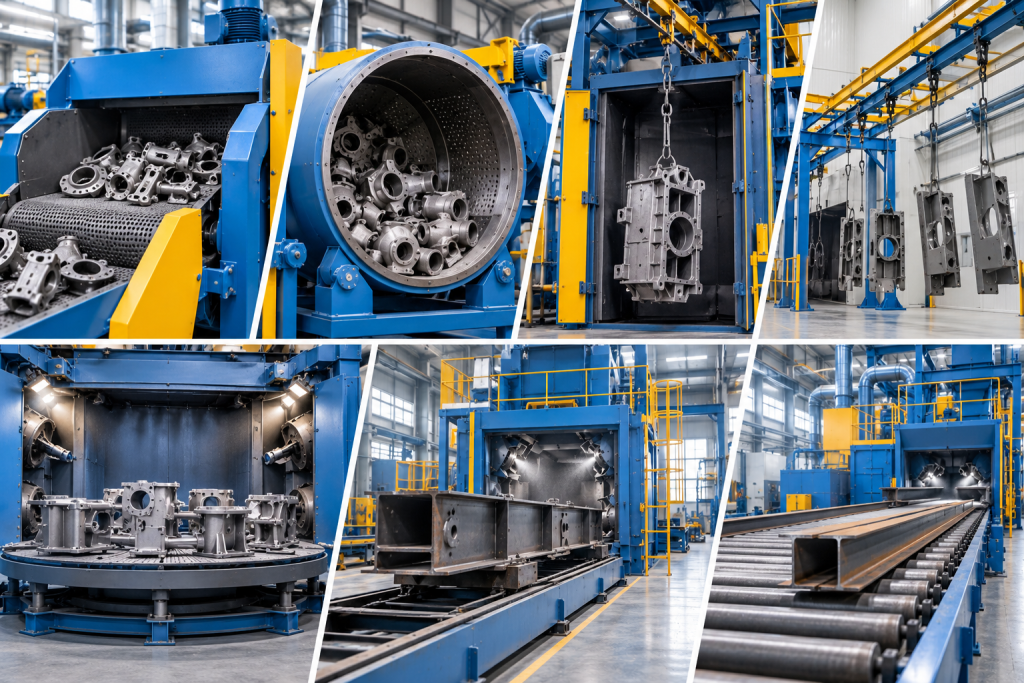
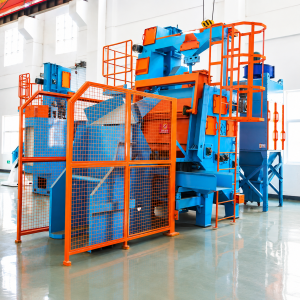
The main types of shot blasting machines are tumble belt, drum, hook, overhead conveyor, turntable, trolley and roller conveyor systems. Each type exposes the workpiece to abrasive in a different way. That handling method determines which parts can be cleaned safely, how much of the surface receives direct coverage and how easily the process can be automated.
Selecting a machine by price, chamber size or motor power alone can create avoidable problems. A machine may hold the part but still leave shadowed surfaces, damage thin features, slow the production line or require too much manual handling. A sound selection starts with the workpiece and the required production result.
Shot blasting machine types are usually classified by how the workpiece moves through the blast zone. Four questions narrow the field quickly:
The same workpiece may be technically possible in more than one machine. The final choice then depends on throughput, labor, floor space, part mix, maintenance strategy and the surface specification.
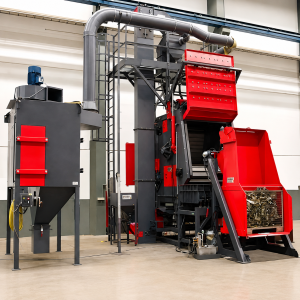
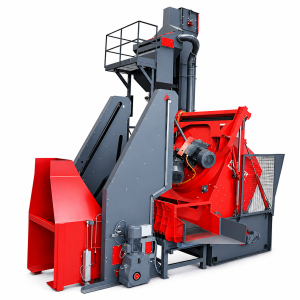
A rubber tumble belt machine loads parts into a curved belt that continuously turns the batch. As the belt moves, parts roll through the blast stream and expose multiple surfaces. The rubber surface cushions impact and helps protect small and medium components from hard contact with a steel conveyor.
This format works well for castings, forgings, heat-treated parts, fasteners and hardware that can tolerate part-to-part contact. It is less suitable for long parts that can bridge across the belt, fragile components, parts with thin fins, or pieces that can lock together. Loading level also matters. An overfilled batch may not tumble freely, while an underfilled batch may move too aggressively.
A metal tumble belt machine uses a steel or manganese-steel conveyor instead of rubber. It is designed for heavier, hotter or sharp-edged castings and forgings that could cut or overload a rubber belt. The metal belt is rugged, but the harder contact surface increases the risk of impact marks on delicate parts.
Check the allowable single-part weight, total batch weight and part geometry. Heavy components must roll rather than slide or jam. The design should also provide access to the belt, links, support rollers and high-wear chamber areas.
A drum machine rotates a perforated or specially shaped drum around the batch. Parts roll within the drum while one or more wheels project abrasive through an opening. Drum systems are mechanically simple and can handle selected medium or heavy parts, but their suitability still depends on whether the product can tumble without damage.
Choose a tumble or drum system when the batch can mix freely and full separation is not required. Choose another handling method when parts have cosmetic faces, tight dimensional tolerances, delicate projections or a tendency to trap abrasive.
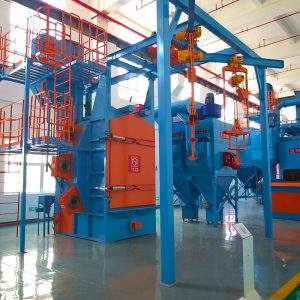
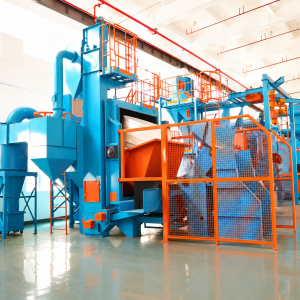
A hook type shot blasting machine suspends the workpiece from a rotating hook or hanger. The load moves into an enclosed chamber, the door closes, and the hook rotates through the blast pattern. Single-hook and double-hook layouts are common. With a double-hook arrangement, one load can be prepared while another is being processed, which reduces idle time.
Hook machines suit medium and large castings, forgings, welded structures and heat-treated parts that should not tumble. Rotation helps expose several sides, and fixtures can hold multiple smaller parts. The main selection checks are hook load, usable hanging envelope, fixture balance, door clearance and whether internal or shielded surfaces remain outside the direct blast path.
For configured applications, a hook machine can be set up to meet a specified cleaning grade and roughness range. The result must be proven using the actual material, contamination and fixture arrangement because surfaces hidden behind the hook or neighboring parts receive less direct impact.
An overhead conveyor machine moves suspended parts through several blast zones. Monorail, step-by-step and accumulating conveyors can be arranged around the production flow. The format is useful when parts already travel on hangers for pretreatment, painting, curing or assembly.
Compared with a batch hook machine, an overhead conveyor can deliver higher and more consistent throughput. It also requires more planning. Hanger pitch, line speed, part spacing and rotation must match the wheel arrangement. The conveyor must prevent collisions and stop abrasive from escaping through entrance and exit seals.
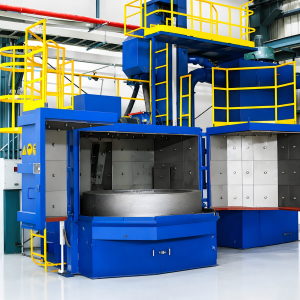
A turntable machine places one or more parts on a rotating table. Rotation carries the workpiece through the blast pattern while the part stays supported from below. This method is useful for gears, flanges, wheels, molds, flat components and other parts that benefit from stable positioning.
The table can protect the bottom face, so verify which surfaces require cleaning. Parts may need to be flipped for a second cycle. Confirm table diameter, maximum load, part height, wheel angle and whether fixtures will create shadow areas.
A trolley machine carries a large or heavy workpiece into the chamber on rails. It is often selected for fabricated structures, machinery frames, large castings and long weldments that cannot hang from a hook or pass across standard rollers.
Trolley systems favor flexibility over high line speed. Loading can use an overhead crane, forklift or dedicated fixture. Because the parts are large, wheel placement and part rotation deserve special attention. Some workpieces require repositioning between cycles to reach the underside or internal faces.
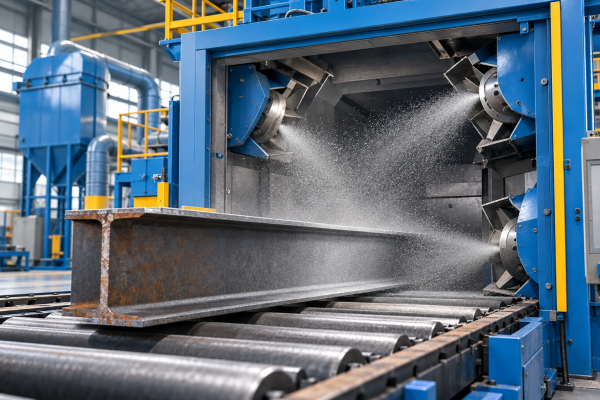
A roller conveyor shot blast machine carries plate, beams, channels, welded frames and structural sections through an entrance vestibule, blast chamber and exit vestibule. Several wheels are positioned above and below the conveyor to clean broad faces and side surfaces in a continuous pass.
This type is widely used before painting, welding or fabrication. It can integrate with drilling, sawing and coating lines. Key parameters include maximum work width and height, minimum part length, conveyor load, line speed, wheel arrangement and the ability to remove abrasive from the top of the workpiece before discharge.
Round bar and pipe require controlled rotation or a wheel layout that covers the full circumference. Coiled strip and linear products require stable guidance, tension control and seals designed for the narrow moving product. A generic roller conveyor may not provide the necessary movement, so choose a design made for the product form.
Pass-through equipment is attractive when parts follow a predictable size range and the line can keep moving. It is less flexible when batches contain radically different shapes, when surfaces must be masked, or when part handling creates long gaps between loads.
| Type | Part handling | Best suited to | Main advantage | Main caution |
| Rubber tumble belt | Batch tumbling | Small and medium parts that tolerate contact | Good all-around coverage with cushioned handling | Not for fragile, long or interlocking parts |
| Metal tumble belt | Batch tumbling | Heavy or sharp-edged castings and forgings | High load and impact resistance | Hard contact can mark delicate parts |
| Drum | Rotating batch | Selected medium or heavy tumble-safe parts | Simple, durable batch process | Geometry must roll freely |
| Hook | Suspended rotating batch | Irregular, larger or impact-sensitive parts | Flexible loading and no part-to-part tumbling | Fixtures and neighboring parts can cause shadows |
| Overhead conveyor | Suspended continuous or indexed flow | High-volume mixed production | Integrates with a production line | Requires careful hanger and line-speed design |
| Turntable | Supported rotating batch | Gears, flanges, molds and flat parts | Stable support and controlled exposure | Bottom face may need a second cycle |
| Trolley | Rail-mounted batch | Very large or heavy fabrications | Handles loads outside standard conveyors | Lower throughput and more repositioning |
| Roller conveyor | Continuous pass-through | Plate, profiles, frames, pipe and bar | High throughput for long products | Part size range and orientation must be predictable |
List the minimum and maximum length, width, height and weight. Identify lifting points, cavities, blind holes, thin walls, machined faces and areas that must not be blasted. If one machine will process several products, group them by handling behavior rather than by part name.
Confirm whether parts can tumble, touch, hang, rotate on a table or travel on rollers. This decision often removes half the machine types from consideration. For parts that trap abrasive, include a plan for tilting, rotation, blow-off or manual inspection before discharge.
Specify the initial condition and required result. Include rust or scale level, coating to be removed, cleaning grade, target roughness and any appearance limit. If the surface will be painted, coordinate the profile with the coating supplier. A rougher surface is not automatically better; it must match the coating thickness and service requirement.
Convert the production target into parts per hour, batches per shift or line speed. Add loading, unloading, fixture changes, inspection and planned breaks. For batch machines, compare usable batch density rather than chamber volume alone. For conveyor lines, include the gaps required between products.
Evaluate abrasive consumption, power, compressed air, dust disposal, filters, wear parts, labor and preventive maintenance. Check the available floor space, foundation, crane coverage and service access. A machine that meets the finish requirement but interrupts the plant flow can become an expensive bottleneck.
If the application is new or the workpiece has difficult geometry, ask for sample blasting. Record the abrasive mix, wheel settings, exposure time, fixture arrangement and result. The test data makes the final machine specification more reliable and provides a baseline for commissioning.
A rubber or metal tumble belt machine is often the first option when small castings can tumble safely. Rubber offers gentler handling; metal suits heavier or sharp-edged parts. Use a hook or fixture-based system when castings can chip, interlock or damage cosmetic surfaces.
Choose a hook type shot blasting machine when parts are too large, irregular or damage-sensitive for tumbling, but can be suspended and rotated. It is also useful for mixed batch production because hangers can be adapted to different workpieces.
A hook machine normally processes one enclosed batch at a time. An overhead conveyor moves multiple hangers through the blast zone continuously or in indexed steps. Hook machines offer batch flexibility; overhead conveyor systems favor production-line flow and higher throughput.
Start with maximum width, height, length and weight, then define minimum part length and target line speed. Confirm wheel positions, top-surface abrasive removal, entrance and exit sealing, and whether the machine is designed for plate, structural shapes, pipe or round bar.
Rarely. One machine can often cover a related part family, but widely different sizes and handling needs create compromises in coverage, fixtures and cycle time. Plants with both small bulk parts and large fabrications usually need separate processes or a clear decision about which product family has priority.
Send JC Blasting your part drawings or photos, size and weight range, material, required finish and hourly output. The engineering team can compare tumble belt, hook, conveyor, turntable, trolley and pass-through options, then recommend the machine type and test plan that best fit your production.
These links support the article’s topic cluster and guide readers toward relevant product pages. Add them with descriptive anchor text where they fit naturally in the published page.
Turntable shot blasting machine: https://www.jcblasting.com/product/turntable-shot-blasting-machine/

English

Hindi

Indonesian

Russian

Spanish

Thai

Vietnamese