Global Surface Treatment Equipment & System Solutions — Since 2002

久昌机械
Get a Quote
Global Surface Treatment Equipment & System Solutions — Since 2002
久昌机械
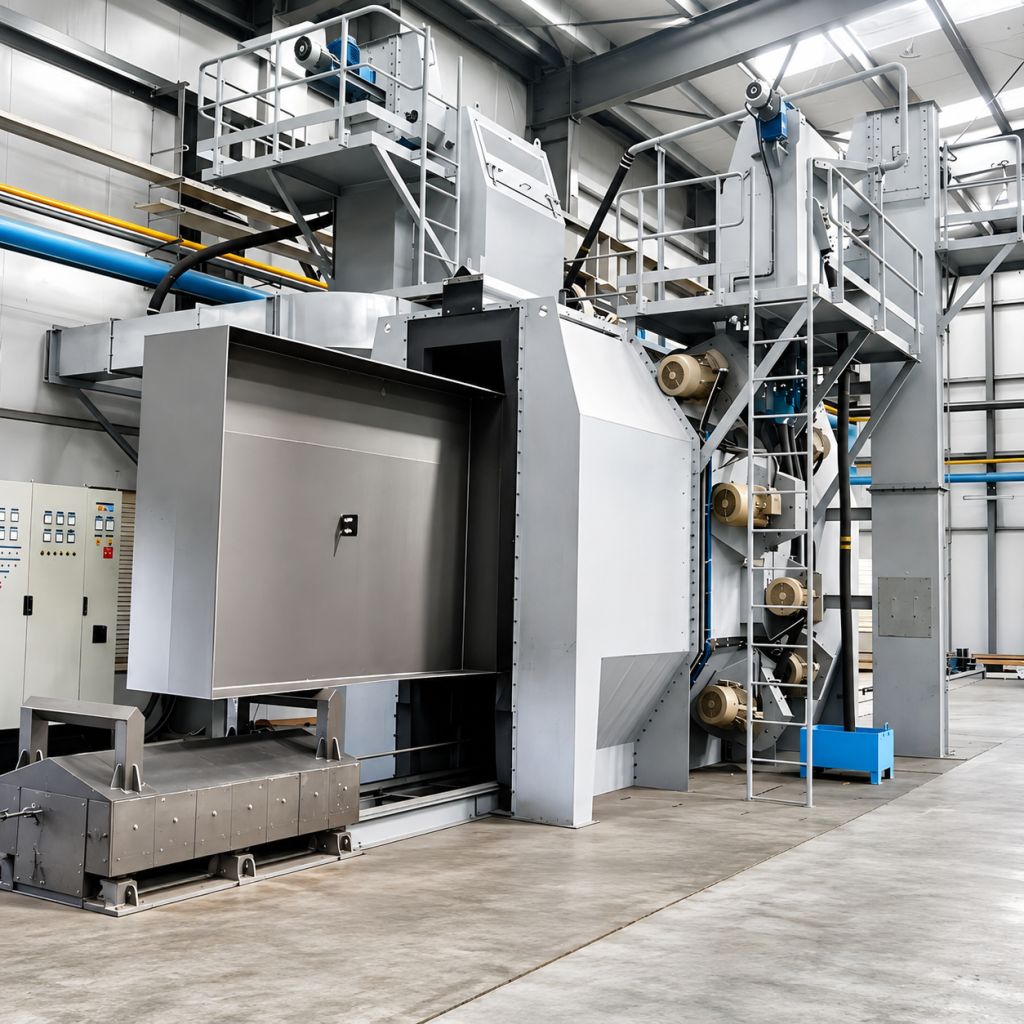
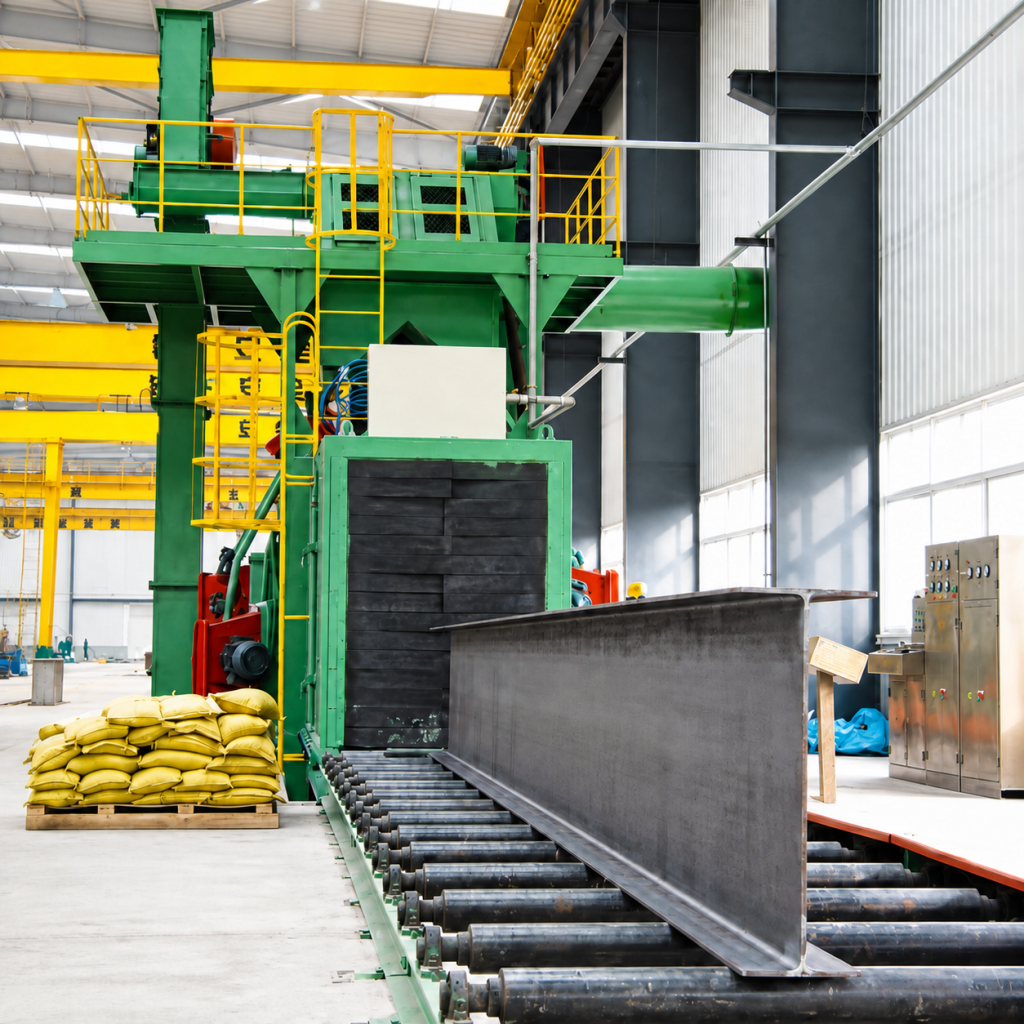
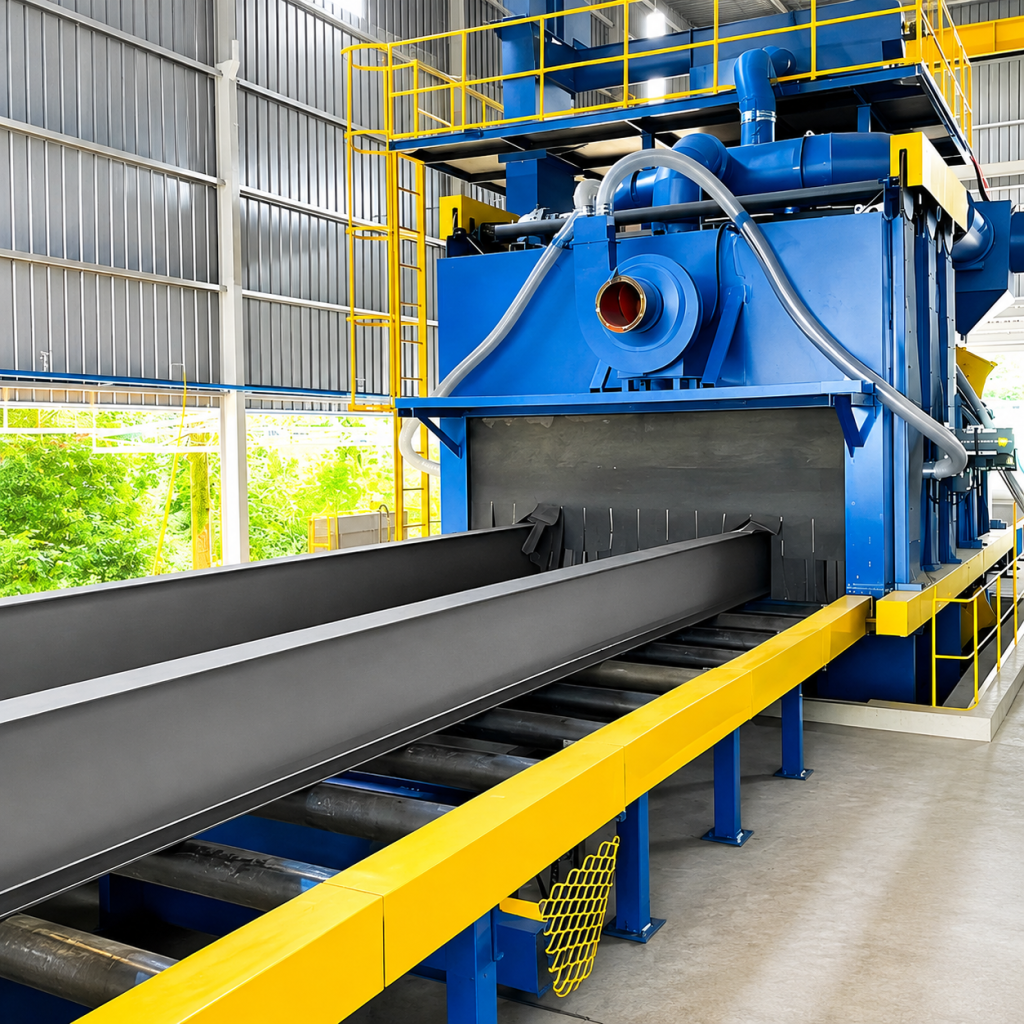
Fully automated surface pretreatment production line for H-beams, I-beams, angle steel, channel steel, and other three-dimensional profiles · QXY-V Series
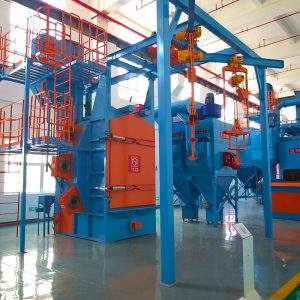
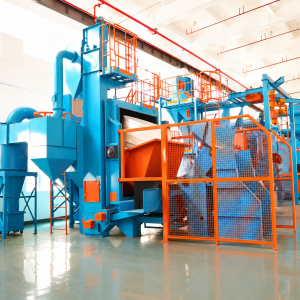
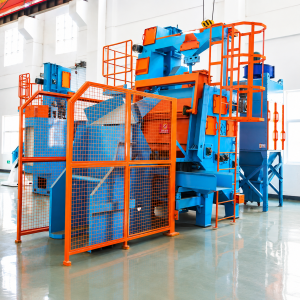
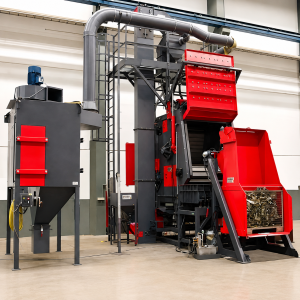
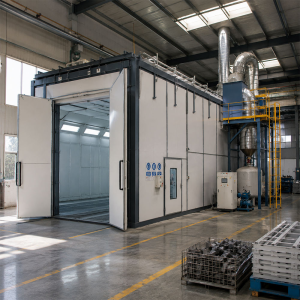
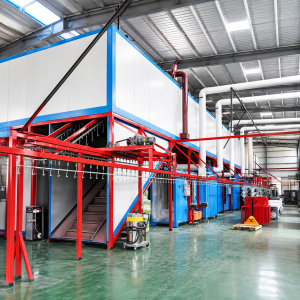
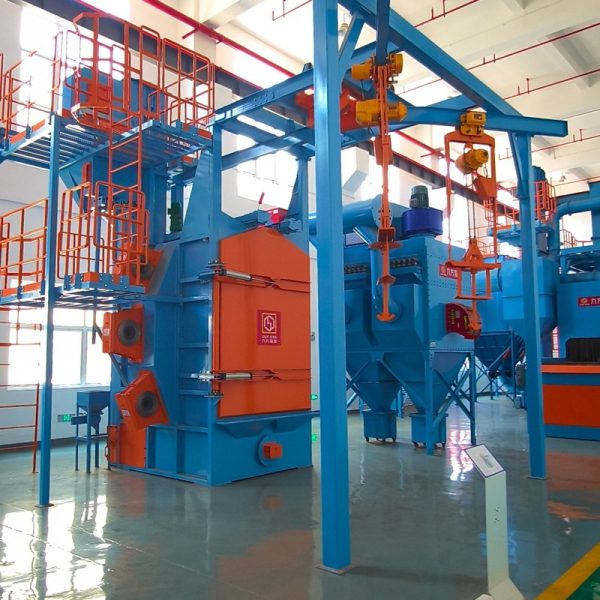
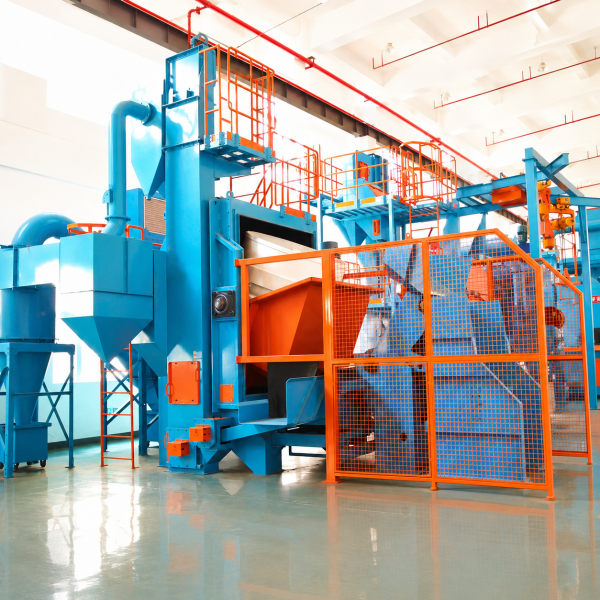
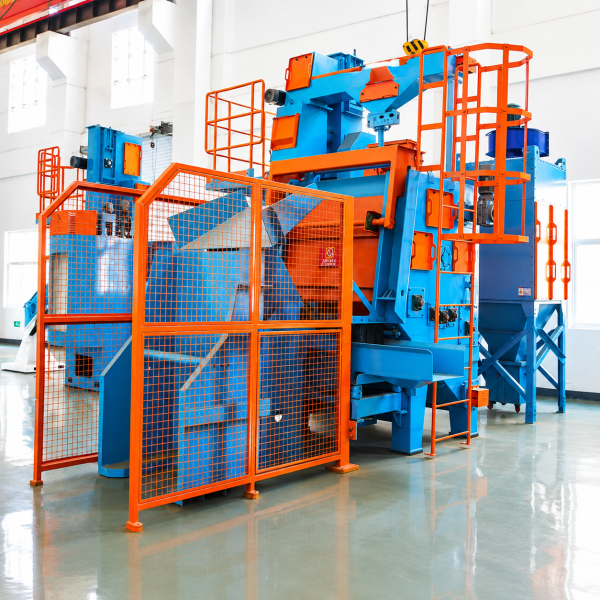
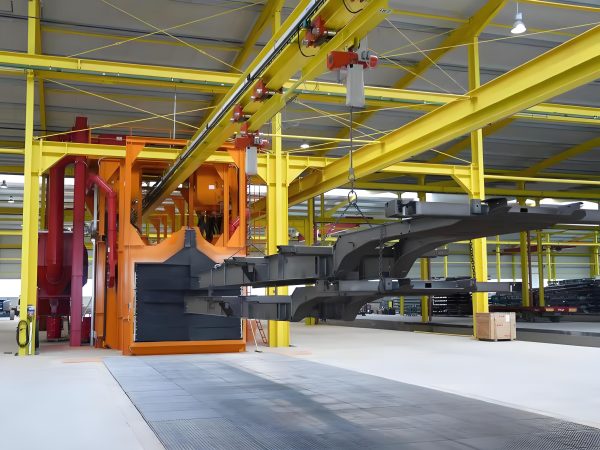
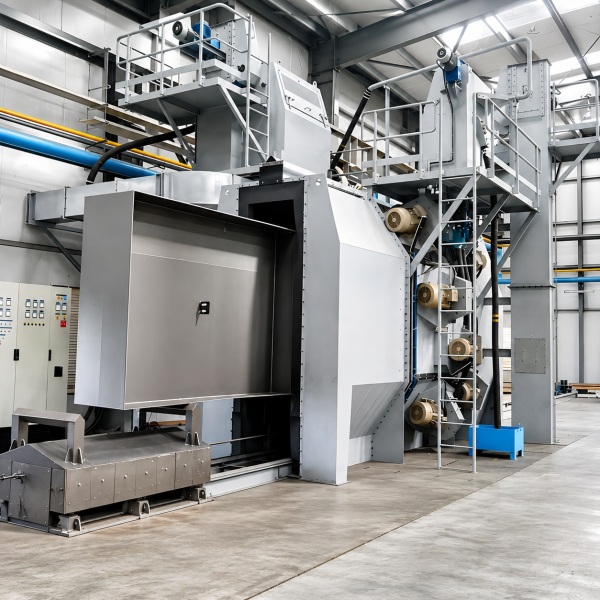
The QXY-V series vertical roller conveyor structural component processing line is a specialized complete set of equipment designed for the surface pretreatment of three-dimensional profiles and welded structural components such as H-beams, I-beams, angle steel, channel steel, steel pipes, and box girders. Unlike horizontal steel plate pretreatment lines, the vertical processing line uses vertically arranged conveyor rollers. Workpieces pass through the shot blasting chamber in a vertical position, where multiple high-efficiency shot blasters blast the outer surface of the workpiece from both sides and the top, achieving rust removal, oxide scale removal, weld slag removal, and surface roughening.
The equipment can be used independently (shot blasting only) or integrated with preheating, automatic painting, and drying stations to form a complete pretreatment production line, achieving fully automated continuous operation. It is widely used in steel structure construction, bridge engineering, construction machinery, ship sectionalizing, power transmission towers, wind turbine towers, port machinery, and other industries, and is a standard supporting equipment for surface rust removal before painting of profiles and welded structural components. After treatment, the surface cleanliness of the workpiece can reach Sa2.5 level (ISO 8501-1), and the roughness Rz 25–60 μm, effectively improving the adhesion of paint and zinc plating and the service life of corrosion protection.
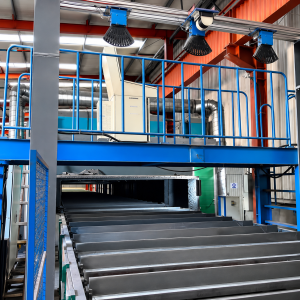
he workpiece is vertically placed on a vertical conveyor roller table via a loading platform. Driven by variable frequency speed-regulating rollers, the workpiece passes through the enclosed shot blasting chamber at a uniform speed in a vertical position. Multiple high-efficiency shot blasters are arranged at three-dimensional simulation angles on both sides and the top of the chamber. High-speed shot impacts the outer surface of the workpiece from multiple directions, rapidly removing oxide scale, rust, and welding slag.
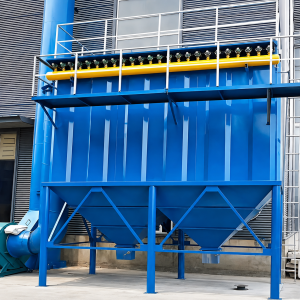
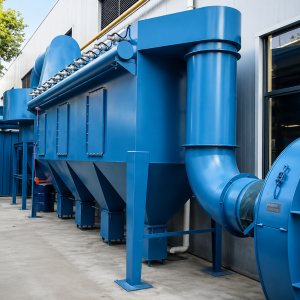
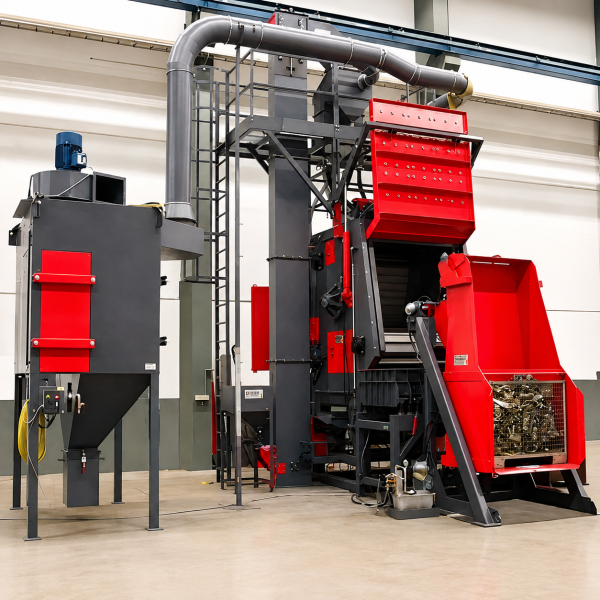
The shot is collected by longitudinal and transverse screw conveyors at the bottom of the chamber and conveyed to a bucket elevator, then lifted to an air separator. After separation, the pure steel shot is recycled; dust and broken shot are filtered by a pulse filter cartridge/bag filter system before being discharged in compliance with standards. The cleaned workpiece undergoes a blow-through shot blasting section to remove residual shot before entering the unloading area or subsequent painting/drying station.
Standard Process Flow: Vertical Loading → Preheating (Optional) → Vertical Roller Conveyor → Shot Blasting → Shot Blowing → Painting (Optional) → Drying (Optional) → Unloading
Difference from Horizontal Steel Plate Pretreatment Line:
Horizontal (Q69 Series): Steel plates are placed horizontally and pass through, processing flat plates, suitable for shipbuilding and bridge steel plates;
Vertical (QXY-V Series): Profiles are placed vertically and pass through, processing three-dimensional structural components, suitable for H-beams, box girders, and other steel profiles and welded parts.
The shot blasting machine adopts a high-efficiency direct-drive structure, with a direct-drive motor and no belt drive. The impeller is 100% dynamically balanced (dynamic balance grade G6.3) to ensure vibration ≤4.5 mm/s at high speeds. The blades, shot distribution wheel, directional sleeve, and guard plates are all made of high-chromium wear-resistant cast iron, with a chemical composition conforming to ASTM A532 standard, a hardness ≥58 HRC, and a standard blade life of 2500–3000 hours.
Shot blasting machine: High-efficiency direct-drive type, symmetrical arrangement on both sides + supplementary arrangement at the top, 3D simulation optimized for blasting angle, ensuring full coverage of both sides of H-beam flanges, webs, and angle steel;
Vertical conveyor rollers: Variable frequency speed-regulating vertical roller assembly, roller surfaces coated with high-chromium wear-resistant sleeves, adjustable clamping force to adapt to different cross-sectional dimensions;
Guiding device: Inlet and outlet equipped with elastic guide wheels and limiting devices to prevent workpiece deviation or tipping;
Preheating system (optional): Gas or electric heating, temperature control accuracy ±5℃, ensuring the profile surface temperature is at least 3℃ above the dew point;
Painting system (optional): High-pressure airless spraying or automatic reciprocating spray gun, compatible with epoxy zinc-rich primer, inorganic zinc silicate primer, etc.;
Drying system (optional): Gas/electric heated hot air circulation, temperature control accuracy ±10℃, drying temperature adjustable from 40–80℃;
Shot material circulation system: Bottom spiral recovery + bucket elevator + air separation, high separation efficiency. ≥99%; Dust removal system: Standard configuration includes pulse jet cartridge dust collector (bag filter optional), dust emissions can be controlled to <5 mg/m³; Electrical system: PLC control (Siemens/Mitsubishi optional), touch screen operation, grating sensor for automatic start/stop of shot blasting, supports automatic/manual modes, remote monitoring module optional.
Installation Site Requirements:
QXY-V10 (Single-machine shot blasting): Approximately 15 m × 5 m footprint, factory height ≥ 8 m;
QXY-V20 (Complete pretreatment line): Approximately 50 m × 8 m footprint (including preheating, shot blasting, painting, and drying), factory height ≥ 9 m;
QXY-V40 (Complete pretreatment line): Approximately 70 m × 10 m footprint, factory height ≥ 10 m;
Space must be reserved for profile stacking and turnover, recommended ≥ 5 m on each side;
Concrete foundation flatness ≤ 3 mm/m, vertical roller conveyor foundation requires pre-embedded anchor bolts and tracks;
Power supply: 380V/3Ph/50Hz (or customized according to customer's power grid), requiring a total equipment power + 20% margin;
Air source: 0.5–0.7 MPa compressed air (for painting and purging). Maintenance Points
Daily: Check the operating sound, vibration, and current of the shot blasting machine; check the smoothness of the vertical roller conveyor operation; check the sensitivity of the grating sensor;
Weekly: Check the wear of vulnerable parts (blades, guard plates) and replenish grease; check the tension of the elevator belt/chain;
Every 3–6 months: Conduct a comprehensive inspection of the wear of the chamber guard plates and vertical roller wear sleeves; check the position of the shot blasting machine directional sleeve window; check the pressure difference of the dust collector filter cartridge/bag;
Blade Replacement Standard: Replace blades when wear >5 mm or cracks appear to ensure that the blasting speed does not decrease;
Roller Inspection: Check the roller bearing clearance and wear sleeve thickness; replace rollers with wear exceeding 50% to prevent scratches or misalignment of the profile surface.
Jiuchang Machinery possesses independent import and export rights, offering various trade terms such as FOB/CIF/DDP, and supporting letters of credit, wire transfers, and milestone payments. Overseas installation services include a three-tiered model: remote technical supervision, on-site installation guidance, and turnkey projects. Global 24/7 response: over 80% of common faults can be resolved within 4 hours via remote diagnostics; local engineers arrive on-site within 48 hours. Commonly used spare parts from core market warehouses are delivered within 48 hours.
| No. | Equipment Name | Roller Conveyor Shot Blasting Machine | ||||
| 1 | Model | QG6915-05 | QG6915-10 | QG6925-30 | QG6930-10 | |
| 2 | Application | Shot blasting cleaning and rust removal for large workpieces, profiles, steel structures, and welded parts | ||||
| 3 | Blast Wheel Type | Machined Type / CNC Cast Type | ||||
| 4 | Number of Blast Wheels | 4 pcs | 4 pcs | 12 pcs | 10 pcs | |
| 5 | Blast Wheel Motor Power | 11 kW | 11 kW | 15 kW | 11 kW | |
| 6 | Roller (Diameter × Spacing) mm | φ80×300 | φ80×300 | φ159×800 | φ108×800 | |
| 7 | Recommended Working Range | Weight (excluding tooling, kg/m) | ≤500 | ≤500 | ≤2000 | ≤1000 |
| Single Workpiece Size | ≤800×300 | ≤800×350 | ≤2300×2800 | ≤3600×600 | ||
| 8 | Max. Inlet Size (W × H, mm) | 1000×400 | 1000×450 | 2500×3000 | 4000×800 | |
| 9 | Flow Control Valve | Semi-automatic | 4 sets | 4 sets | 12 sets | 10 sets |
| 10 | Dust Collector | Dry Type | QG-12 | QG-12 | QG-48 | QG-24 |
| 11 | Air Volume (m³/h) | ≤18000 | ≤18000 | ≤50000 | ≤50000 | |
| 12 | Overall Machine Dimensions (L × W × H, mm) | 8600×3900×6536 | 14600×3907×6200 | 23000×700×8000 | 37113×5563×11513 | |
| 13 | Total Power (excluding dust collector), kW | 55.8 | 55.8 | 252.5 | 196 | |
| 14 | Total Weight (excluding dust collector), t | 15 | 15 | 50 | 40 | |
This product is suitable for surface rust removal and pretreatment of various three-dimensional profiles and welded structural components, including H-beams, I-beams, angle steel, channel steel, steel pipes, box girders, welded frames, lattice columns, power transmission tower components, wind turbine tower structural components, and port machinery booms.
Application Industries:
Steel structure buildings (factories, stadiums, high-rise steel structure frames)
Bridge engineering (steel box girders, steel trusses, bridge decks)
Construction machinery (excavator booms, crane structural components)
Ship sections (hull frames, bulkhead structural components)
Power transmission towers (angle steel towers, steel pipe tower components)
Wind power equipment (tower flanges, base frames, engine room bases)
Port machinery (gantry cranes, quay crane booms)
Unsuitable Scenarios:
Flat steel plates (recommended to use horizontal steel plate pretreatment line Q69 series); ultra-large castings and forgings (recommended to use trolley-type Q76 series); small parts (recommended to use hook-type Q37 or crawler-type Q32).
The horizontal (Q69 series) line processes flat steel plates, with workpieces placed horizontally and passing through, suitable for shipbuilding and bridge steel plates.
The vertical (QXY-V series) line processes three-dimensional profiles (H-beams, angle steel, channel steel, etc.), with workpieces placed vertically and passing through. Shot blasters are arranged from both sides and the top to ensure that all surfaces of the profile (flanges, web, grooves) are fully blasted.
They complement each other: horizontal line for steel plates, vertical line for profiles.
It can process three-dimensional profiles and welded structural components such as H-beams, I-beams, angle steel, channel steel, steel pipes, box beams, welded frames, and lattice columns. Applicable section height 100–1500 mm, width 50–800 mm, length 2–18 m (customizable). Extra-large structural components exceeding this range can be customized with heightened/widened cleaning chambers.
The standard model has a daily processing capacity of approximately 100–300 tons of profiles (two shifts, 16 hours), depending on the profile specifications, degree of corrosion, and cleaning grade. For example, the QXY-V20 (H300×200), with an average speed of 2 m/min and two shifts, has a daily processing capacity of approximately 200–250 tons. The conveyor speed is infinitely adjustable from 0.5–4 m/min; the speed should be reduced for heavy corrosion or high-grade requirements.
Yes. The QXY-V series can be flexibly configured according to user needs. The shot blasting unit can be purchased separately, or a complete pretreatment production line combining preheating, shot blasting, painting, and drying can be selected. Customers who already have painting or drying equipment can purchase only the shot blasting machine; the interface dimensions will be matched to the site requirements.
Under standard operating conditions, surface cleanliness can reach Sa2.5 (ISO 8501-1), with a roughness Rz of 25–60 μm. To meet steel structure coating standards (such as ISO 12944) or higher (Sa3), this can be achieved by increasing the number of shot blasters, reducing the conveyor speed, or using finer abrasives.
The standard single-unit shot blasting machine takes approximately 30–45 days from order placement to shipment; a complete pretreatment line takes approximately 60–90 days. On-site installation and commissioning: approximately 7–10 days for a single unit, and approximately 15–30 days for a complete line. We provide full installation guidance and commissioning services to ensure smooth equipment commissioning.
Main vulnerable parts include shot blaster blades, shot distribution wheels, directional sleeves, chamber guard plates, and wear-resistant sleeves for vertical rollers.
High-chromium cast iron blades: Standard operating conditions 2500–3000 h;
Chamber liner: 3000–8000 h;
Vertical roller wear sleeve: 4000–6000 h.
We provide a standardized spare parts list and global spare parts warehousing and distribution services.
Yes. Equipment cross-section height/width, length, number of shot blasters, conveyor speed, preheating/painting/drying configuration, etc., can all be customized according to the user's workpiece specifications, production volume requirements, and site conditions. We provide free operating condition diagnostics, production line simulation, and solution design services.
Please provide: Profile type and maximum cross-sectional dimensions (height × width × length), daily or annual production capacity requirements, target cleaning grade (Sa2.5/Sa3), whether preheating/painting/drying is required, plant dimensions and power supply conditions, and local environmental emission standards. We provide one-on-one technical solutions and formal quotations.

English

Hindi

Indonesian

Russian

Spanish

Thai

Vietnamese