Global Surface Treatment Equipment & System Solutions — Since 2002

久昌机械
Get a Quote
Global Surface Treatment Equipment & System Solutions — Since 2002
久昌机械
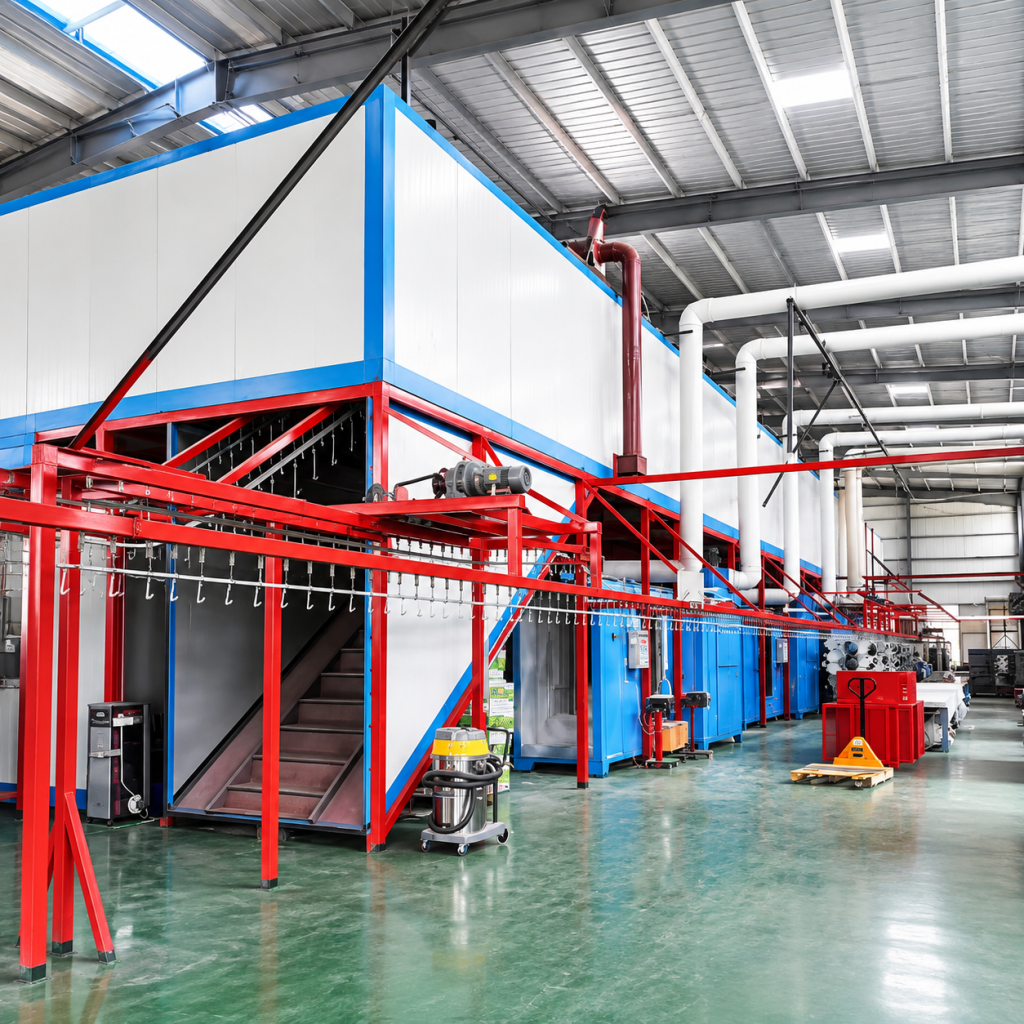
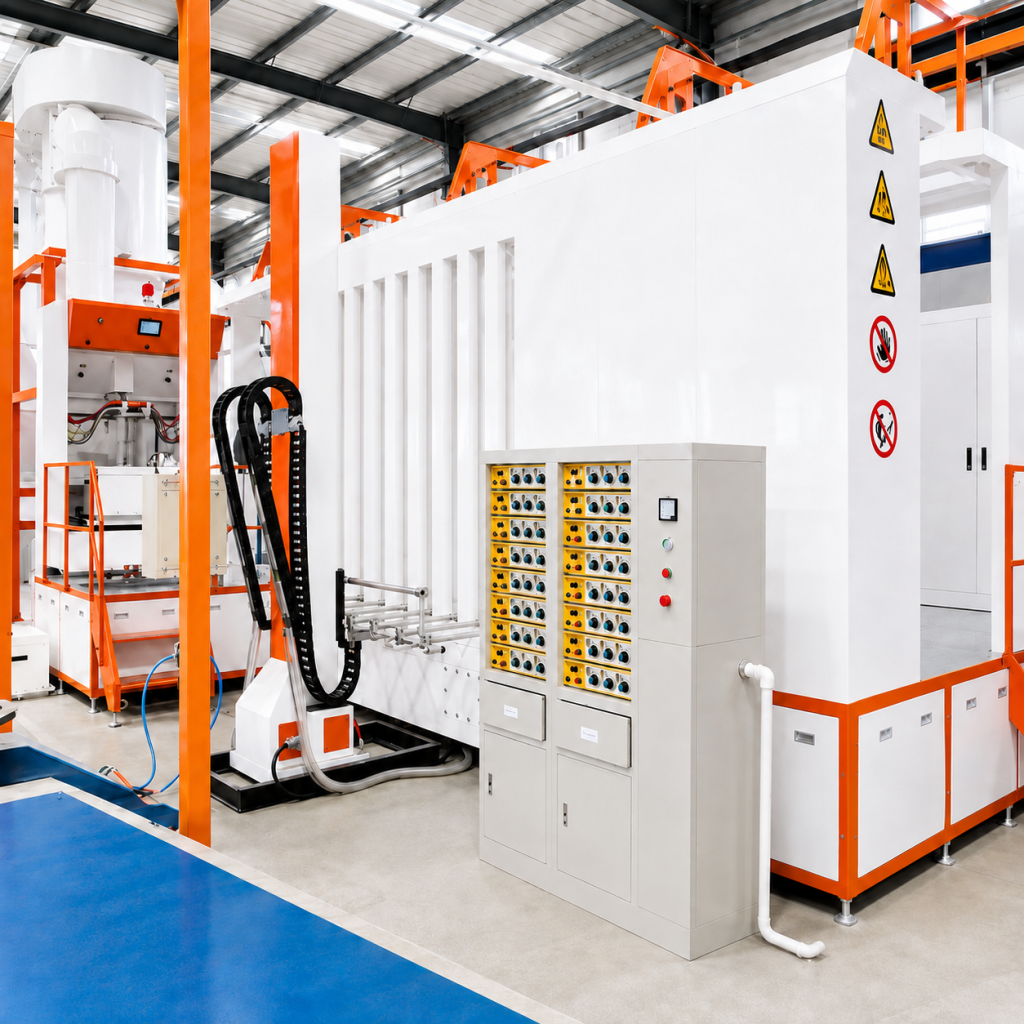
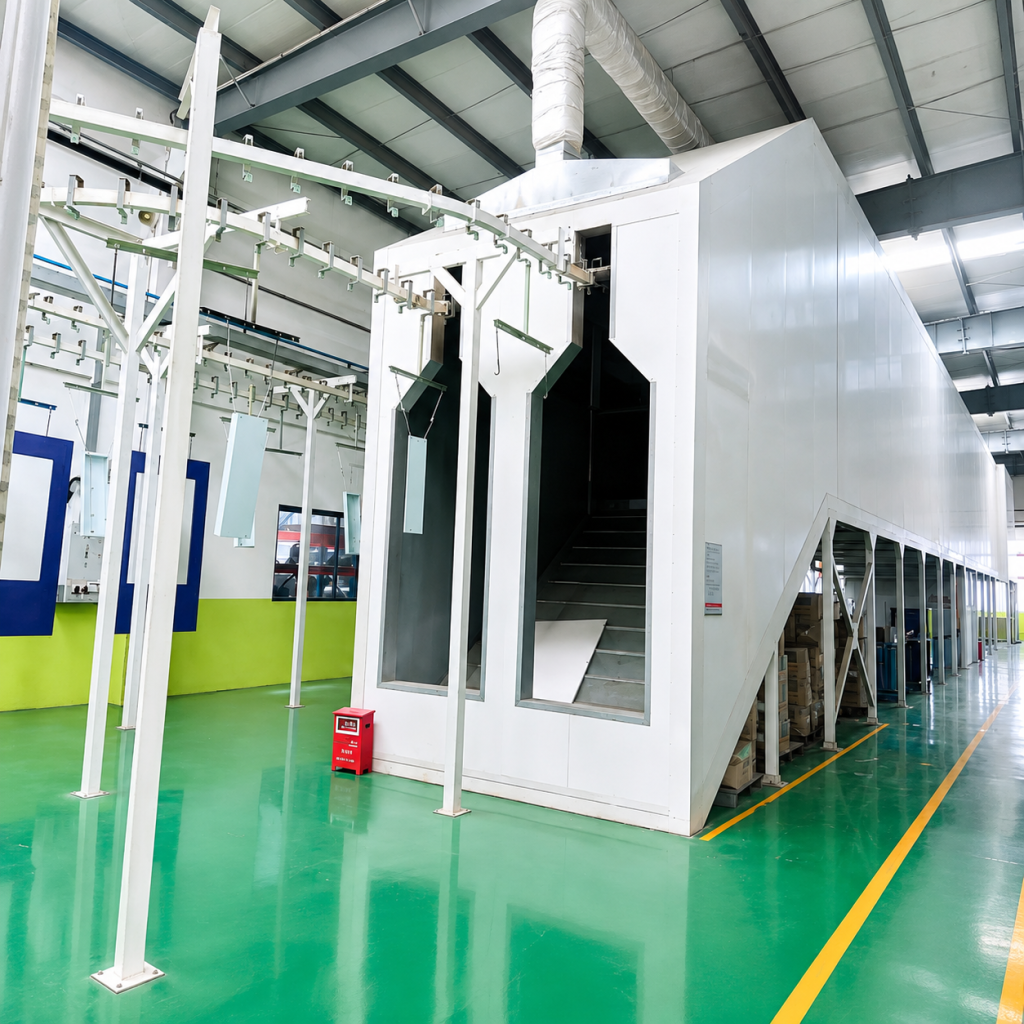
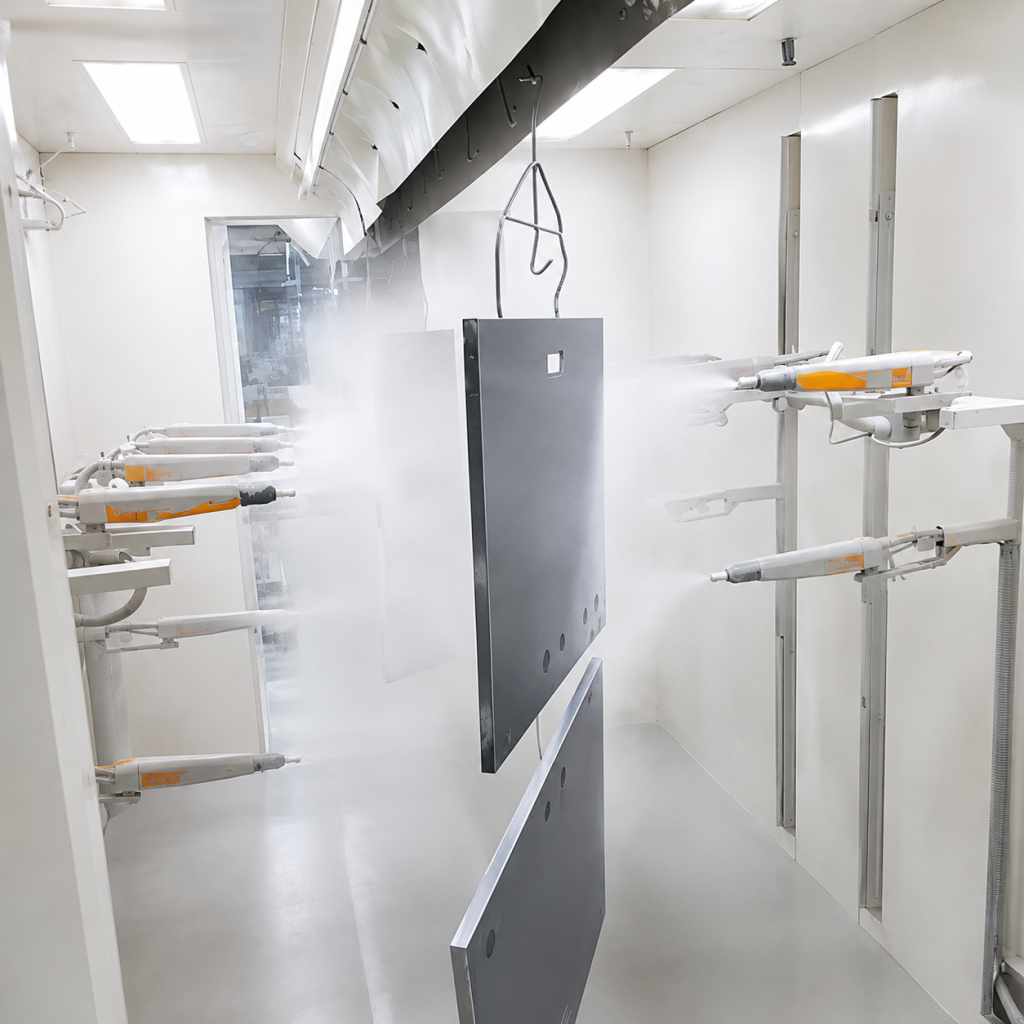
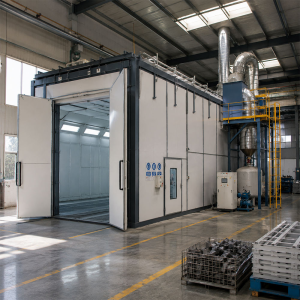
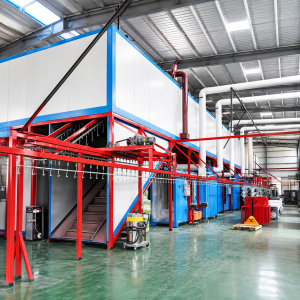
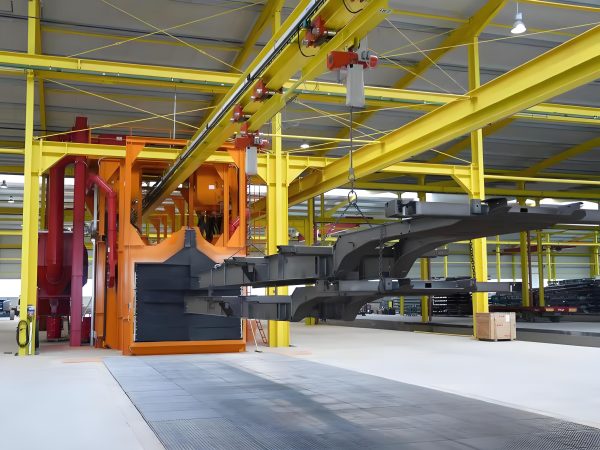
The automatic powder coating production line is a fully automated surface treatment system based on the high-voltage electrostatic corona principle.
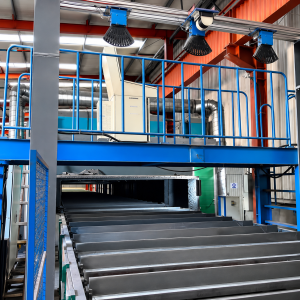
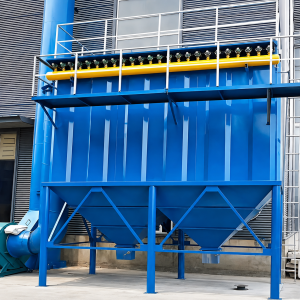
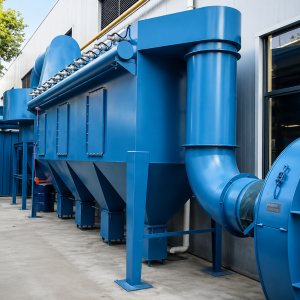
The automatic powder coating production line is a fully automated surface treatment system based on the high-voltage electrostatic corona principle. Workpieces are conveyed by overhead chain or floor rail and pass through degreasing, phosphating, water rinsing, drying, electrostatic powder spraying, curing, and cooling processes. The system uses 60-100 kV high-voltage electrostatic adsorption, combined with large cyclone plus cartridge two-stage recovery. Powder recovery rate is >=98%, and material utilization is >=95%. The curing section temperature control accuracy is +/-2.5 deg C. The complete line uses intelligent PLC interlocked control, supports parameter memory, fault self-diagnosis, and remote monitoring, and is widely used for high-volume coating of metal products in hardware, home appliances, automotive parts, building materials, and related industries.
The spray gun is connected to the negative pole, while the grounded workpiece forms the positive pole. Powder coating is conveyed to the spray gun by compressed air and becomes charged in the 60-100 kV high-voltage corona zone, then electrostatically adsorbs onto the workpiece surface. As the coating thickness increases, accumulated charge produces electrostatic repulsion and automatically stops further adsorption, ensuring uniform film thickness. The workpiece then enters the curing oven and is held at 180-200 deg C for 10-20 minutes, allowing the powder to melt, level, crosslink, and cure into a dense coating film.
Process flow: loading -> pretreatment (degreasing, rust removal, phosphating, water rinsing) -> drying -> electrostatic powder spraying -> curing bake -> forced cooling -> unloading -> quality inspection
Environmental compliance: Solvent-free and near-zero VOC emissions. The line complies with EU RoHS/REACH and environmental regulations in major markets. Recovered powder is reused, reducing hazardous waste disposal cost.
Excellent coating quality: Single-pass film thickness reaches 50-150 um, with complete edge and corner coverage, strong adhesion, excellent corrosion resistance, and batch consistency that meets strict automotive and home appliance standards.
High-efficiency automation: Production efficiency is 4-5 times higher than manual coating, supporting 24-hour continuous batch production and flexible multi-variety mixed-line manufacturing.
Low TCO: Material utilization is >=95%, powder recovery rate is >=98%, color change takes only 10-15 minutes, and overall operating cost is significantly lower than liquid coating.
Intelligent digitalization: PLC closed-loop control manages voltage, air pressure, and temperature. Real-time data acquisition is available, OPC UA/Modbus interfaces are reserved, and MES/ERP integration plus remote predictive maintenance are supported.
Global compliance access: The complete machine is CE certified, electrical systems comply with IEC standards, and explosion-proof configurations can meet ATEX requirements, supporting smooth commissioning in major global markets.
International quality system: Designed and manufactured under ISO 9001. Core components use brands such as Siemens and Schneider, key welds are inspected by X-ray testing, and equipment MTBF is >=20,000 hours.
Digital factory ready: The control system supports OPC UA, Modbus TCP/IP, and EtherNet/IP, enabling industrial cloud connection, real-time OEE monitoring, and predictive maintenance.
Modular and expandable: Standardized modular design supports smooth upgrades from single-shift to three-shift operation and from manual touch-up spraying to fully automatic robotic spraying, protecting long-term investment.
Global service network: Multilingual technical documents and remote AR diagnosis are provided. Critical spare parts support 48-hour global logistics response, with on-site training and localized service team support.
ESG and energy-efficiency advantages: Optimized hot-air circulation and oven insulation reduce total energy consumption by 15%-20% compared with traditional lines, helping customers meet carbon-neutrality goals and supply-chain ESG audit requirements.
|
Parameter |
Unit |
PCL-15 |
PCL-30 |
PCL-45 |
PCL-60 |
|
Production capacity |
pcs/h |
50-100 |
100-200 |
200-300 |
300-500 |
|
Total line length |
m |
20-30 |
40-60 |
50-80 |
60-100 |
|
Conveyor speed |
m/min |
0.5-2.0 |
0.5-3.0 |
0.5-3.0 |
0.5-5.0 |
|
Spray gun quantity |
pcs |
2-4 |
4-6 |
6-8 |
8-12 |
|
Spraying voltage |
kV |
60-80 |
60-100 |
60-100 |
60-100 |
|
Curing temperature |
deg C |
180-200 |
180-200 |
180-200 |
180-200 |
|
Curing time |
min |
10-20 |
10-20 |
10-20 |
10-20 |
|
Oven tunnel size |
m |
Custom |
15 x 2 x 2.5 |
25 x 3 x 3 |
40 x 3 x 3.5 |
|
Oven heating power |
kW |
approx. 30 |
approx. 50 |
approx. 80 |
approx. 120 |
|
Coating thickness |
um |
50-150 |
50-150 |
50-150 |
50-150 |
|
Material utilization |
% |
>=95 |
>=95 |
>=95 |
>=95 |
|
Powder recovery rate |
% |
>=98 |
>=98 |
>=98 |
>=98 |
|
Installed power |
kW |
approx. 40 |
approx. 70 |
approx. 110 |
approx. 160 |
Note: Parameters can be customized according to workpiece specifications and output requirements. Curing temperature is adjusted according to powder type. Heating methods can be gas, electric, or diesel.
The line is suitable for high-volume surface coating of metal workpieces including hardware products, aluminum profiles, appliance housings, automotive parts, furniture, fitness equipment, machinery, electronic and electrical enclosures, guardrails, building-material doors and windows, and similar products. It can process steel plates, aluminum plates, tubes, castings, forgings, and complex geometric frames for decorative corrosion protection, anti-rust primer powder, and functional coatings.
Powder coating contains no solvent and has near-zero VOC emissions, making it more environmentally friendly. Single-pass film thickness reaches 50-150 um with better corrosion resistance. Powder recovery rate is >=98%, reducing overall cost. Liquid paint is more suitable for high gloss, thin coating, and complex color-matching requirements.
The complete machine complies with CE and ISO 9001. Electrical systems meet IEC/EN 60204-1, and ATEX explosion-proof options are available. UL, CSA, or local mandatory certification support can be provided according to the target market.
Set curing parameters from the powder supplier's technical data and then verify the metal temperature profile on the actual workpiece. Most thermosetting powders require the workpiece metal to reach 180-200°C and hold for 10-20 minutes, but coating thickness, material mass, and oven airflow can change the setting. We use thermocouples to record the metal temperature profile and adjust conveyor speed, oven zones, and air circulation until the coating is fully cured without discoloration or energy waste.
With a quick color-change system, standard color change takes 10-15 minutes, and similar colors can be changed faster. Automatic cleaning devices can further shorten downtime and maximize equipment OEE.
Taking PCL-30 as an example, the required floor area is about 60-120 m2, including pretreatment, powder spraying, curing, cooling, and logistics passages. Recommended clear plant height is >=5 m, with reserved space for maintenance and future expansion.
Powder spraying produces near-zero VOC emissions. Unattached powder is handled by two-stage recovery, and emissions are far below Chinese, European, and American standards. Curing exhaust can be equipped with activated carbon adsorption or zeolite rotor treatment to meet strict environmental regulations.
Please provide workpiece type, dimensions, weight, daily output, powder type, curing conditions, installation-site dimensions, preferred heating method, pretreatment requirements, and target-market certification requirements. We provide free on-site survey, 3D layout plan, and ROI calculation.
Main wear parts include nozzles, filter cartridges, conveyor chains, and heating elements. Recommended nozzle spare-parts ratio is 5%-10%; filter cartridges should be replaced regularly; chain tension and lubrication should be checked monthly. Preventive maintenance plans and remote health monitoring services are available.

English
Hindi

Indonesian

Russian

Spanish

Thai
Vietnamese