Global Surface Treatment Equipment & System Solutions — Since 2002

久昌机械
Get a Quote
Global Surface Treatment Equipment & System Solutions — Since 2002
久昌机械
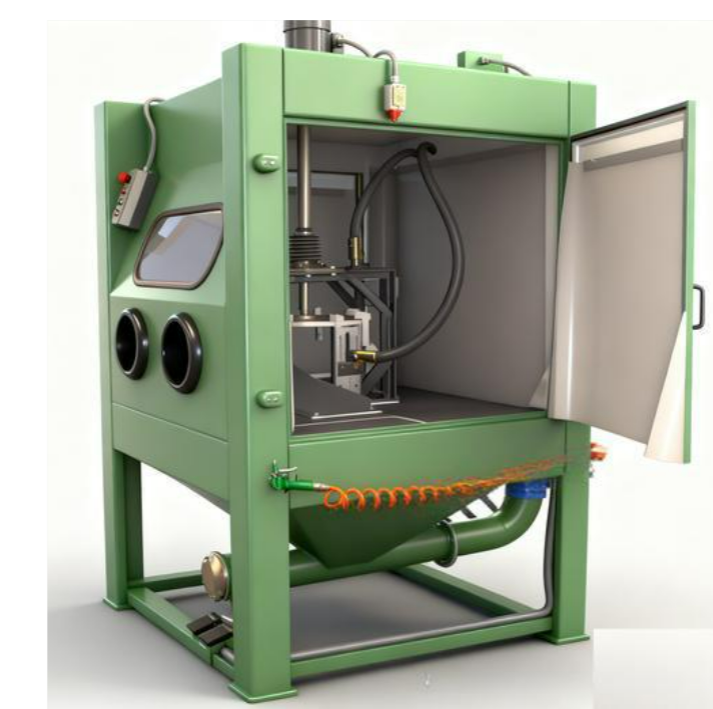
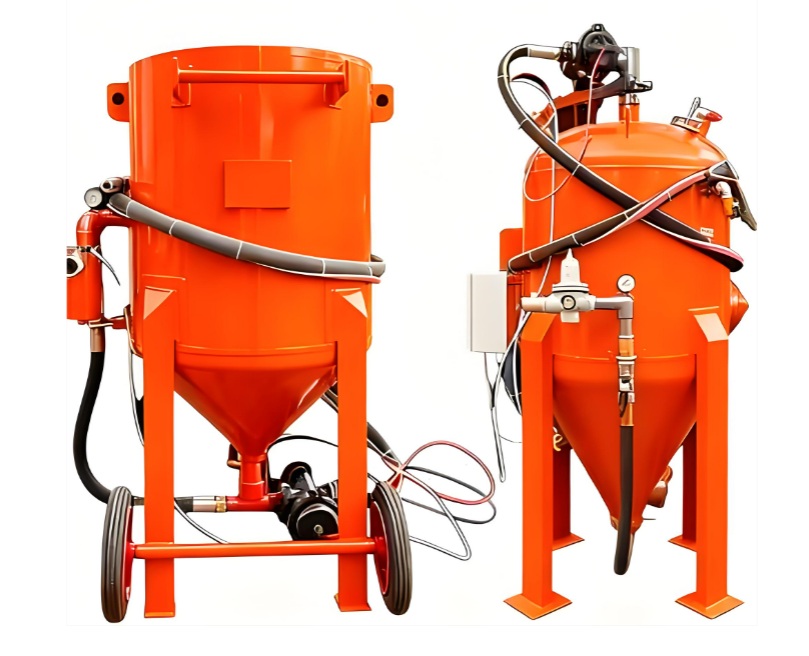
Flexible Surface Cleaning, Roughening, and Strengthening Equipment
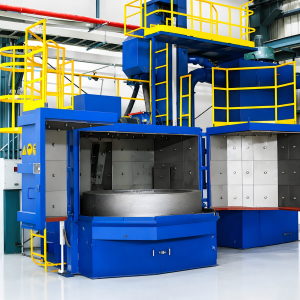
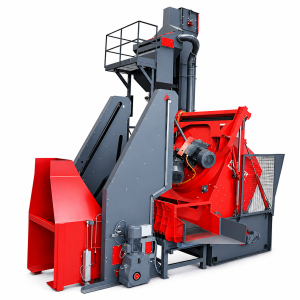
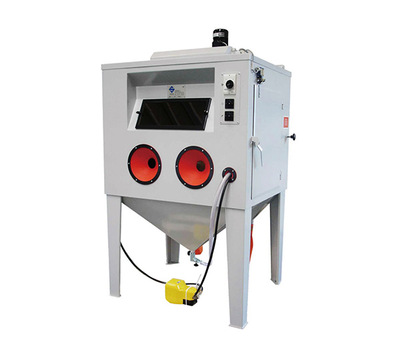
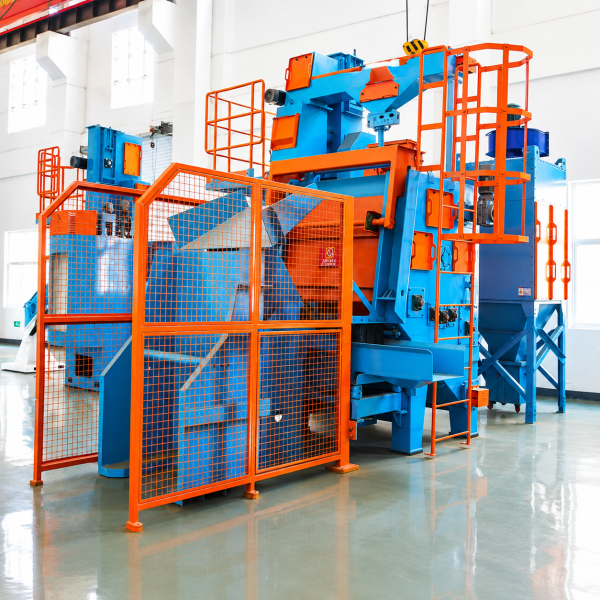
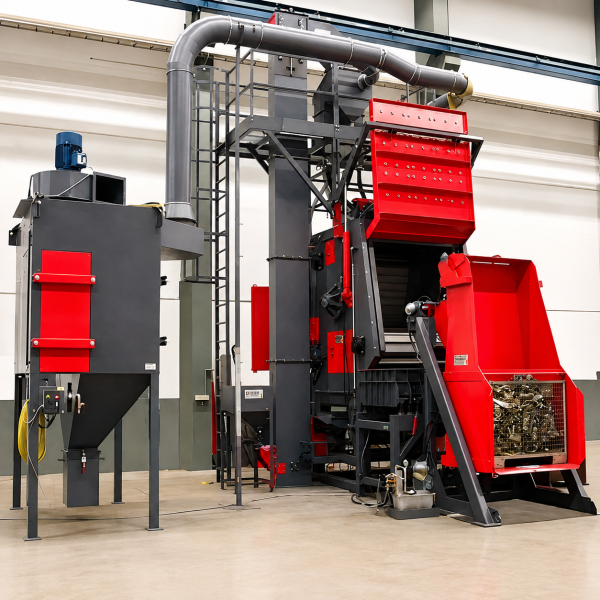
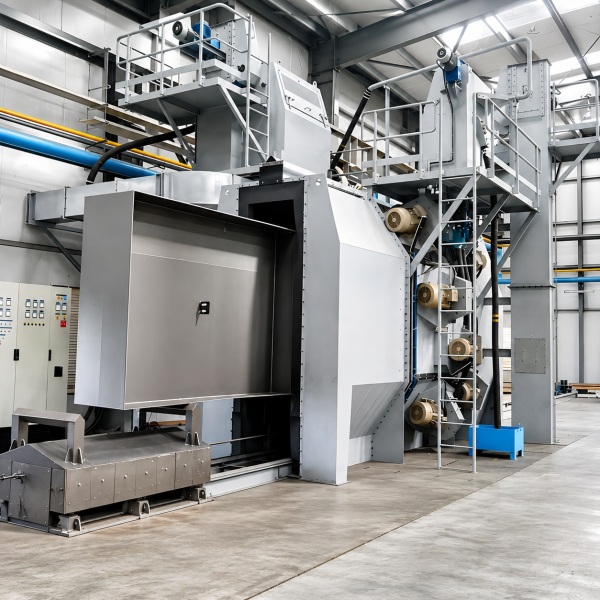
The sandblasting machine is a multi-purpose surface treatment system that uses a high-speed abrasive jet to impact the workpiece surface for cleaning, roughening, or strengthening.
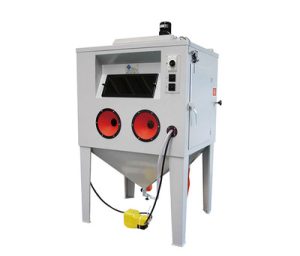
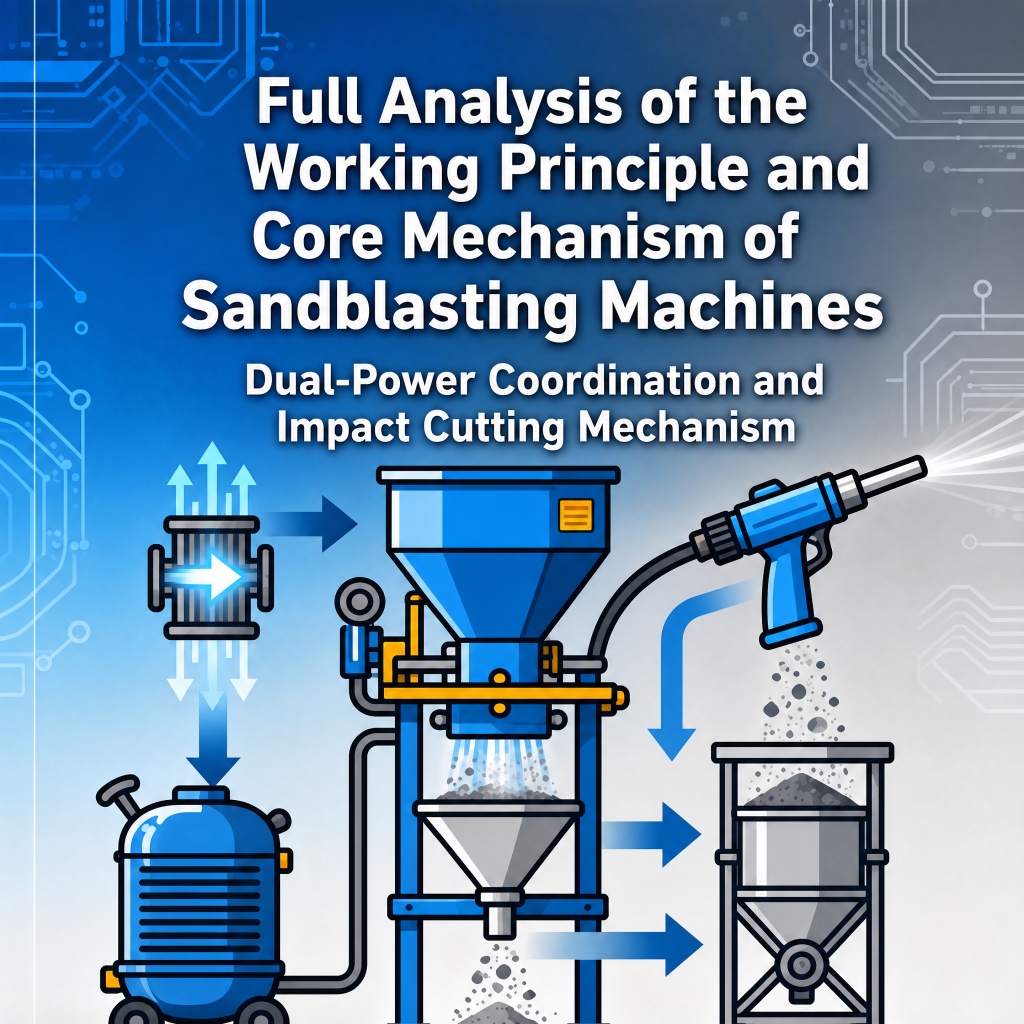
By working principle, it can be divided into pressure-feed and suction-feed types. The pressure-feed type uses compressed air to force abrasive into the blast gun, producing strong impact energy and high efficiency for large workpieces and heavy-duty cleaning. The suction-feed type uses the Venturi effect to generate negative pressure and draw abrasive into the gun, offering a compact structure and convenient operation for precision and small workpieces.
The equipment is widely used for surface treatment of molds, castings, welded structures, and metal machined parts. It can effectively remove oxide scale, rust layers, burrs, and old coatings. Surface cleanliness can stably reach Sa2.0-Sa2.5 in accordance with ISO 8501-1, and roughness can be controlled within Ra25-Ra6.3 um, meeting international project acceptance and coating adhesion requirements.
In pressure-feed operation, compressed air is purified through an oil-water separator and then enters the blasting tank, pressing the abrasive into the blasting hose. At the blast gun, the abrasive mixes with high-speed airflow and accelerates into a dense jet that impacts the workpiece surface. In suction-feed operation, negative pressure generated by the Venturi effect at the gun nozzle draws abrasive from the storage tank and mixes it into the jet.
Process flow: compressed-air preparation -> abrasive supply -> blast gun jetting -> workpiece surface cleaning -> abrasive recovery and screening -> dust collection and filtration -> recycling.
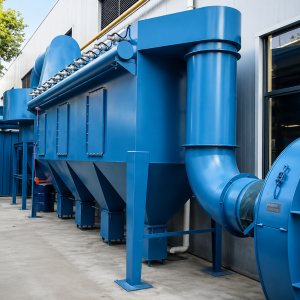
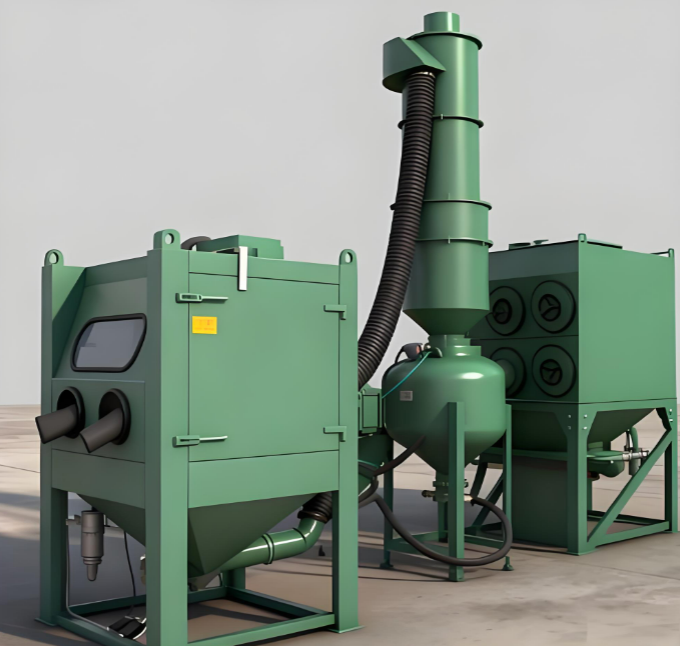
The system is equipped with closed-loop recovery and cartridge or baghouse dust collection. Abrasive recovery rate is >=98%, and dust emission concentration is <50 mg/m3, meeting EU and North American environmental emission regulations for greener production.
Excellent treatment performance: Pressure-feed blasting provides strong jet kinetic energy, stable Sa2.0-Sa2.5 surface cleanliness, and uniform controllable roughness, creating an ideal substrate for subsequent painting, coating, or electroplating.
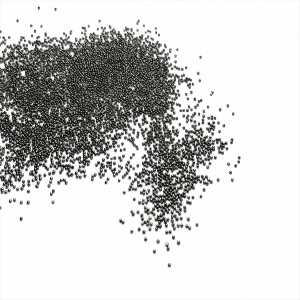
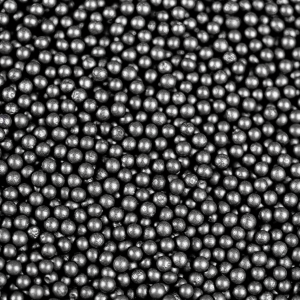
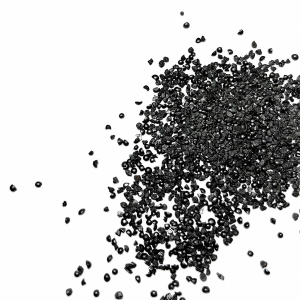
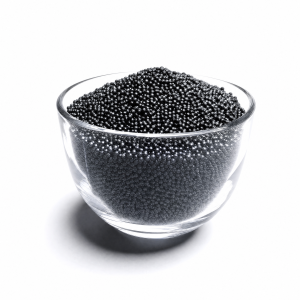
Wide abrasive compatibility: Steel grit, steel shot, quartz sand, brown fused alumina, glass beads, white fused alumina, and other abrasives are supported. Abrasive type can be switched flexibly according to workpiece material and process requirements.
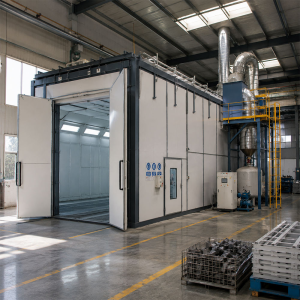
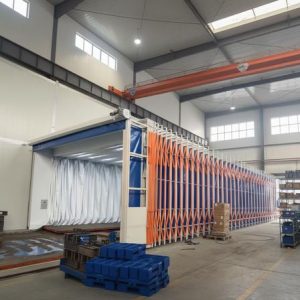
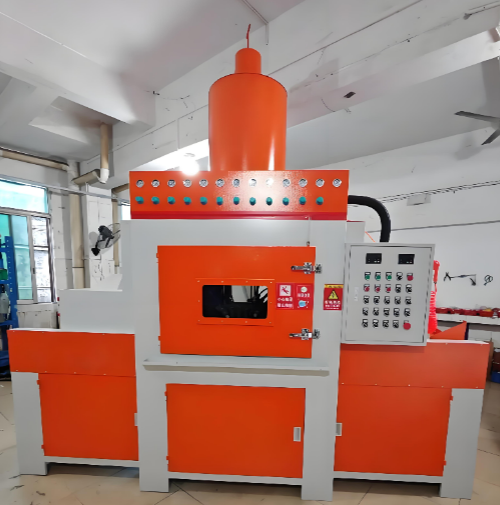
Strong adaptability: The machine can process metal components, complex molds, and irregular parts with limited restrictions on workpiece size and shape. Mobile operation supports continuous multi-station production without a fixed blasting room.
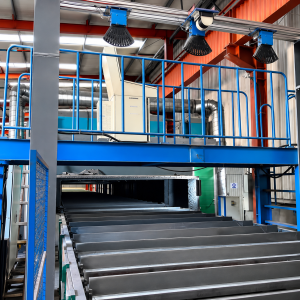
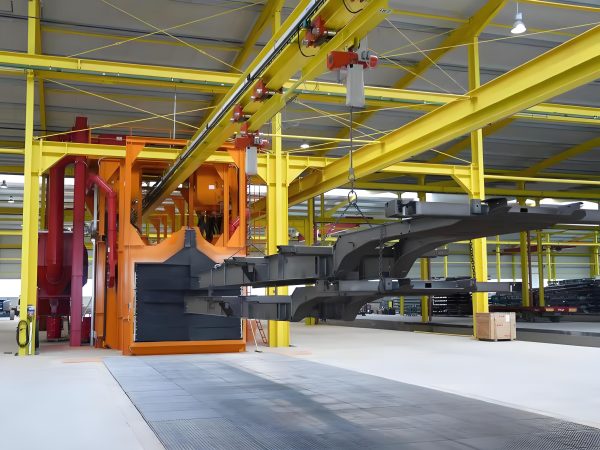
Modular and automation-ready design: Basic models can be upgraded quickly with optional automatic turntables, robotic arms, or rail conveyor systems for automated blasting, reduced labor dependence, and improved batch consistency.
Safety and compliance: The overall machine design complies with CE machinery directives and ISO safety standards. Optional intelligent pressure monitoring and emergency stop systems help protect operators.
International certification and quality assurance: The product is supported by ISO 9001 quality management and CE certification. Key pressure-bearing parts comply with international safety standards, with complete material reports and traceability documents available for multinational customer audits.
Global service and spare-parts network: Spare-parts warehouses and technical support centers are available in Europe, North America, Southeast Asia, and the Middle East. We provide 24/7 remote diagnosis, on-site commissioning, and operator training to ensure stable lifecycle operation.
Customization and flexible manufacturing: In addition to standard models, the equipment can be deeply customized according to workpiece size, production takt, and automation requirements, from single machines to fully automatic sandblasting lines.
Excellent total cost of ownership: High abrasive recovery rate (>=98%) and low-energy design significantly reduce operating cost. Modular construction reduces maintenance downtime, and extended warranty services are available beyond the standard warranty period to protect long-term ROI.
Proven industry experience: Our equipment has been widely used by Fortune Global 500 companies in automotive, aerospace, energy, and heavy industry fields. We have extensive multinational project delivery experience and understand safety, environmental, and electrical requirements across different countries.
|
Parameter |
Unit |
SPJ-400 |
SPJ-600 |
SPJ-900 |
SPJ-1200 |
|
Tank volume |
L |
400 |
600 |
900 |
1200 |
|
Number of blast guns |
pcs |
1 |
1-2 |
2 |
2-3 |
|
Blasting pressure |
MPa |
0.4-0.6 |
0.4-0.8 |
0.4-0.8 |
0.4-0.8 |
|
Compressed air consumption |
m3/min |
3-6 |
4-8 |
6-12 |
8-16 |
|
Nozzle diameter |
mm |
dia. 6-8 |
dia. 8-10 |
dia. 8-12 |
dia. 10-14 |
|
Processing efficiency |
m2/h |
5-10 |
10-20 |
15-25 |
20-35 |
|
Applicable abrasive size |
mm |
dia. 0.5-2.0 |
dia. 0.5-2.0 |
dia. 0.5-3.0 |
dia. 0.5-3.0 |
|
Tank diameter |
mm |
dia. 600 |
dia. 800 |
dia. 1000 |
dia. 1200 |
|
Tank height |
mm |
1200 |
1500 |
1800 |
2000 |
|
Cleaning grade |
grade |
Sa2.0-2.5 |
Sa2.0-2.5 |
Sa2.0-2.5 |
Sa2.0-2.5 |
|
Abrasive consumption |
kg/h |
50-100 |
100-200 |
150-300 |
200-400 |
|
Installed power |
kW |
approx. 3 |
approx. 5 |
approx. 8 |
approx. 12 |
The equipment is suitable for surface treatment in mold manufacturing, precision casting, welded structures, machinery manufacturing, automotive parts, railway components, aerospace, petrochemical equipment, shipbuilding and repair, and related industries.
It can process metal components, castings, welded structures, molds, and various parts for rust removal, scale removal, surface roughening, deburring, and removal of old coatings.
It is especially suitable for fine treatment of small and medium-sized workpieces and for production sites that lack a fixed blasting room but require flexible relocation.
Pressure-feed blasting uses compressed air to press abrasive into the blast gun, delivering higher jet energy and efficiency for large workpieces and heavy-duty cleaning. Suction-feed blasting uses Venturi negative pressure to draw abrasive into the gun, with a compact structure and flexible operation for precision and small workpieces.
Steel grit and steel shot are suitable for powerful cleaning of metal surfaces. Quartz sand and brown fused alumina are commonly used for rust removal. Glass beads are suitable for precision surface finishing. White fused alumina is suitable for softer materials such as stainless steel and aluminum alloy. Selection should consider workpiece hardness, surface requirements, and cost.
Nozzle life depends on abrasive hardness and blasting pressure. With hard abrasives such as steel grit and steel shot, typical service life is 10-30 hours. Softer abrasives such as glass beads provide longer nozzle life. Replacement is recommended when the nozzle diameter wears to 150% of its original size.
A small suction-feed unit requires about 1-2 m2, a medium pressure-feed unit requires about 2-4 m2, and a large automatic model requires about 4-8 m2. Recommended installation height is >=3.5 m, with reserved space for operation, abrasive storage, and compressed-air connection.
Main wear parts include the nozzle, blasting hose, viewing glass, and oil-water separator filter element. It is recommended to keep nozzle spares at 5%-10% of total quantity. Routine maintenance is simple and does not require a complex electrical system.
Please provide workpiece type and dimensions, daily processing volume, target cleanliness and roughness, workpiece material, installation-site dimensions, and compressed-air source parameters. We provide professional technical selection consultation and solution design.

English

Hindi

Indonesian

Russian

Spanish

Thai

Vietnamese