Global Surface Treatment Equipment & System Solutions — Since 2002

久昌机械
Get a Quote
Global Surface Treatment Equipment & System Solutions — Since 2002
久昌机械
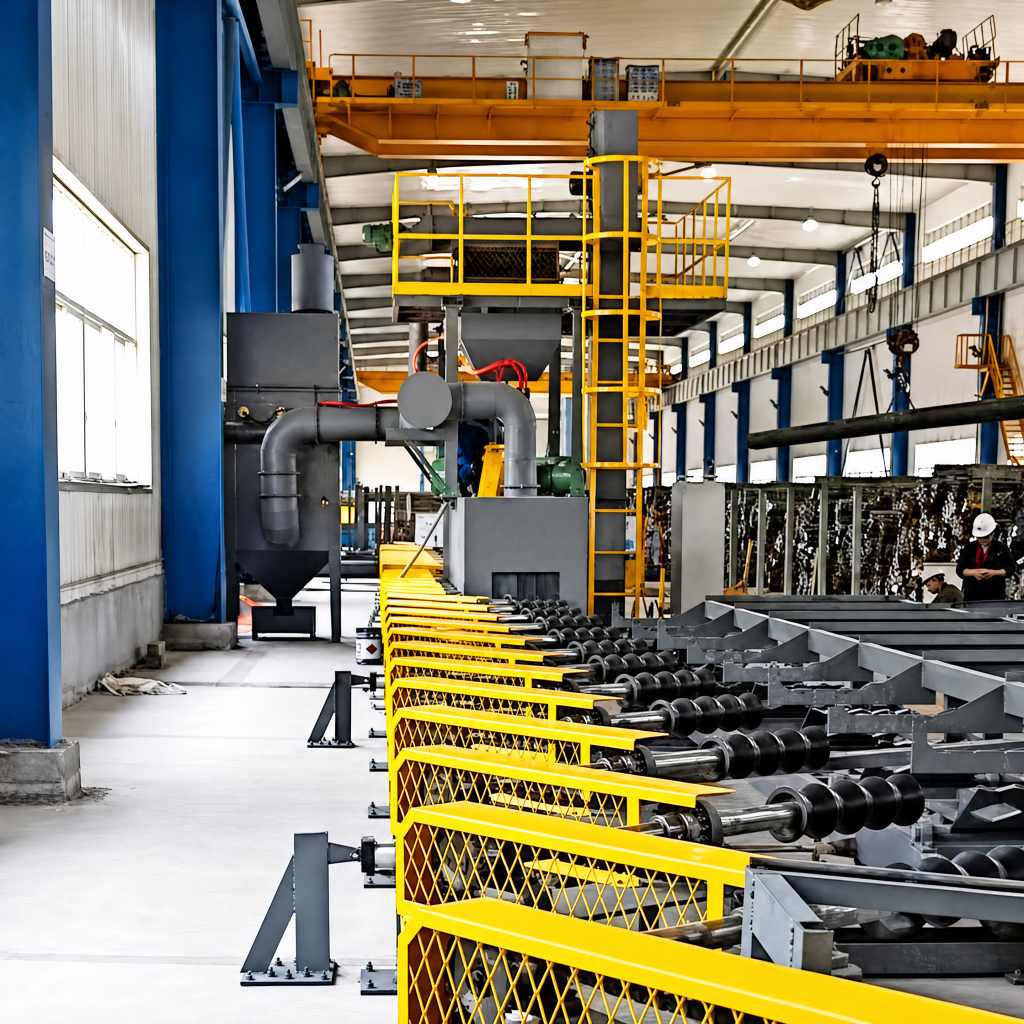
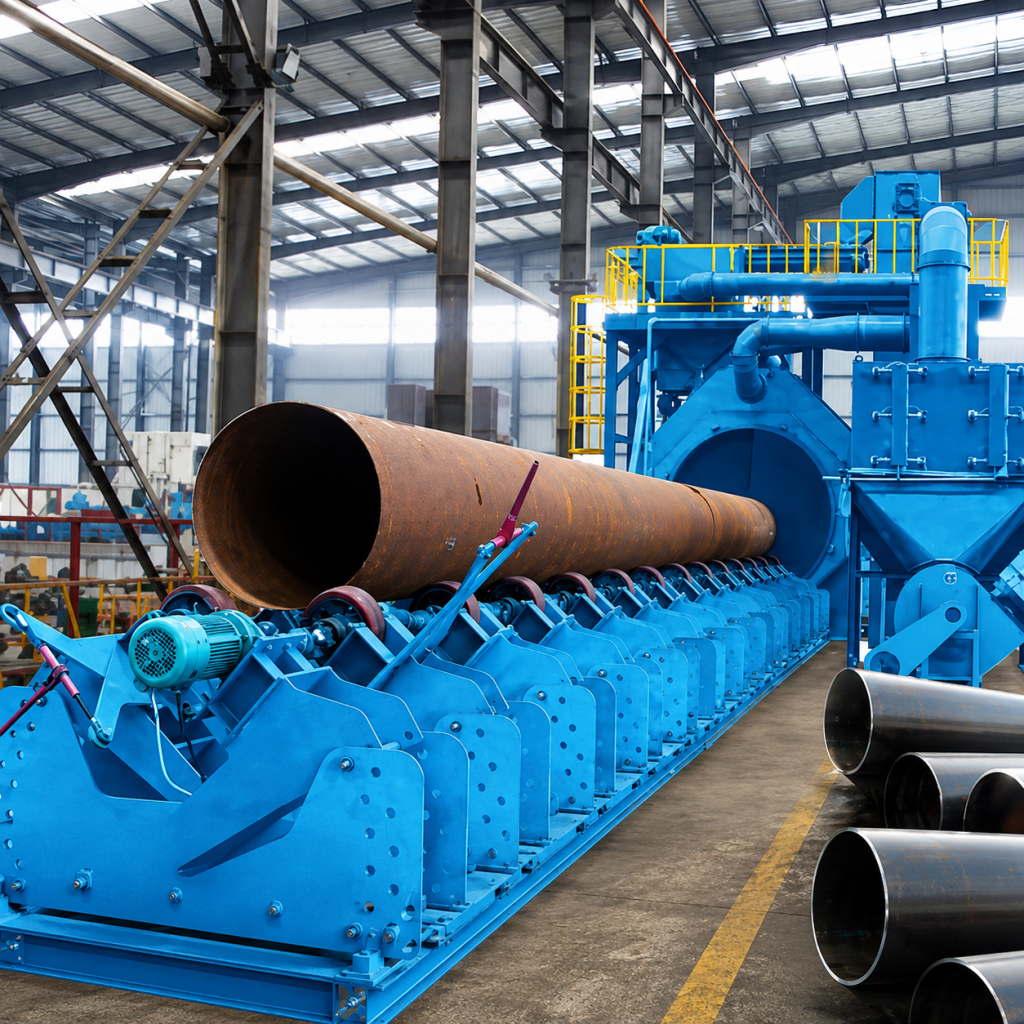
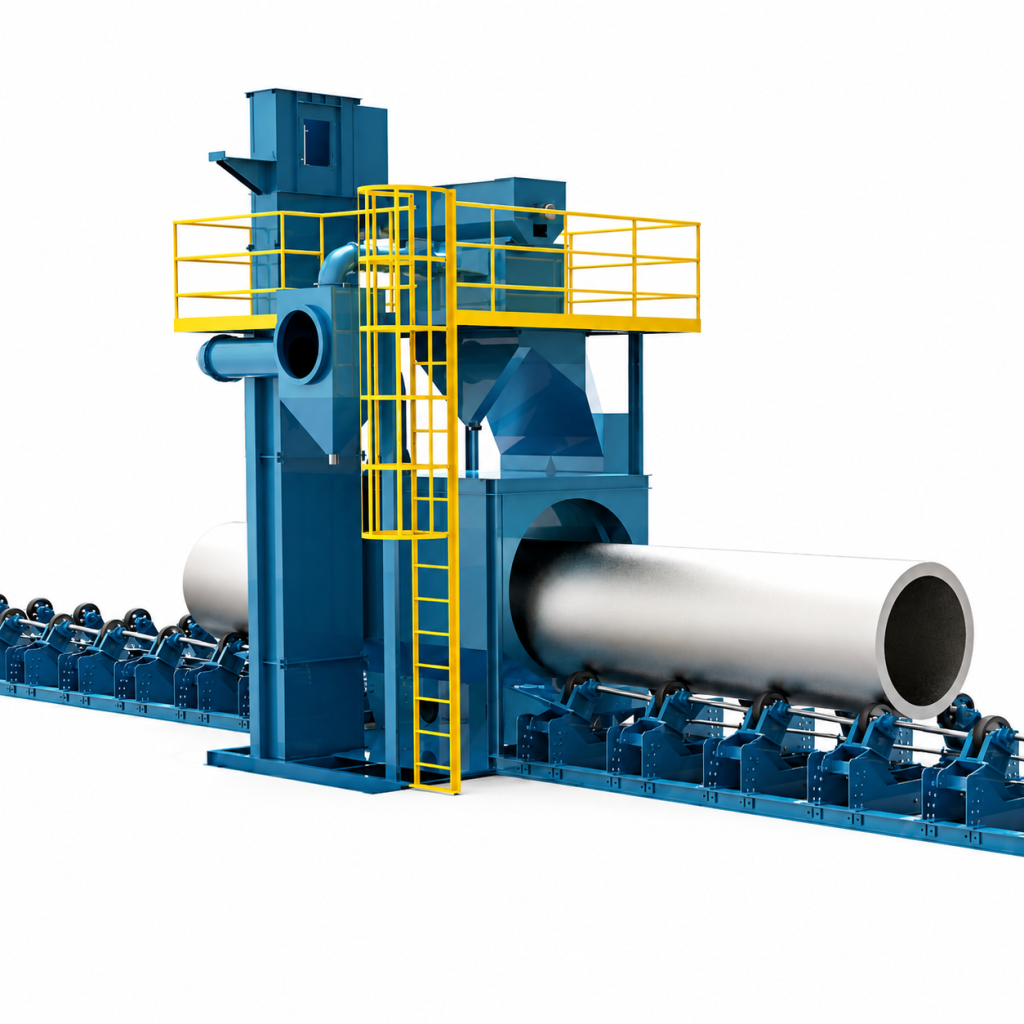
Fully automatic external surface pretreatment and cleaning equipment for circular profiles
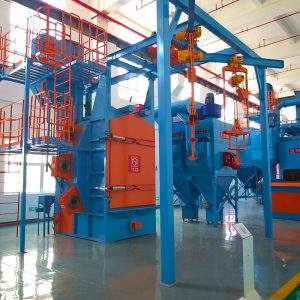
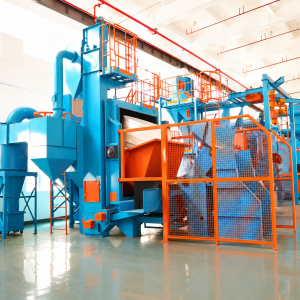
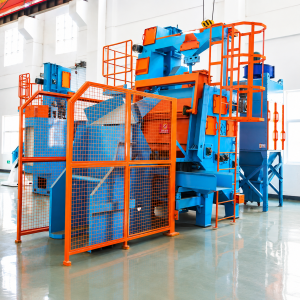
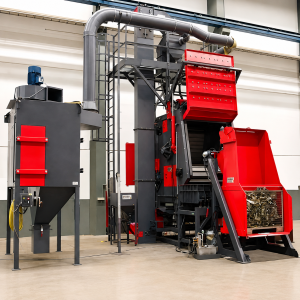
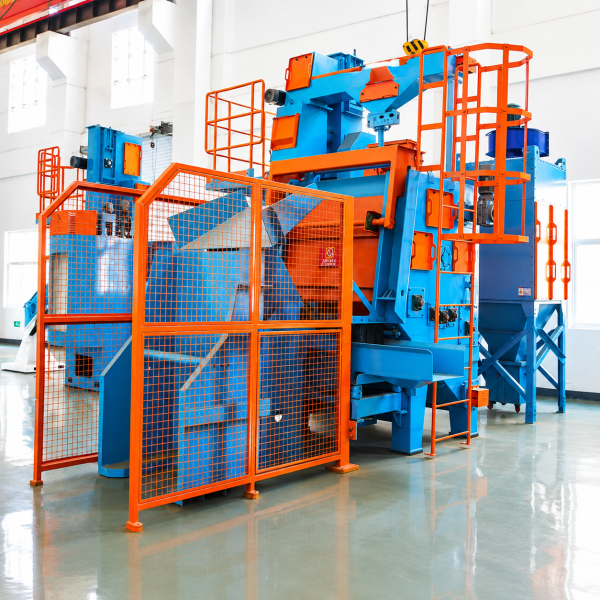
The QZW series roller conveyor shot blasting machine is specifically designed for cleaning the outer walls of round and long workpieces such as steel pipes, solid bars, round steel, and threaded rebar, achieving integrated treatment of rust removal, oxide scale removal, and surface roughening. The workpiece is horizontally conveyed by a frequency-controlled rubber/steel roller conveyor, with inclined idlers driving the workpiece to rotate at a uniform speed. Multiple high-efficiency shot blasters propel shot at high speed from multiple angles, performing 360° all-around cleaning of the workpiece's outer wall. The equipment can be used independently or integrated into pipe rolling, hot-dip galvanizing, and anti-corrosion coating production lines to achieve continuous automated operation. It is widely used in industries such as oil and gas transmission steel pipes, water supply and drainage pipes, mechanically forged round steel, building rebar, pressure vessel round pipes, and wind power round shafts. After treatment, the surface cleanliness of the workpiece can reach Sa2.5 level (ISO 8501-1), and the roughness Rz 25–60 μm, effectively improving the adhesion of paint and galvanized layers.
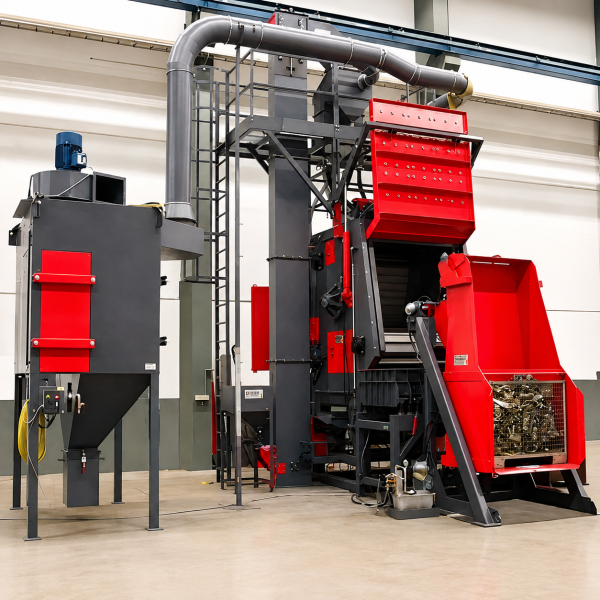
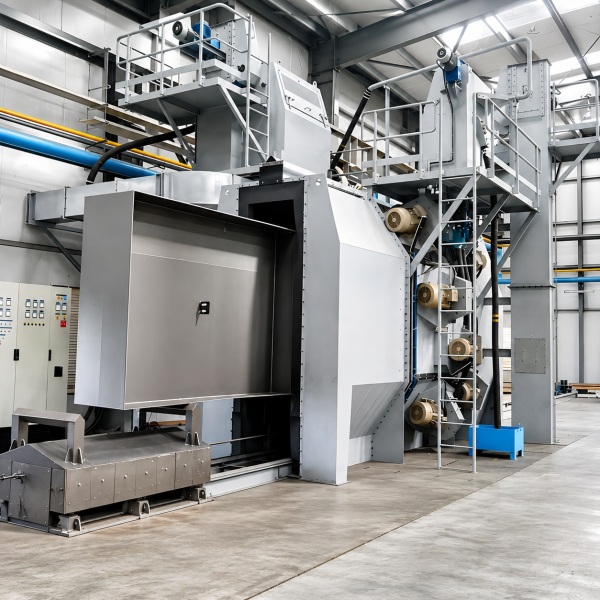
Adjustable speed rubber/steel conveyor rollers smoothly feed pipes and round steel into the enclosed shot blasting chamber. Inclined idlers drive the workpiece to rotate at a uniform speed, while multiple high-efficiency shot blasters project shot at high speed from different directions, continuously impacting the outer wall of the workpiece to remove rust and oxide scale. The detached shot and rust residue fall to the bottom of the equipment and are collected by longitudinal and transverse screw conveyors to a bucket elevator, which then lifts them to an air separator. The separator uses gravity and air separation to separate intact steel shot, broken shot, and dust. Pure steel shot is stored in a storage hopper and quantitatively supplied to the shot blasters for reuse by a shot material controller. Dust generated during operation is centrally filtered by a matching pulse jet filter/bag filter, and the purified air is discharged in compliance with standards.
Process Flow: Feeding → Rotary Shot Blasting → Automatic Shot Material Recovery and Sorting → Dust Purification → Discharge
The shot blasting machine adopts a high-efficiency direct-drive structure, with a direct-drive motor and no belt drive. The impeller is 100% dynamically balanced (dynamic balance grade G6.3) to ensure vibration ≤4.5 mm/s at high speeds. The blades, shot distribution wheel, directional sleeve, and guard plates are all made of high-chromium wear-resistant cast iron, with a chemical composition conforming to ASTM A532 standard, a hardness ≥58 HRC, and a standard blade life of 2500–3000 hours.
Shot blasting machine: High-efficiency direct-drive type, with different power configurations (11–30 kW) depending on pipe diameter and wall thickness. The arrangement angle is optimized through 3D simulation to ensure full coverage of the outer wall.
Conveying roller conveyor: Small-diameter pipes use variable frequency rubber roller conveyors (friction drive + rotation), while large-diameter pipes use steel roller conveyors (variable frequency motor drive), with stepless speed adjustment from 0.5–5 m/min.
Issuer roller brackets: Adjustable spacing and tilt angle to adapt to different pipe diameters, ensuring stable rotation of the workpiece without deviation.
Chamber liner: High-chromium cast iron/65Mn rolled liner, modular quick-connect design, thickness 10–20 mm, quick replacement.
Sealing system: Inlet and outlet labyrinth seals + multi-layer rubber curtains to prevent shot leakage while allowing smooth workpiece passage.
Shot material circulation system: Bottom spiral recovery + bucket elevator + air separation, separation efficiency ≥99%.
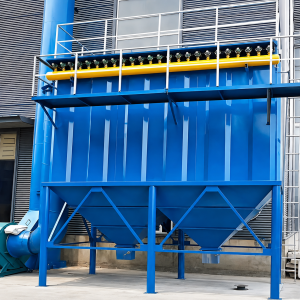
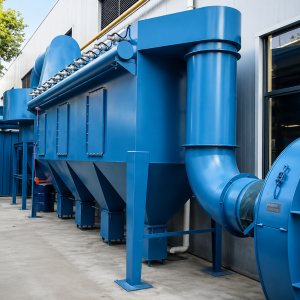
Dust removal system: Standard configuration includes a pulse jet filter cartridge dust collector (bag filter optional), dust emissions can be controlled to <5 ppm. mg/m³; Electrical system: PLC control (Siemens/Mitsubishi optional), touch screen operation, adjustable forward and reverse rotation of roller conveyor, supports automatic/manual mode, and optional remote monitoring module.
Installation Site Requirements:
QZW-04 model: Approximately 15 m × 4 m footprint (including loading, main unit, and unloading areas); factory height ≥ 6 m;
QZW-12 model: Approximately 22 m × 5 m footprint; factory height ≥ 7 m;
QZW-30 model: Approximately 35 m × 8 m footprint; factory height ≥ 9 m;
Required space for workpiece placement and turnover; recommended ≥ 3 m on each side;
Concrete foundation flatness ≤ 3 mm/m; roller conveyor foundation requires pre-embedded anchor bolts and tracks;
Power supply: 380V/3Ph/50Hz (or customized according to customer's power grid); Requires a total equipment power capacity + 20% margin.
Maintenance Points
Daily: Check the operating sound, vibration, and current of the shot blasting machine; check the smoothness of the roller conveyor operation; check the integrity of the inlet and outlet sealing curtains;
Weekly: Check the wear of vulnerable parts (blades, guard plates) and replenish lubricating grease; check the tension of the elevator belt/chain;
Every 3–6 months: Conduct a comprehensive inspection of the chamber guard plates and idler rollers for wear; check the position of the shot blasting machine's directional sleeve window; check the pressure difference of the dust collector filter cartridge/bag;
Blade Replacement Standard: Replace blades when wear exceeds 5 mm or cracks appear to ensure that the blasting speed does not decrease;
Jiuchang Machinery possesses independent import and export rights, offering various trade terms such as FOB/CIF/DDP, and supporting letters of credit, wire transfers, and milestone payments. Overseas installation services include a three-tiered model: remote technical supervision, on-site installation guidance, and turnkey projects. Global 24/7 response: over 80% of common faults can be resolved within 4 hours via remote diagnostics; local engineers arrive on-site within 48 hours. Commonly used spare parts from core market warehouses are delivered within 48 hours.
|
Parameter Items |
Unit |
Q6910 |
Q6920 |
Q6930 |
Q6940 |
|
Maximum Disk Weight |
kg |
500 |
1000 |
1500 |
2500 |
|
Applicable Disc Diameter Range (Outer Diameter) |
mm |
Φ600–800 |
Φ800–1000 |
Φ1000–1300 |
Φ1200–1500 |
|
Processing Beats (Reference) |
min/盘 |
5–8 |
6–10 |
8–12 |
10–15 |
|
Reference Daily Output (Single Shift 8 Hours) |
t |
20–30 |
30–50 |
40–60 |
50–80 |
|
Number Of Workstations |
indivual |
1–2 |
2 |
2 |
2 |
|
Number Of Shot Blasting Machines |
tower |
4 |
6 |
6–8 |
8 |
|
Power Of A Single Shot Blasting Machine |
kW |
11 |
11 |
15 |
15 |
|
Total Power Of Shot Blasting Machine |
kW |
44 |
66 |
90–120 |
120 |
|
Bullet Diameter |
mm |
Φ0.8–1.2 |
Φ0.8–1.5 |
Φ0.8–1.5 |
Φ1.0–2.0 |
|
Elevator Lifting Capacity |
t/h |
20 |
30 |
40 |
50 |
|
Separator Separation Volume |
t/h |
20 |
30 |
40 |
50 |
|
Dust Removal Air Volume |
m³/h |
6000 |
10000 |
15000 |
20000 |
|
Total Installed Power (Excluding Dust Removal) |
kW |
≈48 |
≈72 |
≈96 |
≈120 |
|
Total Installed Power (Including Dust Removal) |
kW |
≈110 |
≈185 |
≈230 |
≈330 |
Suitable Workpieces: Seamless steel pipes, welded pipes, solid bars, hot-rolled round steel, threaded steel bars, forged round shafts, and other long and round metal components with diameters ranging from φ50 to 3000 mm.
Application Industries: Oil and gas pipeline manufacturing (pre-treatment of pipelines, casings, and conduits for corrosion protection) Municipal water supply and drainage steel pipe processing (rust removal before internal and external anti-corrosion coating) Mechanical forging processing (surface cleaning of round steel and bars) Pre-treatment of building steel bars (rust removal and roughening of threaded steel bars) Pressure vessels, wind power equipment, hot-dip galvanizing plants, etc.
Unsuitable Scenarios: Internal cavity cleaning (this equipment only treats the outer wall; internal cavities require a dedicated internal shot blasting machine or sandblasting equipment); Non-circular profiles (square tubes and H-beams require a QH series through-type shot blasting machine).
This machine is specifically designed for processing round and long workpieces with diameters ranging from φ50–3000 mm, including seamless steel pipes, welded pipes, solid bars, hot-rolled round steel, and threaded steel bars for construction. It is used for workpiece painting, rust removal on the outer wall before hot-dip galvanizing, and removal of oxide scale to improve coating adhesion. It is not suitable for square tubes, H-beams, or other irregularly shaped materials (a QH series through-type shot blasting machine is required), nor for internal cavity cleaning.
Adjust the spacing and tilt angle of the roller supports to ensure stable support and rotation for workpieces of different diameters; for large-diameter workpieces, appropriately reduce the roller conveyor speed and increase the shot supply to ensure the outer wall is completely blasted. Before leaving the factory, the equipment undergoes 3D simulation verification based on the target pipe diameter range to ensure that the shot blaster arrangement covers the entire diameter range.
Flexible purchasing is supported. The shot blasting main unit (including shot circulation and dust removal system) can be purchased separately, or a complete set of roller conveyor systems for loading, intermediate, and unloading can be provided. If the customer already has a conveyor line, only the shot blasting chamber and core unit need to be purchased; the interface size will be matched to the site specifications.
Efficiency is determined by pipe or bar diameter, workpiece spacing, required surface grade, shot-blast-wheel power, and conveyor speed. Our throughput calculation uses the effective cleaning length, conveyor speed, and loading interval to define pieces per hour or metres per hour. After receiving your diameter range, wall thickness, material, and target cleanliness, we recommend the appropriate wheel configuration and operating speed.
Check if the inlet and outlet rubber sealing curtains are aged or damaged, and replace them promptly; check if the labyrinth seal baffles are deformed or misaligned and correct them; appropriately reduce the roller conveyor speed to reduce the rapid passage of workpieces carrying away shot. Under standard design, the shot recovery rate is ≥98%; abnormal losses are usually caused by seal failure.
Check if the dust collector filter cartridges/bags are clogged. Regularly activate the pulse automatic cleaning system; replace if dust accumulation is severe. Check for air leaks in the dust collector duct flanges and inspection door gaskets. Check the opening of the air separator dampers to ensure that rust and dust completely enter the dust collection duct. A properly configured dust collector can control dust emissions to <5 mg/m³. Abnormalities are usually caused by improper maintenance.
Yes. The total length of the roller conveyor, the number of shot blasters, and the dust collection air volume can be adjusted according to the customer's factory dimensions, maximum workpiece length, and daily production requirements. Automatic loading and unloading auxiliary fixtures can also be provided. Free solution design and 3D simulation verification are offered.
Please provide: Pipe/round steel diameter range, single workpiece length and maximum weight, daily processing capacity, surface cleaning grade requirements (Sa2.5/Sa3), factory dimensions (length, width, and height), on-site power supply conditions, whether an automatic loading and unloading device is required, and local environmental emission standards. We offer personalized technical solutions and formal quotes.

English

Hindi

Indonesian

Russian

Spanish

Thai

Vietnamese