Global Surface Treatment Equipment & System Solutions — Since 2002

久昌机械
Get a Quote
Global Surface Treatment Equipment & System Solutions — Since 2002
久昌机械
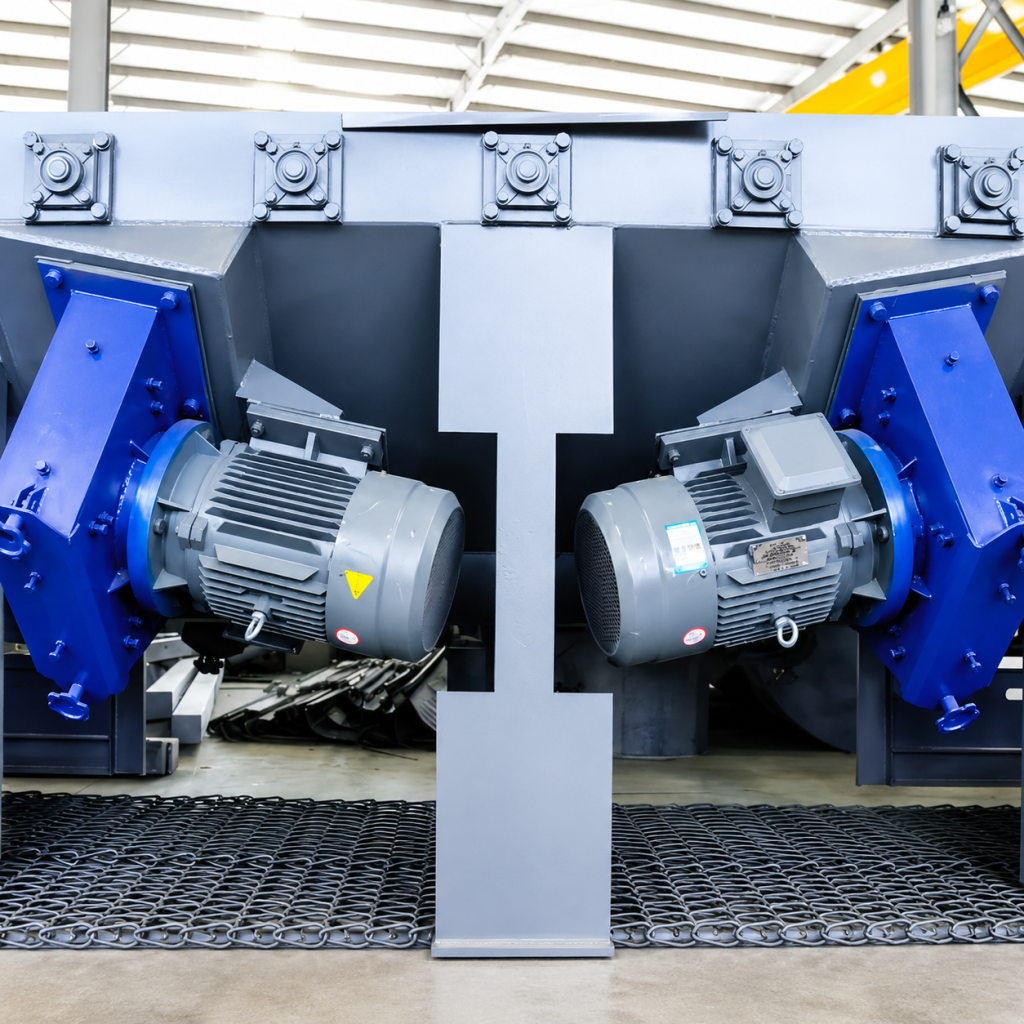
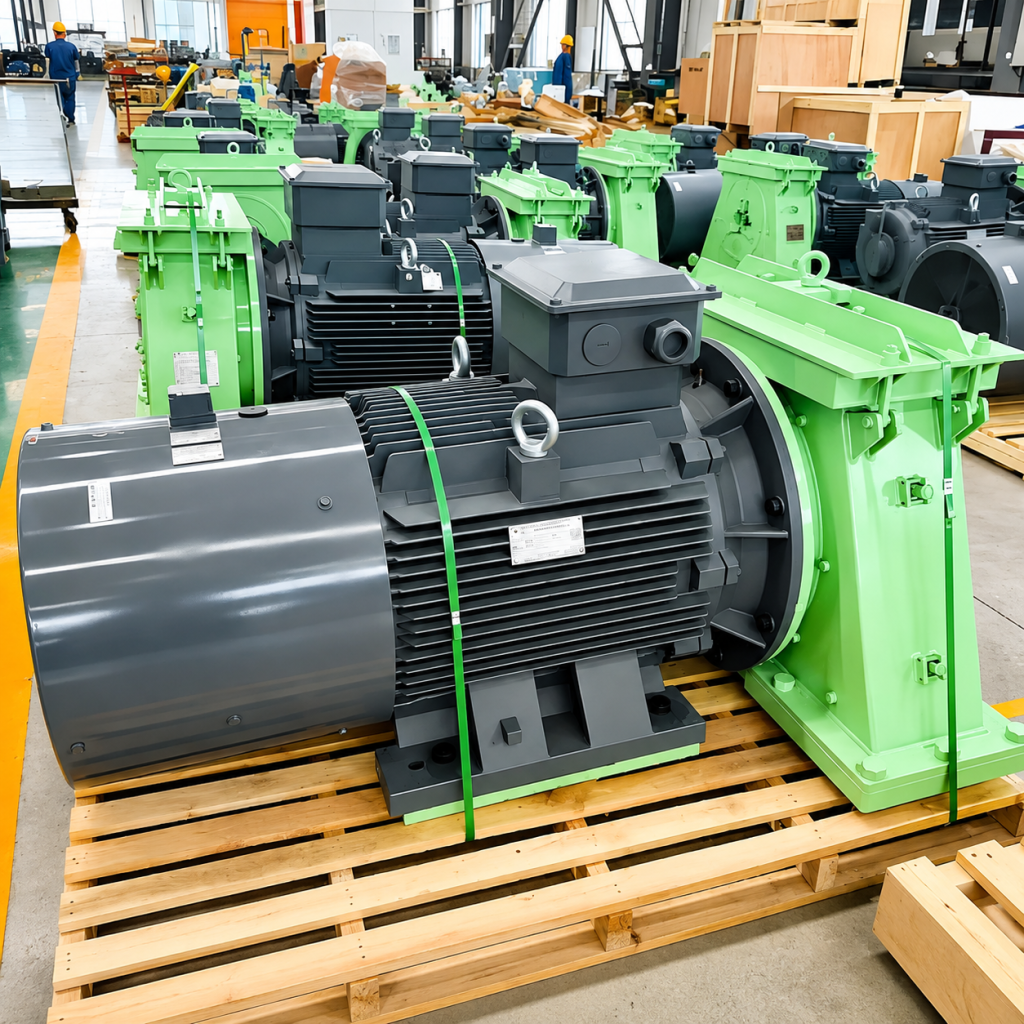
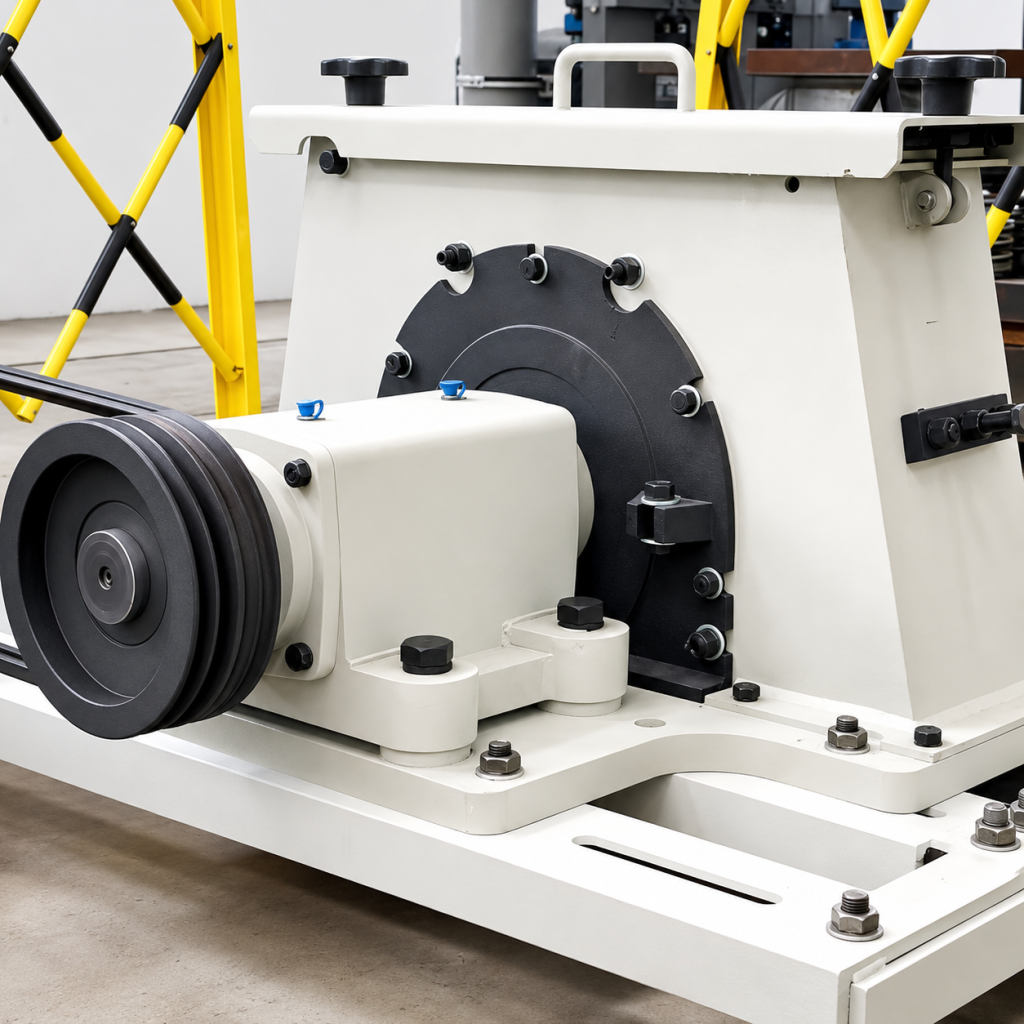
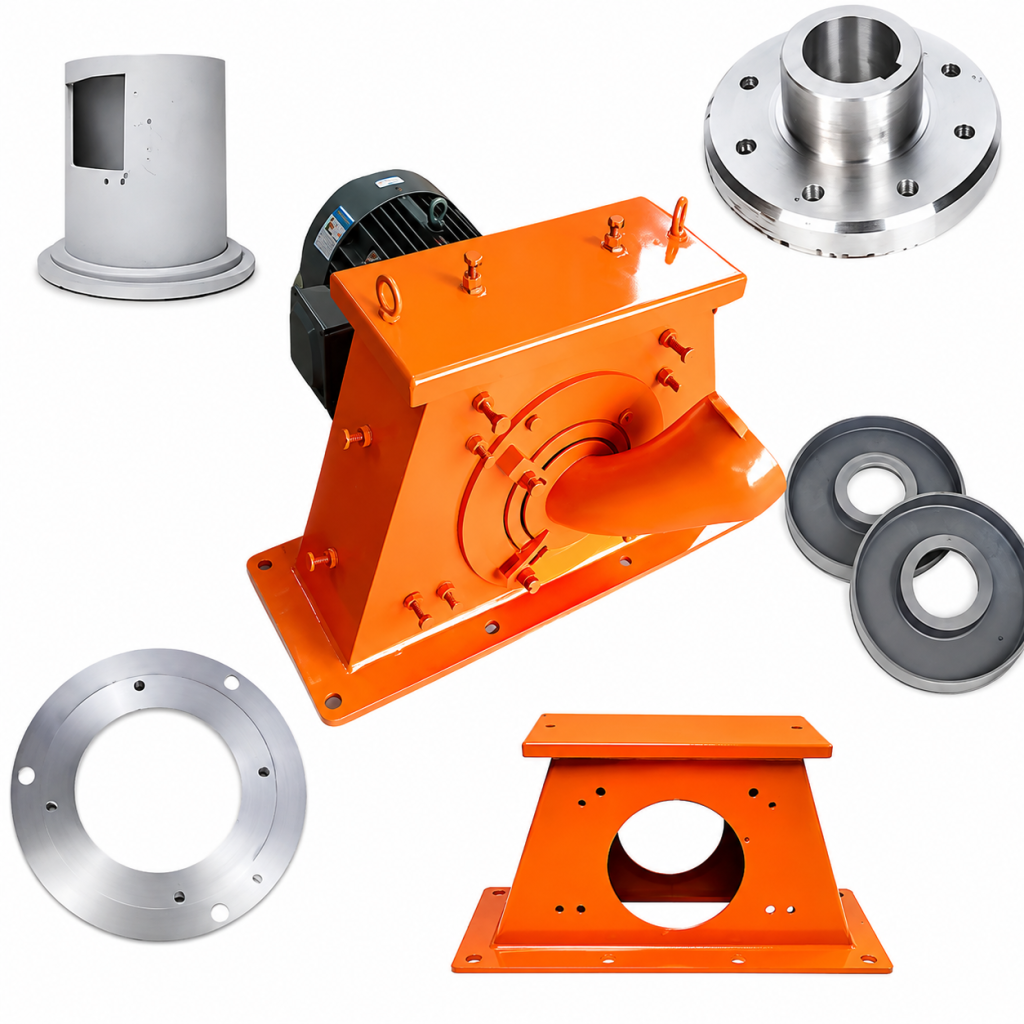
Core Power Unit for Shot Blasting Machines
The shot blasting wheel, also known as the blast wheel or blast head, is the core power unit of a shot blasting machine and the key actuator that accelerates abrasive media to high speed.
Its main structure includes the impeller, blades, distributor, control cage, main shaft, and related wear parts. Abrasive media flows by gravity from the hopper into the distributor. The distributor rotates at the same speed as the main shaft and carries the abrasive into rotation. Under centrifugal force, the abrasive is pressed against the inner side of the control cage and exits through the rectangular control-cage window.
The high-speed rotating blades then receive the abrasive and accelerate it outward along the blade path. Finally, the abrasive is projected in a fan-shaped pattern onto the workpiece surface at 60-80 m/s, achieving cleaning or surface strengthening. The performance of the shot blasting wheel directly determines the cleaning efficiency, energy consumption, and abrasive utilization of the entire machine.
Abrasive media flows by gravity from the feed hopper into the distributor. The distributor, rotating at the same speed as the main shaft, carries the abrasive into rotation. Under centrifugal force, the abrasive is pressed toward the inner side of the control cage. When it reaches the rectangular window of the control cage, it is thrown out through the window, received by the high-speed rotating blades, accelerated from the inside toward the outside, and finally projected in a fan-shaped pattern onto the workpiece surface at 60-80 m/s.
Adjusting the control-cage window position changes the blasting direction so the abrasive can be projected onto the workpiece as effectively as possible. Incorrect control-cage positioning not only reduces cleaning efficiency but also increases liner wear. The window size affects the abrasive diffusion angle: a larger window creates a larger fan angle and weaker cleaning concentration. When control-cage window wear exceeds 13 mm, it should be replaced promptly.
Process flow: abrasive enters hopper -> distributor captures and accelerates abrasive -> control cage guides and positions abrasive stream -> blades receive and further accelerate abrasive -> high-speed blasting onto workpiece.
High blasting efficiency: Impeller speed reaches 2900 rpm, abrasive outlet velocity is 60-80 m/s, and blasting capacity ranges from 60 to 460 kg/min for significantly improved cleaning efficiency.
No-dead-angle coverage: Three-dimensional dynamic simulation optimizes wheel angle and position, enabling uniform all-around surface coverage and reducing empty blasting.
Compact structure and easy maintenance: Cantilever centrifugal or single-disc structures are simple and reliable, and wear parts such as blades are convenient to replace.
Premium wear-resistant materials: Key components are made from high-chromium cast iron or alloy steel, offering excellent wear and corrosion resistance and longer service life.
Adjustable blasting parameters: Control-cage angle is adjustable and window size can be selected to flexibly match blasting direction and diffusion angle to workpiece shape and cleaning requirements.
Strong energy efficiency: Compared with compressed-air blasting, the wheel blast method does not require a compressed-air source, consumes less energy, delivers a larger media flow, and produces higher output per unit of energy.
High abrasive utilization: Optimized layout reduces empty blasting, improves abrasive utilization, and lowers operating cost.
Strong compatibility: The wheel can be matched with different shot blasting machine models and supports steel shot, cast steel grit, cut wire shot, and other abrasive media.
|
Parameter |
Unit |
Q034 |
Q035 |
Q036 |
Q037 |
|
Impeller diameter |
mm |
dia. 360 |
dia. 420 |
dia. 500 |
dia. 600 |
|
Number of blades |
pcs |
8 |
8 |
8 |
8 |
|
Impeller speed |
rpm |
2900 |
2900 |
2900 |
2900 |
|
Shot blasting capacity |
kg/min |
60-120 |
120-180 |
180-260 |
260-360 |
|
Shot velocity |
m/s |
60-78 |
60-78 |
60-78 |
60-78 |
|
Motor power |
kW |
5.5-11 |
11-15 |
15-22 |
22-30 |
|
Control cage window |
mm |
60 x 80 |
70 x 90 |
80 x 100 |
90 x 110 |
|
Distributor diameter |
mm |
dia. 80 |
dia. 90 |
dia. 100 |
dia. 115 |
|
Applicable shot diameter |
mm |
0.3-1.7 |
0.3-1.7 |
0.3-2.0 |
0.3-2.0 |
|
Liner thickness |
mm |
10-15 |
12-18 |
15-20 |
18-25 |
|
Feed inlet diameter |
mm |
dia. 40 |
dia. 45 |
dia. 50 |
dia. 60 |
|
Total weight |
kg |
approx. 80 |
approx. 150 |
approx. 250 |
approx. 400 |
Notes: 1. The parameters above are reference values for standard models and can be customized according to customer requirements. 2. Shot velocity refers to the linear speed at the outer edge of the blade. 3. It is recommended to keep 5%-10% of the total wear-part quantity as spare parts.
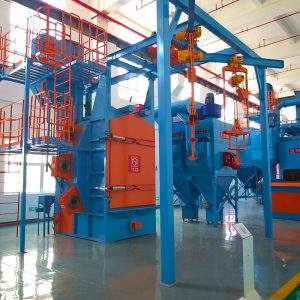
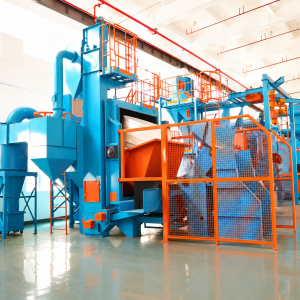
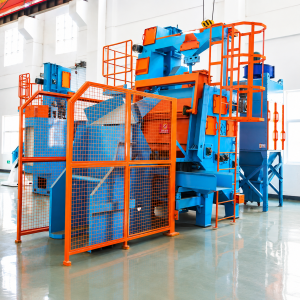
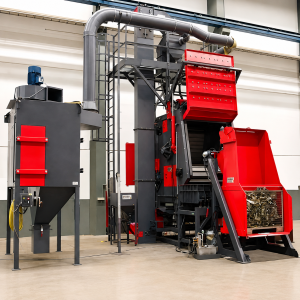
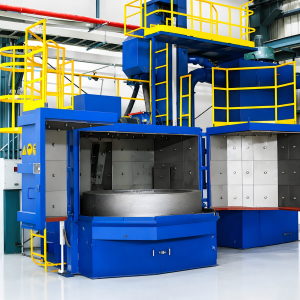
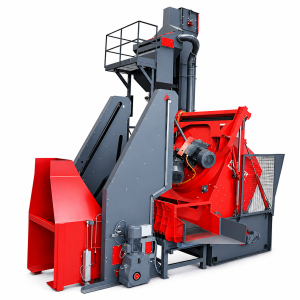
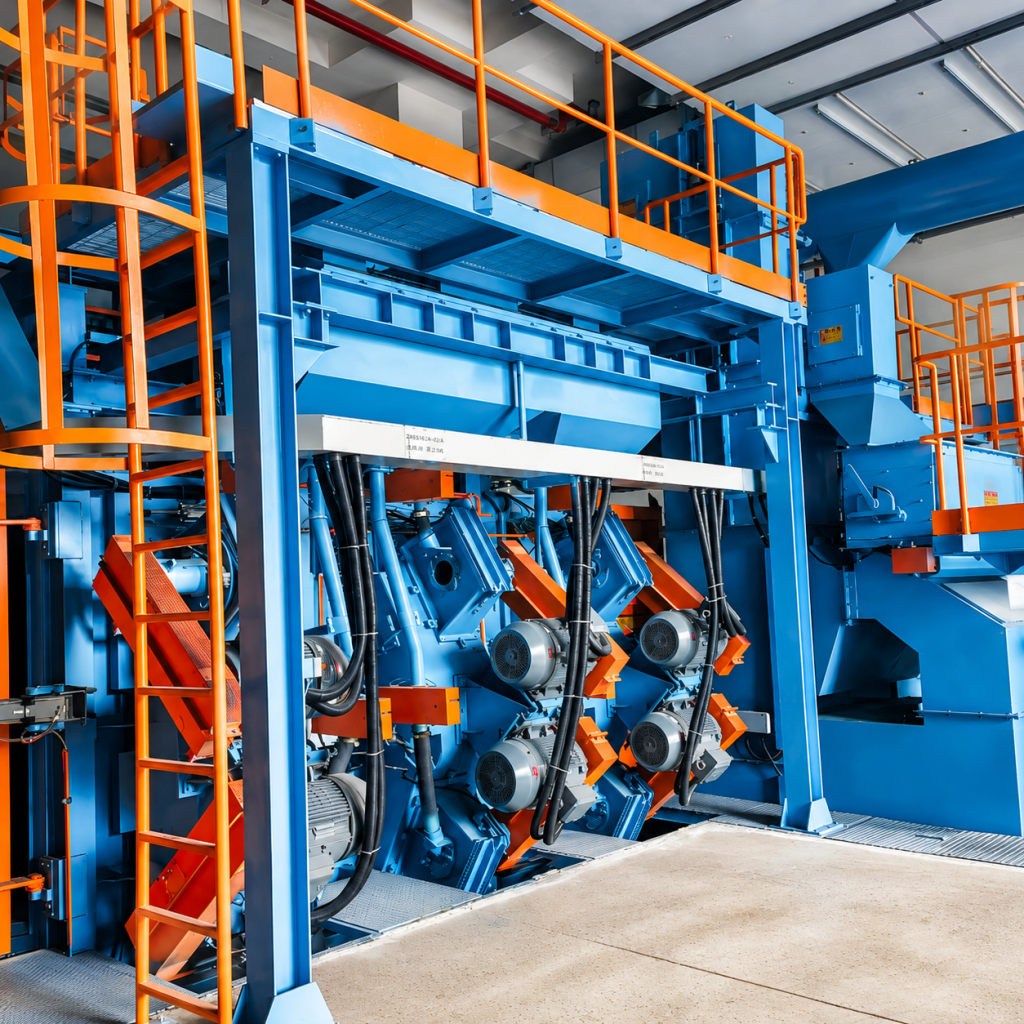
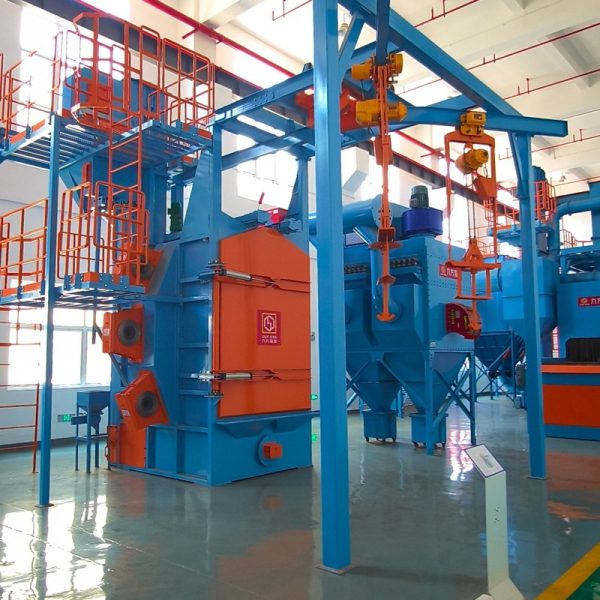
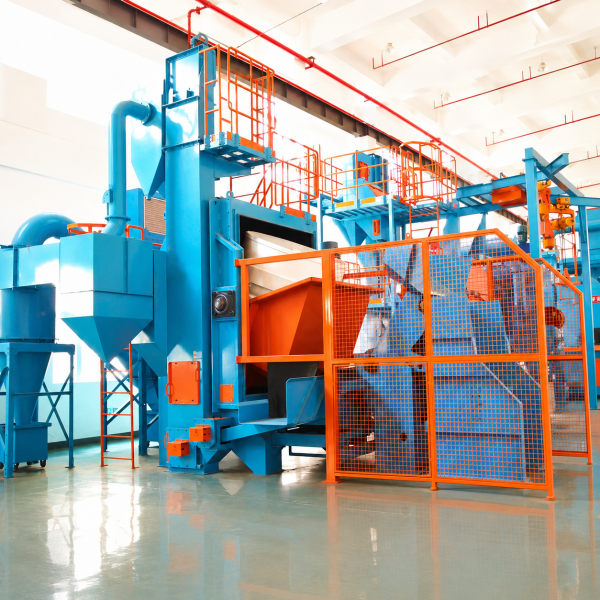
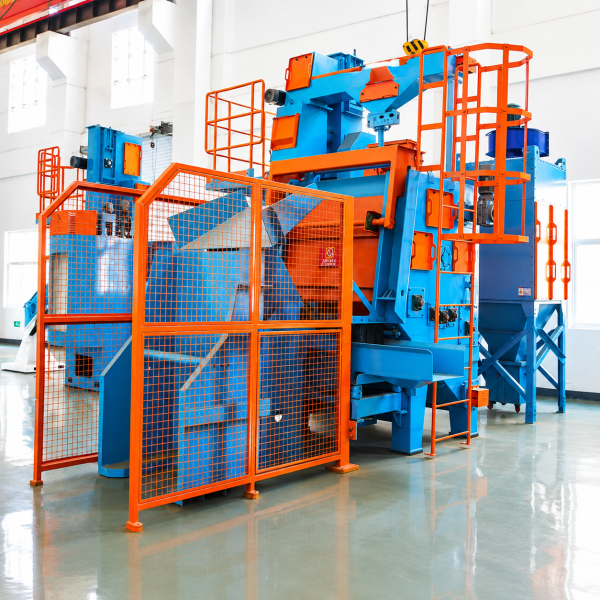
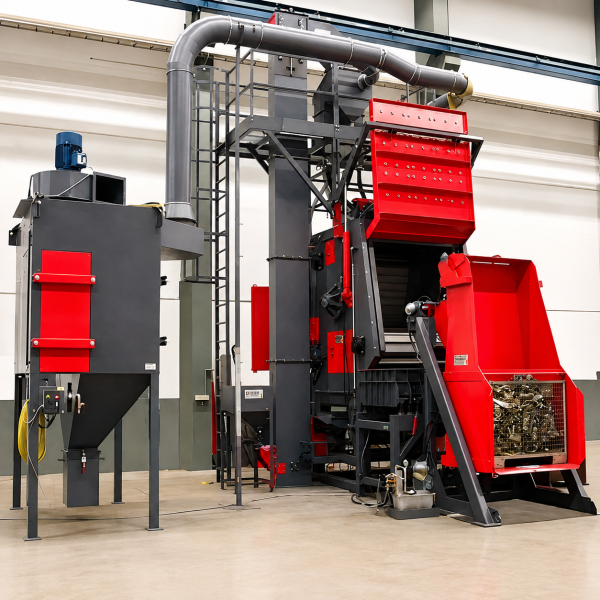
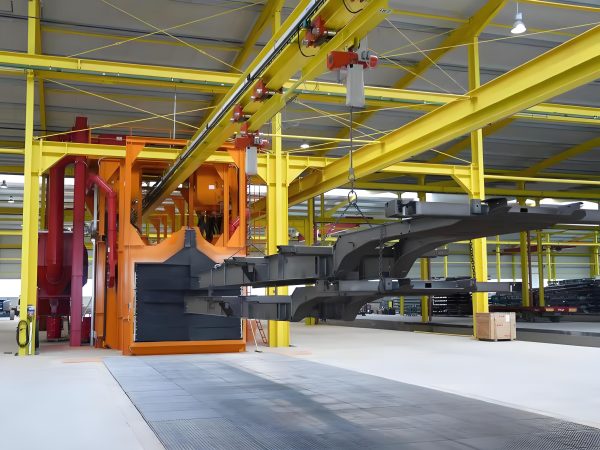
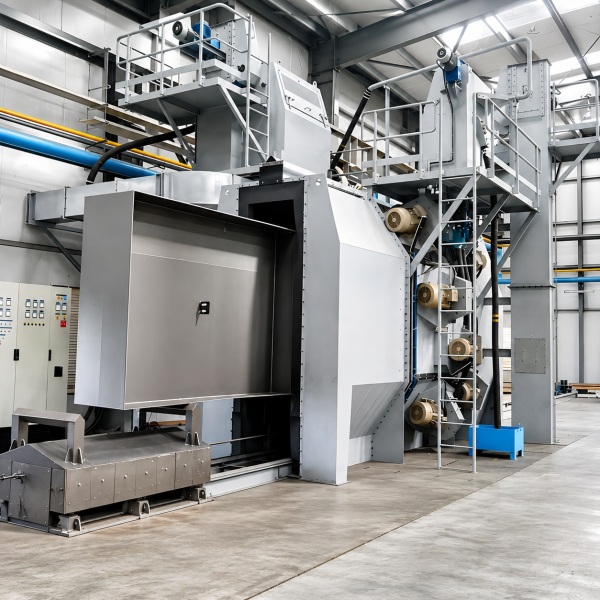
As the core component of shot blasting machines, the shot blasting wheel is widely used with many types of equipment, including overhead conveyor, tumble belt, through-feed, hook type, rotary table, trolley type, mesh belt, and road-surface shot blasting machines.
It can be used for rust removal, scale removal, sand removal, and surface strengthening of metal castings, forgings, welded parts, and heat-treated parts. It is also suitable for surface pretreatment in steel structures, bridges, vehicles, shipbuilding, petrochemical equipment, building materials, hardware, and related industries.
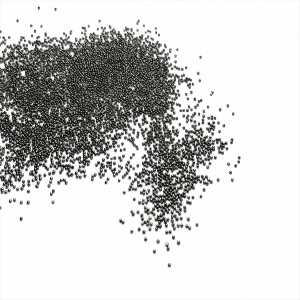
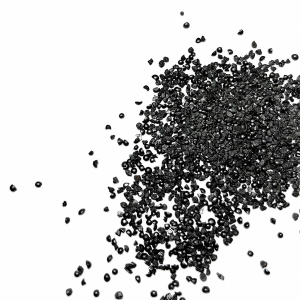
Common matched abrasive media include steel shot, cast steel grit, cut wire shot, stainless steel shot, and similar media.
The main wear parts include blades, control cage, distributor, and liners such as top plates, side plates, and end plates. Blades are the most frequently replaced wear parts and should be inspected or replaced after 500-800 operating hours. The control cage should be replaced when window wear exceeds 13 mm. The distributor should be inspected or replaced after 1000-1500 operating hours. A 5%-10% spare-parts inventory is recommended.
The control cage position determines the abrasive projection direction. To adjust it, loosen the fixing bolts, rotate the control cage until the window is aligned with the workpiece area, and then tighten the bolts. Incorrect blasting direction causes empty blasting, lower cleaning efficiency, and faster liner wear. The control-cage window should be inspected regularly and replaced when wear exceeds 13 mm.
Common blade types include flat straight blades, forward-curved blades, and backward-curved blades. Flat straight blades are simple and economical. Forward-curved blades offer stronger acceleration and higher blasting efficiency. Backward-curved blades provide better wear resistance. Selection should consider abrasive type, workpiece material, and cleaning requirements. High-chromium cast iron or alloy steel is commonly used to improve wear resistance.
The abrasive outlet velocity is generally 60-80 m/s, measured as the linear speed at the blade outer edge. Velocity can be increased by raising impeller speed through a frequency inverter or motor change, increasing impeller diameter, or selecting forward-curved blades for stronger acceleration. Excessive velocity accelerates blade and liner wear, so the setting should be balanced carefully.
Blasting capacity is positively related to motor power. As a general reference, each 1 kW of power corresponds to about 6-8 kg/min of blasting capacity. For example, an 11 kW motor corresponds to about 120-180 kg/min, while a 15 kW motor corresponds to about 180-260 kg/min. Actual performance is also affected by impeller diameter, blade quantity, abrasive type, and other factors. Manufacturer performance curves should be used for final selection.
Common causes include incorrect control-cage angle, severe blade wear, unstable abrasive supply, and misaligned workpiece position. To reduce empty blasting, regularly inspect and adjust the control-cage angle, replace worn blades promptly, keep the abrasive supply system stable, and ensure correct workpiece conveying position. Three-dimensional dynamic simulation can optimize wheel angle and position.
Selection mainly depends on workpiece type and size, required daily throughput, abrasive type, target cleaning grade, and matched equipment type. In general, determine the required blasting capacity first, select motor power based on that capacity, and then choose impeller diameter according to available installation space. We provide free selection consultation and solution design.
Quotation usually requires the matched equipment type and model, required blasting capacity in kg/min, abrasive type, workpiece type and dimensions, installation-space limitations, and power supply conditions. We provide free selection consultation and technical support.

English

Hindi

Indonesian

Russian

Spanish

Thai

Vietnamese