Global Surface Treatment Equipment & System Solutions — Since 2002

久昌机械
Get a Quote
Global Surface Treatment Equipment & System Solutions — Since 2002
久昌机械
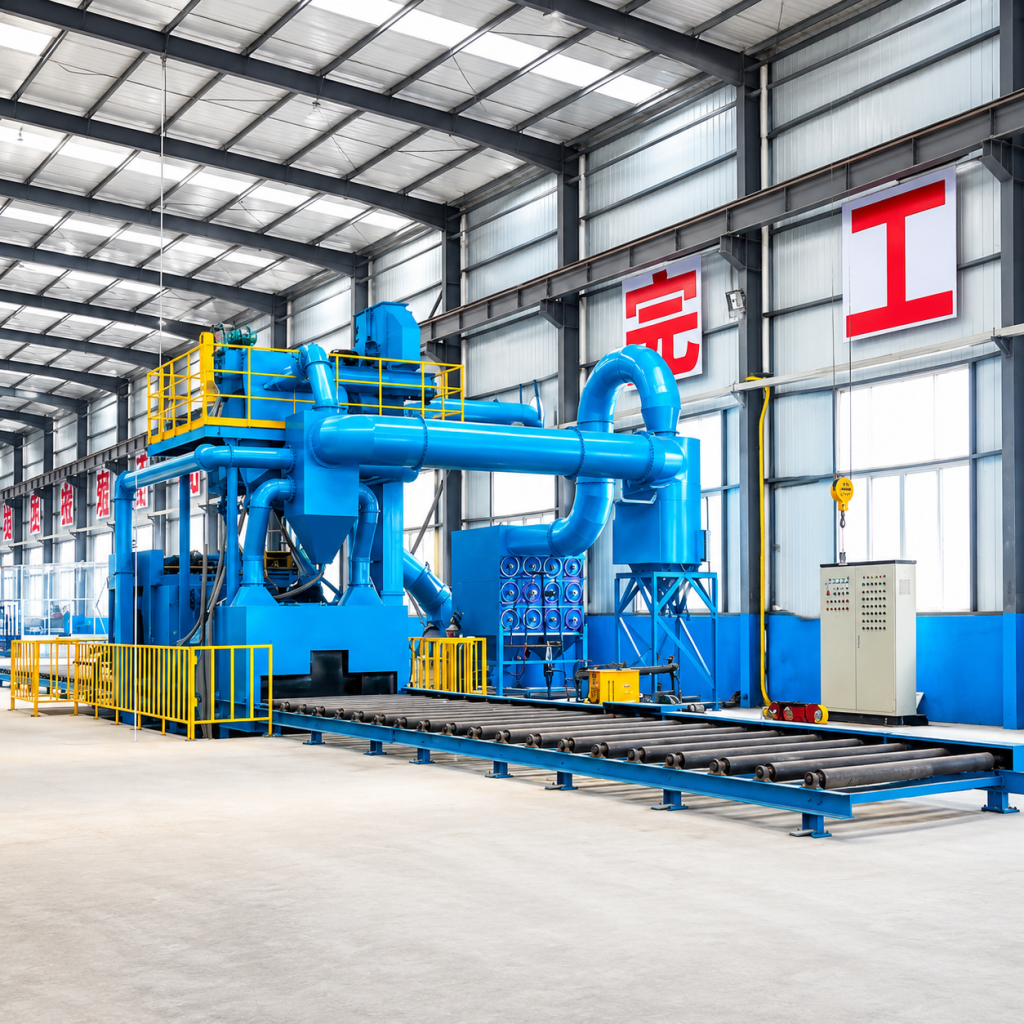
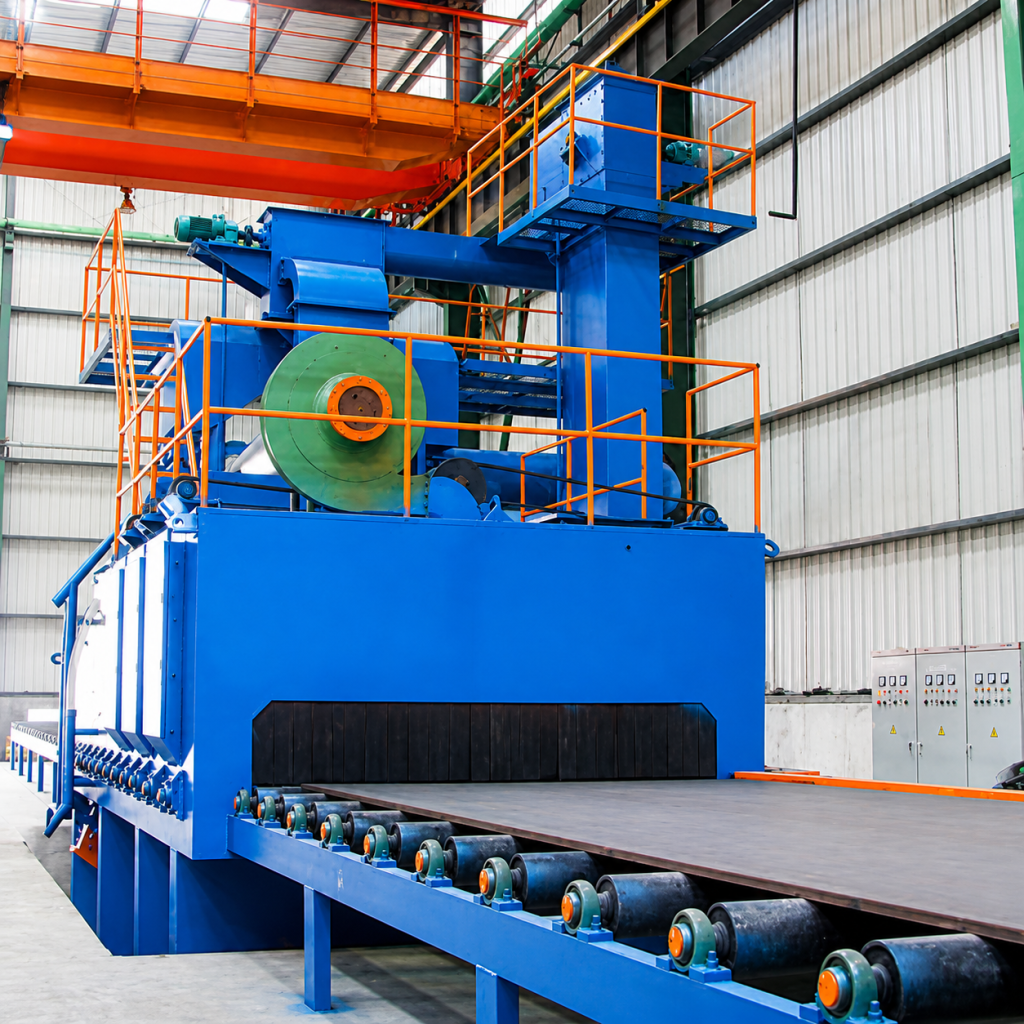
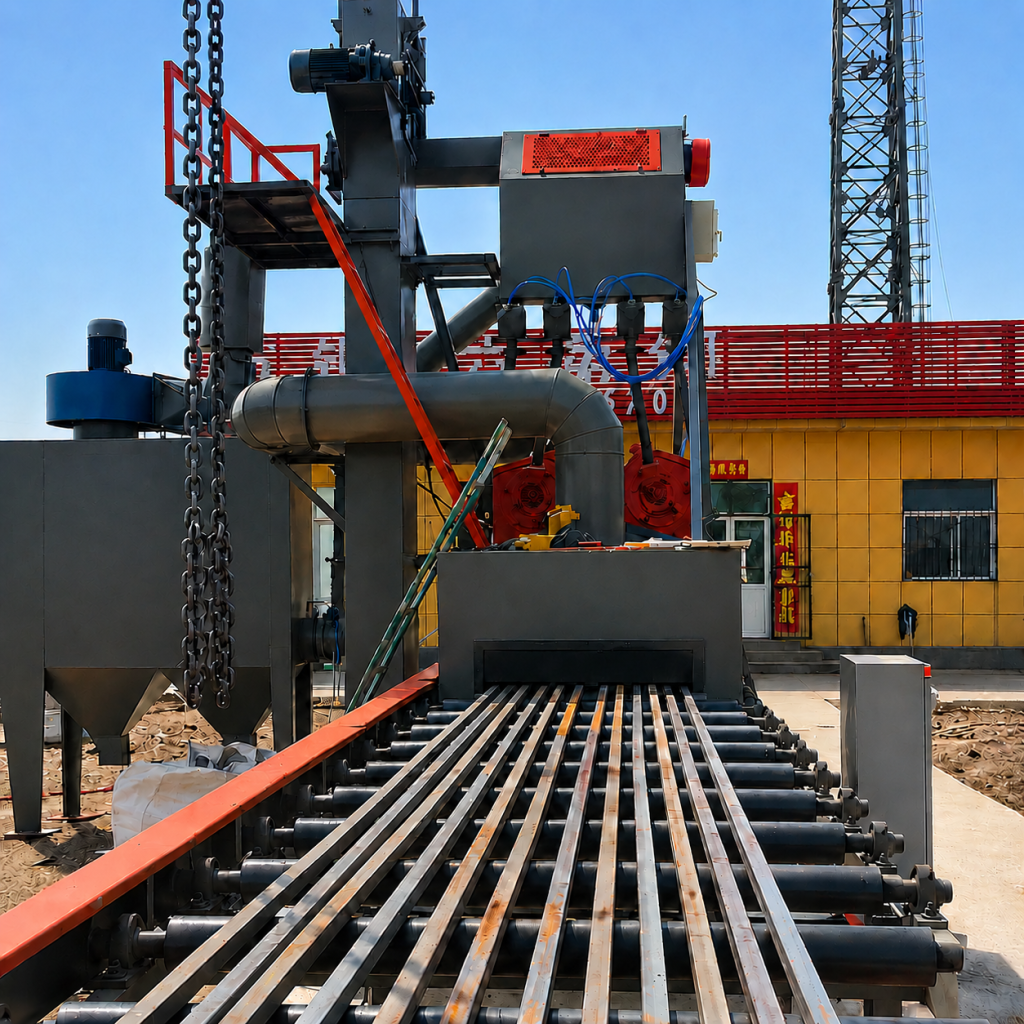
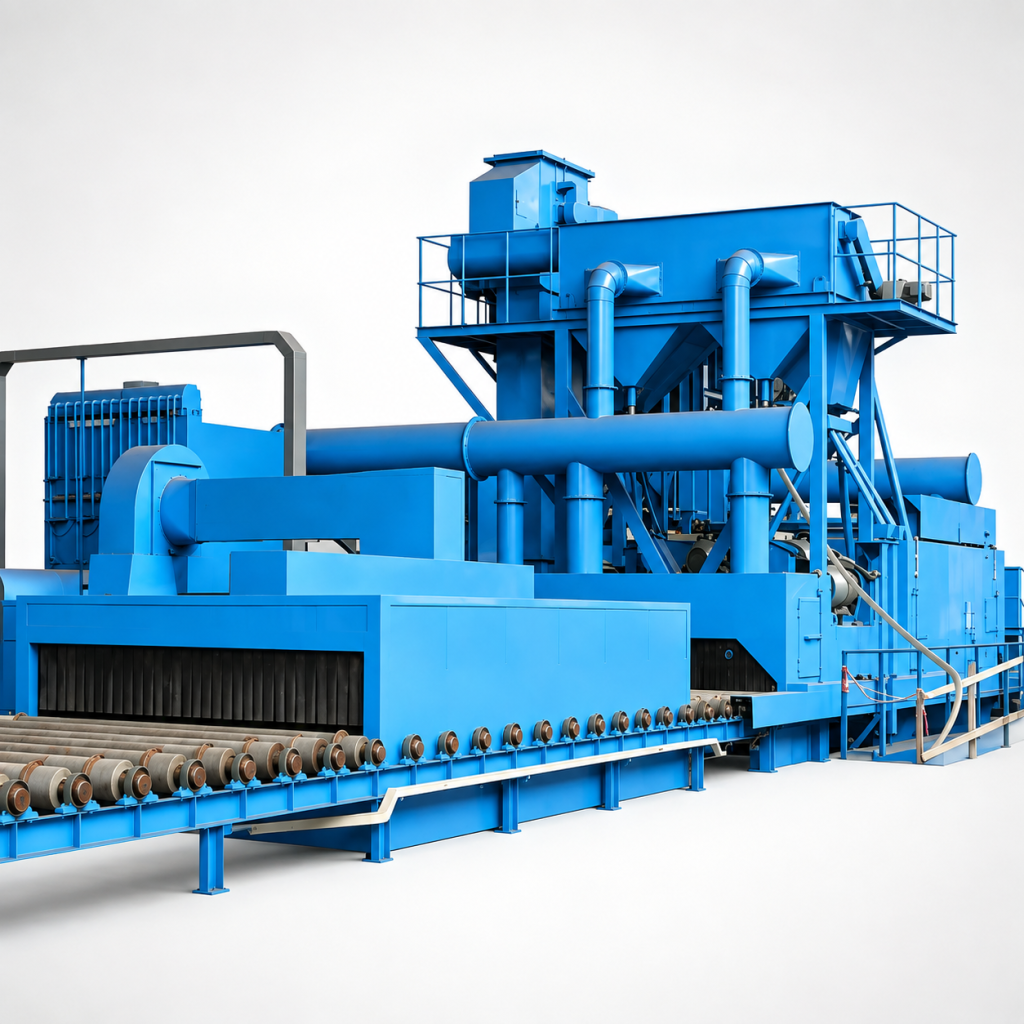
Fully Automated Surface Pretreatment Production Line for Steel Plates and Profiles · Q69 Series
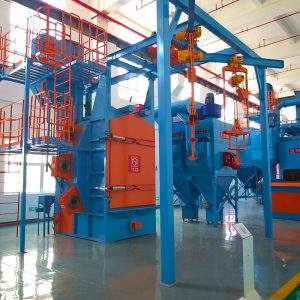
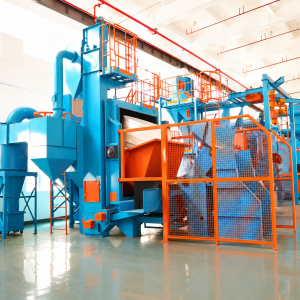
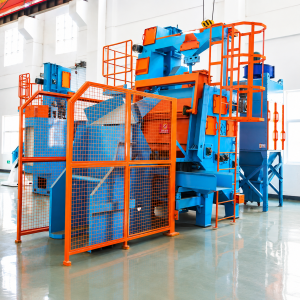
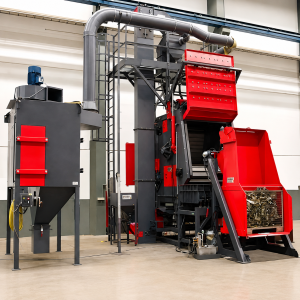
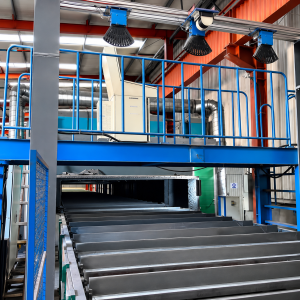
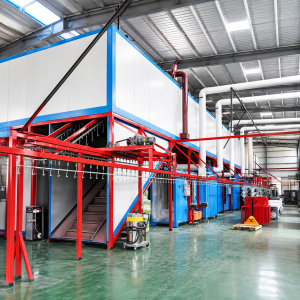
The Q69 series horizontal roller conveyor steel plate pretreatment line is a specialized complete set of equipment for continuous surface treatment of steel plates, profiles, and steel structural components. Workpieces are horizontally conveyed via a frequency-controlled roller conveyor and undergo preheating (optional) → shot blasting → shot blowing → automatic painting (optional) → drying (optional), achieving fully automated continuous operation. Multiple high-efficiency shot blasters propel high-speed shot from different directions, removing rust, scale, and roughening the entire surface of the workpiece. The treated surface cleanliness reaches Sa2.5 level (ISO 8501-1), and the roughness Rz is 25–60 μm, effectively improving coating adhesion.
This equipment is widely used in shipbuilding (PSPC standard), bridge engineering, construction machinery, locomotives and rolling stock, petrochemicals, steel structure construction, wind power equipment, and other industries. It is a standard supporting equipment for surface rust removal and primer coating before steel cutting.
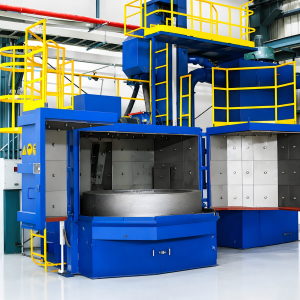
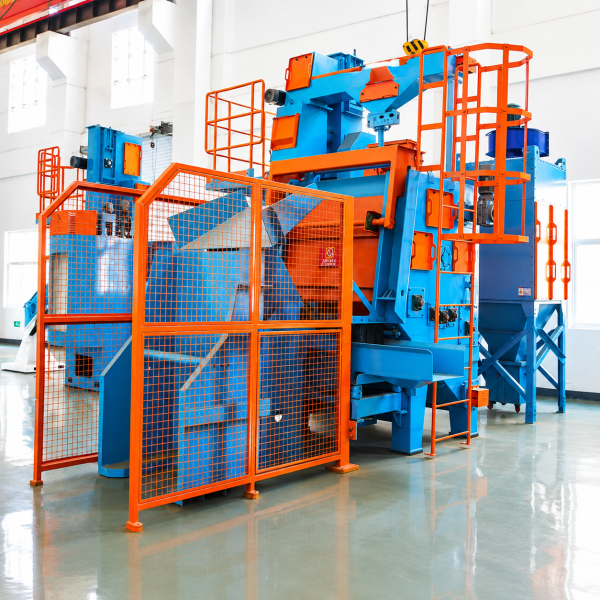
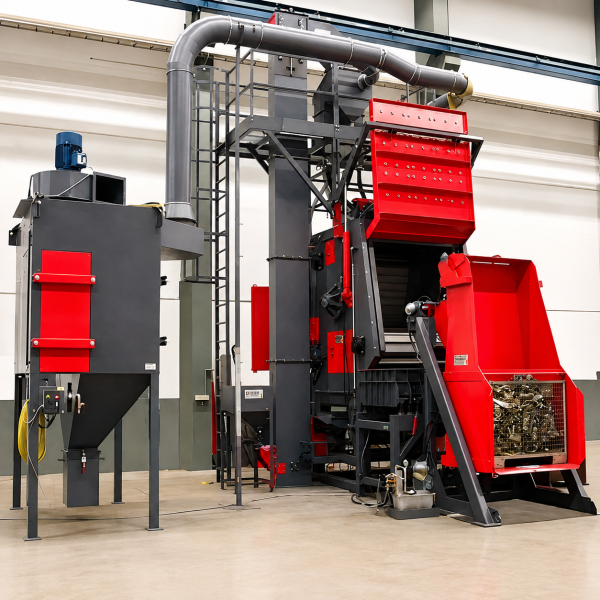
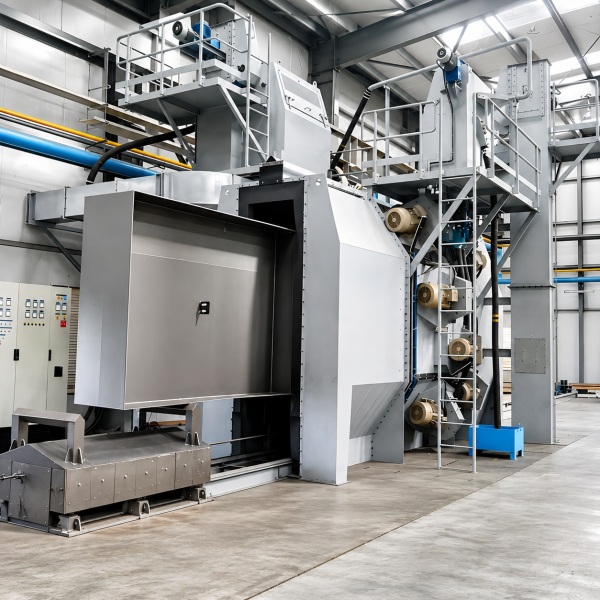
An adjustable-speed steel roller conveyor feeds steel plates/sections into a closed shot blasting chamber. Multiple high-efficiency shot blasters propel shot at high speed from above, below, and both sides at a three-dimensional simulated angle, continuously impacting the workpiece surface and rapidly removing oxide scale and rust. The shot is collected by a longitudinal/transverse screw conveyor at the bottom of the chamber and then conveyed to a bucket elevator, which lifts it to an air separator. After separation, the pure steel shot is recycled; dust and broken shot are filtered by a pulse filter cartridge/bag filter system before being discharged in compliance with standards.
A complete pretreatment line (optional configuration) includes:
Preheating section: Gas or electric heating to raise the surface temperature of the steel plate above the dew point to prevent rust re-emergence after shot blasting (essential for marine PSPC standards);
Shot blasting section: Multiple shot blasters arranged in a three-dimensional layout, with 3D simulation optimizing the blasting angle to ensure no blind spots;
Blow-off section: High-pressure air knives to remove residual shot, preventing it from being carried into subsequent painting stations;
Automatic painting section: High-pressure airless spraying or automatic spray guns to apply shop primer;
Drying section: Gas/electric heating for rapid surface drying of the paint film, facilitating subsequent stacking and storage.
Standard process flow:
Loading → Preheating (optional) → Shot blasting → Blow-off → Painting (optional) → Drying (optional) → Unloading
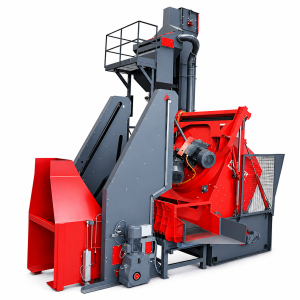
The shot blasting machine adopts a high-efficiency direct-drive structure, with a direct-drive motor and no belt drive. The impeller is 100% dynamically balanced (dynamic balance grade G6.3) to ensure vibration ≤4.5 mm/s at high speeds. The blades, shot distribution wheel, directional sleeve, and guard plates are all made of high-chromium wear-resistant cast iron, with a chemical composition conforming to ASTM A532 standard, a hardness ≥58 HRC, and a standard blade life of 2500–3000 hours.
Shot blasting machine: High-efficiency direct-drive type, three-dimensional arrangement on top, bottom, and sides, 3D simulation optimized for blasting angle, ensuring full surface coverage of the steel plate;
Conveyor rollers: Variable frequency speed-regulating steel rollers, roller surfaces covered with high-chromium wear-resistant sleeves, strong load-bearing capacity, and stable operation;
Preheating system (optional): Gas or electric heating, temperature control accuracy ±5℃, ensuring the steel plate surface temperature is at least 3℃ above the dew point (PSPC standard);
Painting system (optional): High-pressure airless spraying or automatic reciprocating spray gun, uniform paint film thickness, compatible with epoxy zinc-rich primer, inorganic zinc silicate primer, etc.;
Drying system (optional): Gas/electric heated hot air circulation, temperature control accuracy ±10℃, drying temperature adjustable from 40–80℃;
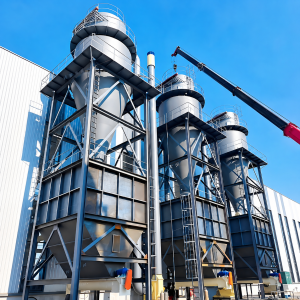
Shot material circulation system: Bottom spiral recovery + bucket elevator + air separation, separation efficiency ≥99%;
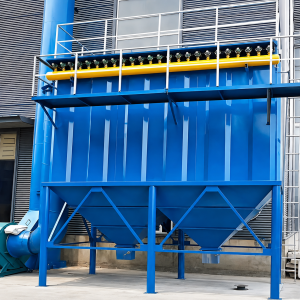
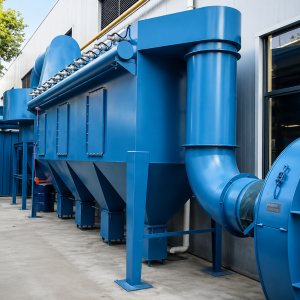
Dust removal system: Standard pulse cartridge dust collector (bag filter optional), dust emissions can be controlled to <5 mg/m³;
Electrical system: PLC Control (Siemens/Mitsubishi optional), touch screen operation, supports automatic/manual modes, automatic start and stop of shot blasting machine with grating sensor, and optional remote monitoring module.
Installation Site Requirements:
Q6910 type (single-machine shot blasting): Approximately 18 m × 5 m footprint, factory height ≥ 7 m;
Q6930 type (complete pretreatment line): Approximately 60 m × 8 m footprint (including preheating, shot blasting, painting, and drying), factory height ≥ 8 m;
Q6950 type (complete pretreatment line): Approximately 80 m × 10 m footprint, factory height ≥ 9 m;
Space must be reserved for steel plate stacking and handling, recommended ≥ 5 m on each side;
Concrete foundation flatness ≤ 3 mm/m, roller conveyor foundation requires pre-embedded anchor bolts and tracks;
Power supply: 380V/3Ph/50Hz (or customized according to customer's power grid), requiring a total equipment power + 20% margin;
Air source: 0.5–0.7 MPa compressed air (for painting and purging). Maintenance Points
Daily: Check the operating sound, vibration, and current of the shot blasting machine; check the smoothness of the roller conveyor operation; check the sensitivity of the grating sensor;
Weekly: Check the wear of vulnerable parts (blades, guard plates) and replenish grease; check the tension of the elevator belt/chain;
Every 3–6 months: Conduct a comprehensive inspection of the wear of the chamber guard plates and roller conveyor wear sleeves; check the position of the shot blasting machine directional sleeve window; check the pressure difference of the dust collector filter cartridge/bag;
Blade Replacement Standard: Replace blades when wear >5 mm or cracks appear to ensure that the blasting speed does not decrease;
Roller Conveyor Inspection: Check the roller bearing clearance and wear sleeve thickness; replace promptly if wear exceeds 50% to prevent scratches or misalignment of the steel plates.
Jiuchang Machinery possesses independent import and export rights, offering various trade terms such as FOB/CIF/DDP, and supporting letters of credit, wire transfers, and milestone payments. Overseas installation services include a three-tiered model: remote technical supervision, on-site installation guidance, and turnkey projects. Global 24/7 response: over 80% of common faults can be resolved within 4 hours via remote diagnostics; local engineers arrive on-site within 48 hours. Commonly used spare parts from core market warehouses are delivered within 48 hours.
| Machine Model | Unit | Q698 | Q6915 | Q6920 | Q6925 | Q6930 | Q6940 |
| Effective Cleaning Width | mm | 1200 | 1500 | 2000 | 2500 | 3000 | 4000 |
| Chamber Inlet Size | mm | 1200×400 | 1200×400 | 2000×400 | 2500×800 | 3000×800 | 4000×400 |
| Workpiece Cleaning Length | mm | 1200-6000 | 1200-12000 | 1200-12000 | 3000-12000 | 2400-12000 | 4500-18000 |
| Roller Conveyor Speed (Variable Speed) | m/min | 0.5-4 | 0.5-5 | 0.5-4 | 0.5-4.5 | 0.5-4 | 2-8 |
| Steel Plate Cleaning Thickness | mm | 3-60 | 1.5-60 | 3-60 | 3-60 | 3-110 | 4.5-100 |
| Applicable Section Specifications | ≤20#<≤16# | ≤20#<≤16# | ≤20#<≤16# | 60×8-300×1000 | 60×8-300×1000 | 60×8-300×1000 | |
| Shot Blasting Capacity | kg/min | 4×250 | 4×250 | 6×250 | 6×250 | 6×360 | 8×360 |
| Initial Shot Loading | kg | 3000 | 4000 | 4500 | 4500 | 8000 | 11000 |
| Roller Brush (Scraper) Adjustment Width | mm | 200 | 350 | 450 | 600 | 850 | 900 |
| Air Volume | m³/h | 17560 | 19000 | 19550 | 27758 | 28850 | 38000 |
| Overall Dimensions | mm | 12180×4250×7095 | 15200×5370×6797 | 30650×6850×7500 | 31200×8070×7758 | 44042×6385×11117 | 45000×7830×11400 |
| Depth Below Ground | mm | 1616 | 2257 | 2800 | 2353 | 2800 | 4317 |
| Total Power (Excluding Dust Collector) | kW | 78.3 | 113.5 | 156.6 | 224.55 | 204.5 | 293.6 |
| Total Machine Weight | t | 20.4 | 33 | 41 | 53.2 | 71.8 | 75 |
Suitable for surface rust removal and pretreatment of various steel materials, including steel plates, H-beams, I-beams, angle steel, channel steel, steel pipes, and steel structural components. Widely used in shipbuilding (meeting PSPC painting standards), bridge engineering, construction machinery, automobile manufacturing, locomotives and rolling stock, petrochemicals, steel structure construction, and wind power equipment industries.
Typical applications: Pretreatment of marine steel plate sections, rust removal of bridge steel box girder panels, pretreatment of construction machinery structural components before painting, and pretreatment of wind turbine tower steel plates.
Unsuitable scenarios: Curved or irregularly shaped parts (recommended to use hook-type Q37 or trolley-type Q76); extra-thick plates (>200 mm, requiring customized heavy-duty roller conveyors and high-power shot blasting machines).
It is mainly used for surface rust removal, oxide scale removal, and coating of shop primer on steel plates, profiles, and steel structural components before processing. It is a standard supporting equipment for steel pretreatment in industries such as shipbuilding (PSPC standard), bridges, construction machinery, and steel structures. It can effectively improve the adhesion of subsequent coatings and extend the corrosion resistance of workpieces.
The last two digits in the model number represent the maximum width of workpieces that the equipment can handle (unit: decimeters). For example, Q6910 can handle a maximum width of 1000 mm, Q6920 can handle 2000 mm, and Q6950 can handle 5000 mm. The larger the model number, the more shot blasters there are, the stronger the processing capacity, and the higher the installed power. The standard plate thickness range for all models is 6–60 mm; extra-thick plates can be customized.
Yes. The Q69 series can be flexibly configured according to user needs. Users can purchase the shot blasting unit separately or choose a complete pretreatment production line integrating preheating, shot blasting, painting, and drying. Customers with existing painting or drying equipment can purchase only the shot blasting machine; interface dimensions will be matched to site requirements.
Processing efficiency is calculated from line width, conveyor speed, plate thickness, initial rust grade, and the required surface-cleanliness level. As a reference, a standard line for medium steel plate is commonly configured for 1-5 m/min; the actual m²/h output is line width × conveyor speed × 60. We confirm the shot-blast-wheel power and speed after reviewing your plate sizes and target Sa grade.
Under standard operating conditions, surface cleanliness can reach Sa2.5 (ISO 8501-1), with a roughness Rz of 25–60 μm. To meet marine PSPC standards or higher (Sa3), this can be achieved by increasing the number of shot blasters, reducing the conveyor speed, or using finer abrasives.
After the foundation, utilities, and equipment access are ready, a standard roller-conveyor pretreatment line normally requires about 20-35 working days for mechanical installation, electrical wiring, dry commissioning, and process acceptance. Large lines, site welding, dust-collection ductwork, or overseas commissioning may extend the schedule; we provide a phased installation plan before shipment.
Main vulnerable parts include shot blaster blades, shot distribution wheels, directional sleeves, chamber guard plates, and roller wear sleeves.
High-chromium cast iron blades: Standard operating conditions 2500–3000 h;
Chamber liner: 3000–8000 h;
• Roller wear sleeve: 4000–6000 h.
We provide a standardized spare parts list and global spare parts warehousing and distribution services.
Yes. Equipment width, length, number of shot blasters, conveyor speed, preheating/painting/drying configuration, etc., can all be customized according to the user's workpiece specifications, production volume requirements, and site conditions. We provide free operating condition diagnostics, production line simulation, and solution design services.
Please provide: Maximum workpiece dimensions (width × thickness × length), workpiece type (steel plate/section steel/structural component), daily or annual production capacity requirements, target cleaning grade (Sa2.5/Sa3), whether preheating/painting/drying is required, plant dimensions and power supply conditions, and local environmental emission standards (please specify if PSPC compliance is required). We offer personalized technical solutions and formal quotes.

English

Hindi

Indonesian

Russian

Spanish

Thai

Vietnamese