Global Surface Treatment Equipment & System Solutions — Since 2002

久昌机械
Get a Quote
Global Surface Treatment Equipment & System Solutions — Since 2002
久昌机械
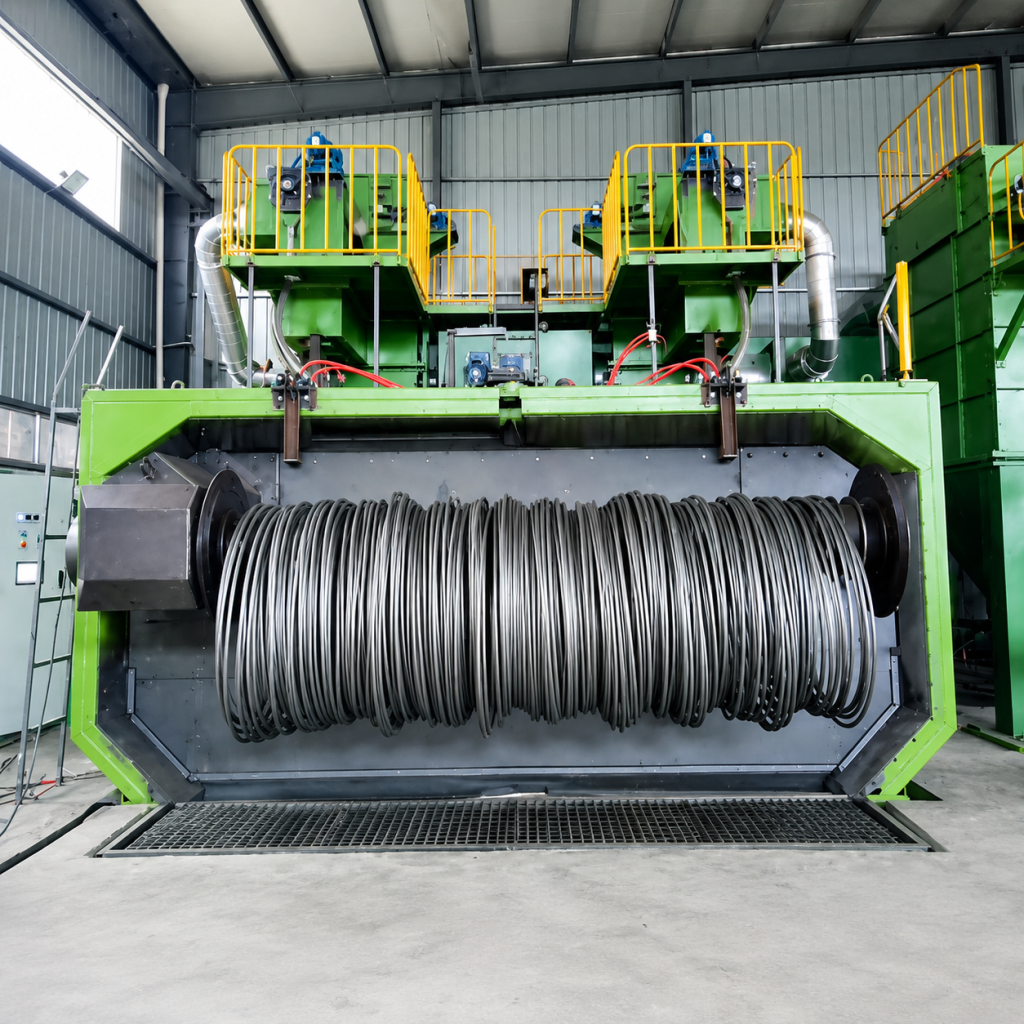
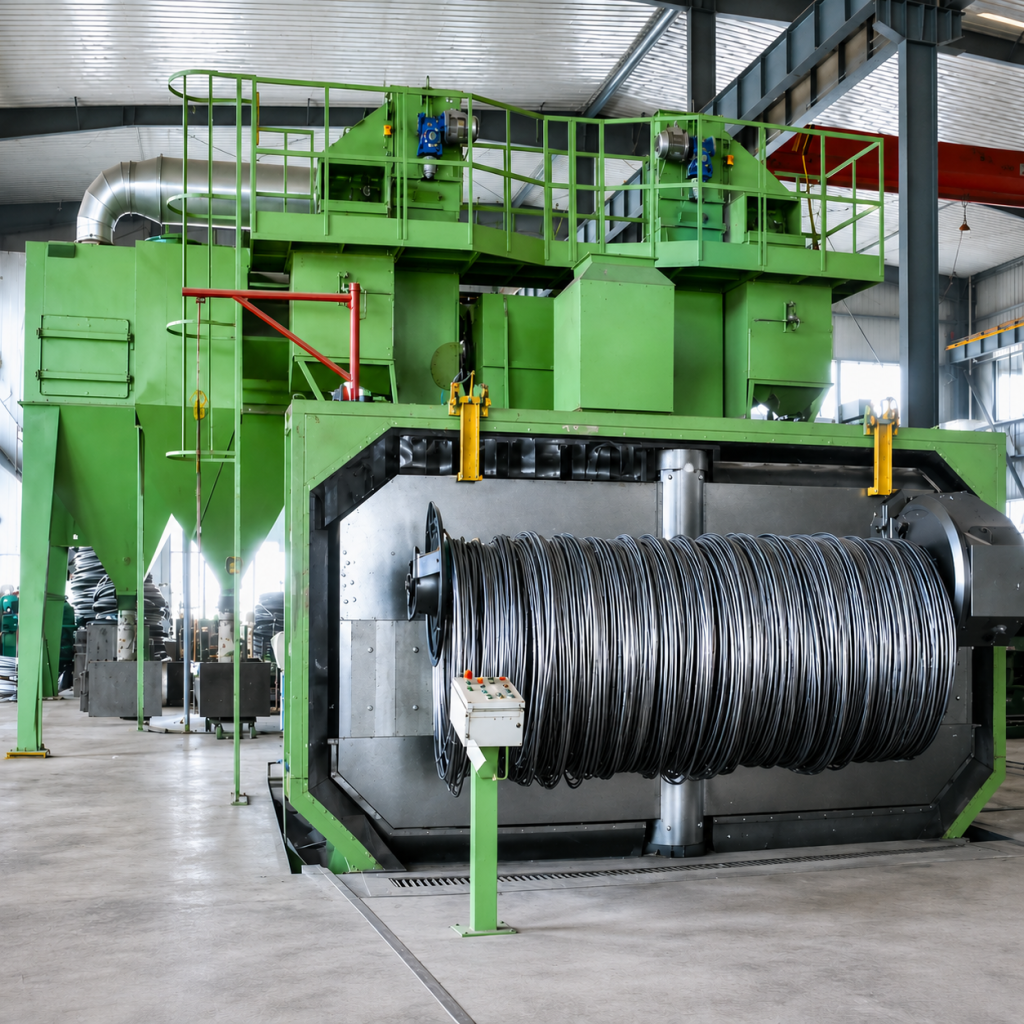
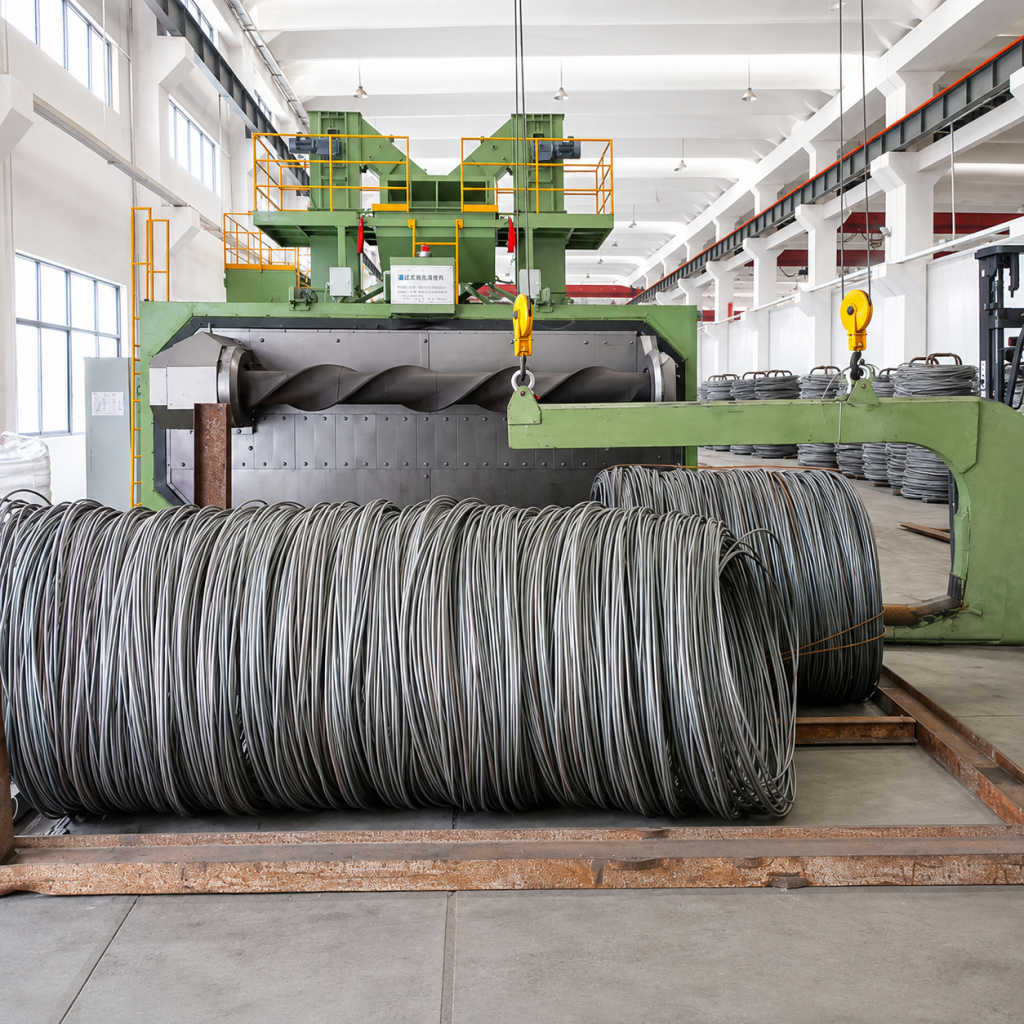
Specialized equipment for overall surface cleaning of coiled wire
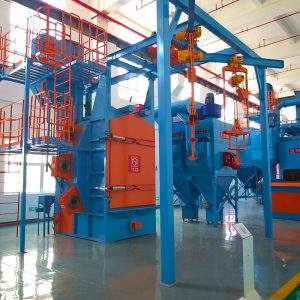
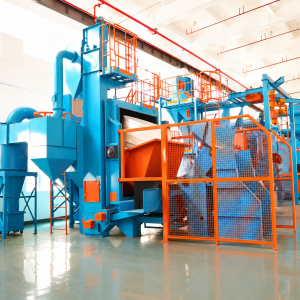
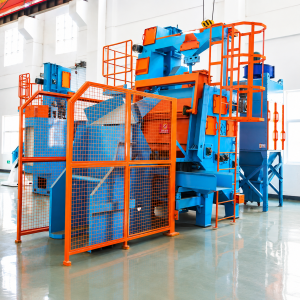
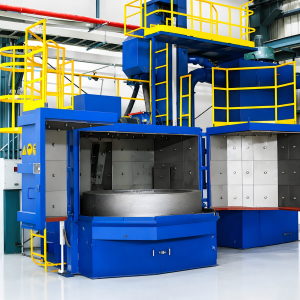
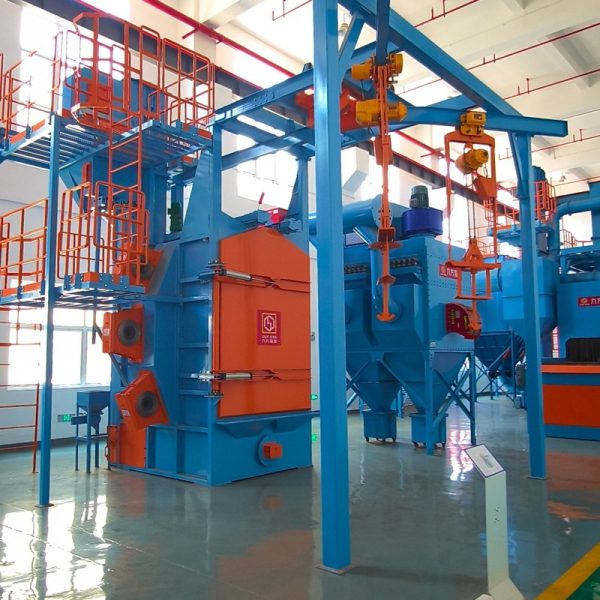
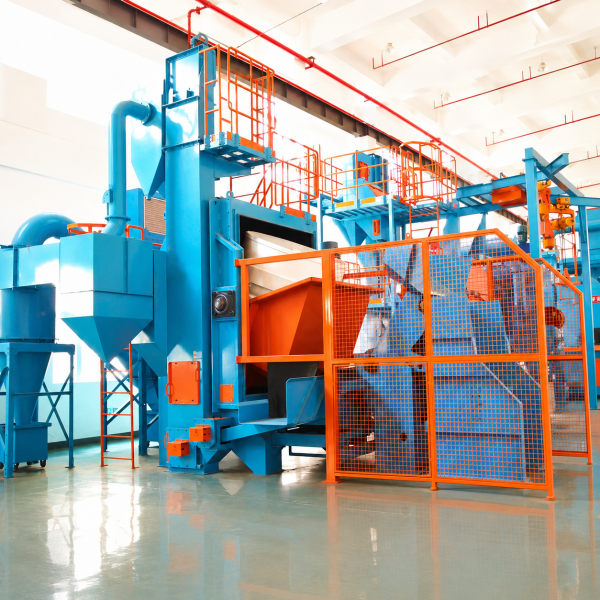
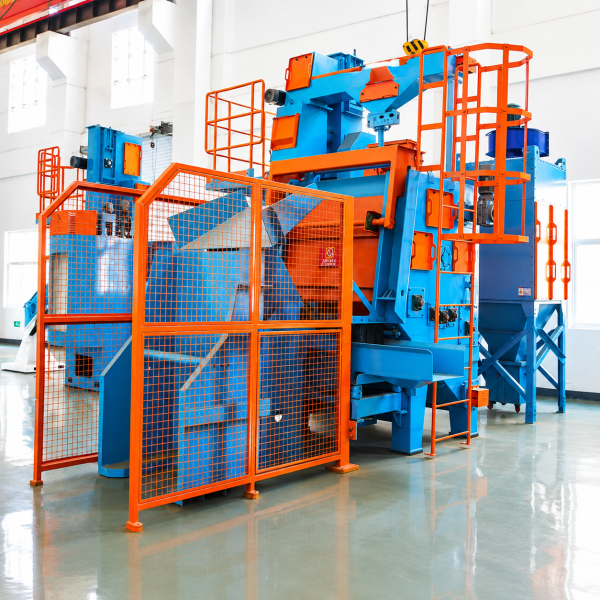
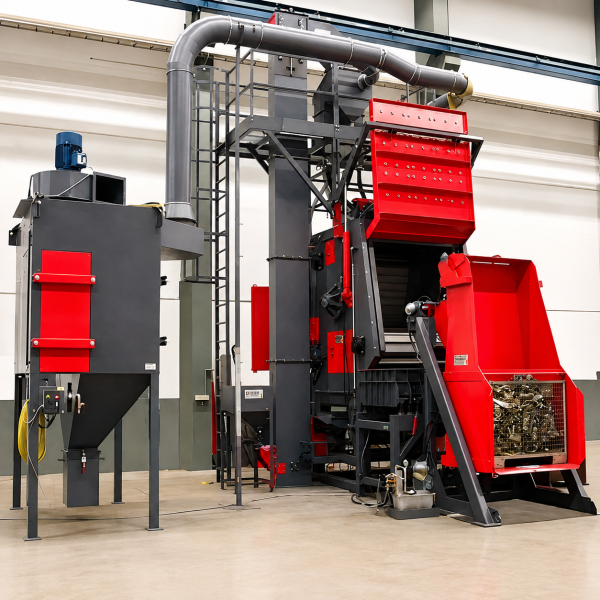
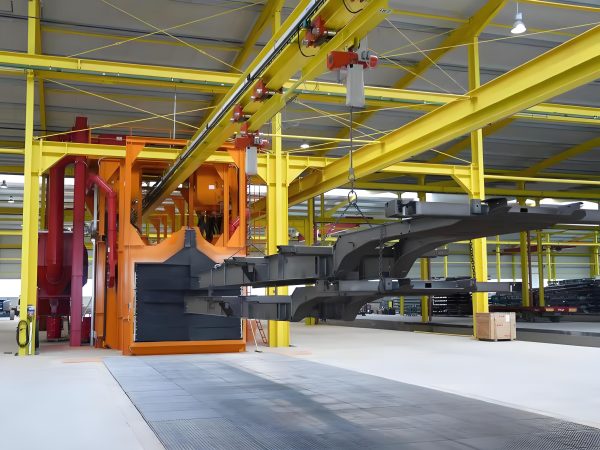
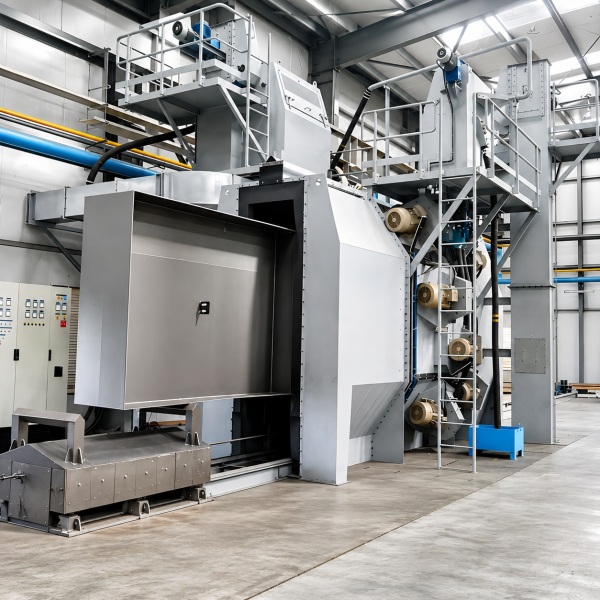
The QGP series shot blasting machine for whole-coil steel bars is a specialized piece of equipment for surface cleaning of wire rods such as coiled steel bars, wire rods, and steel strands in a whole-coil state. Unlike the straight-through type, the whole-coil type eliminates the need to straighten or unwind the wire. The workpiece is mounted in a whole-coil state on a dedicated workstation frame or hanger and introduced into the enclosed shot blasting chamber via a conveyor system. Multiple shot blasters deliver high-speed shot to all surfaces of the whole-coil wire from multiple angles. The shot impacts the inner and outer surfaces through the gaps in the coil, achieving rust removal, oxide scale removal, and surface strengthening. The equipment is often equipped with a dual-station alternating system, allowing one coil to be cleaned while another is being loaded and unloaded, shortening auxiliary time. After processing, the workpiece remains in a coiled state, facilitating subsequent storage, transportation, and direct use. Surface cleanliness can reach Sa2.5 grade (ISO 8501-1), and surface roughness Rz 25–60 μm.
The entire reel of wire is mounted on a dedicated workstation rack or hanger. The workstation rack is then introduced into the shot blasting chamber via a conveyor system (chain or roller drive). After the chamber door is closed, multiple shot blasters propel shot at high speed from the perimeter and top. The shot impacts the inner and outer surfaces of the wire through the gaps in the reel, causing oxide scale and rust to fall off. The shot is then collected by a scraper recovery system at the bottom of the chamber, a screw conveyor, and a bucket elevator before entering an air separator for separation and recycling. Dust and broken shot are filtered by a pulse jet filter/bag filter system before being discharged in compliance with standards. In a dual-workstation configuration, one reel is processed inside the cleaning chamber, while the other is loaded and unloaded outside, alternating in a cycle.
Process Flow: Loading reel onto rack → Workstation rack enters chamber → Shot blasting → Workstation rack exits chamber → Shot cleaning by blowing → Unloading reel → Next reel
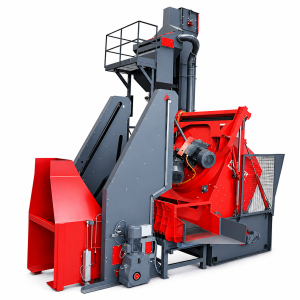
The shot blasting machine adopts a high-efficiency direct-drive structure, with a direct-drive motor and no belt transmission. The impeller is 100% dynamically balanced (dynamic balance grade G6.3) to ensure vibration ≤4.5 mm/s at high speeds. The blades, shot distribution wheel, directional sleeve, and guard plates are all made of high-chromium wear-resistant cast iron, with a chemical composition conforming to ASTM A532 standard and a hardness ≥58 HRC.
Shot blasting machine: High-efficiency direct-drive type, with an angle optimized by 3D simulation to ensure effective shot entry into the coil gap;
Workstation frame/hanger: Welded steel structure with high-chromium wear-resistant protective plates on the surface. The contact points with the coil have rounded transitions to prevent scratching the wire;
Conveying system: Chain or roller drive, frequency conversion speed regulation, smooth operation, positioning accuracy ±10 mm;
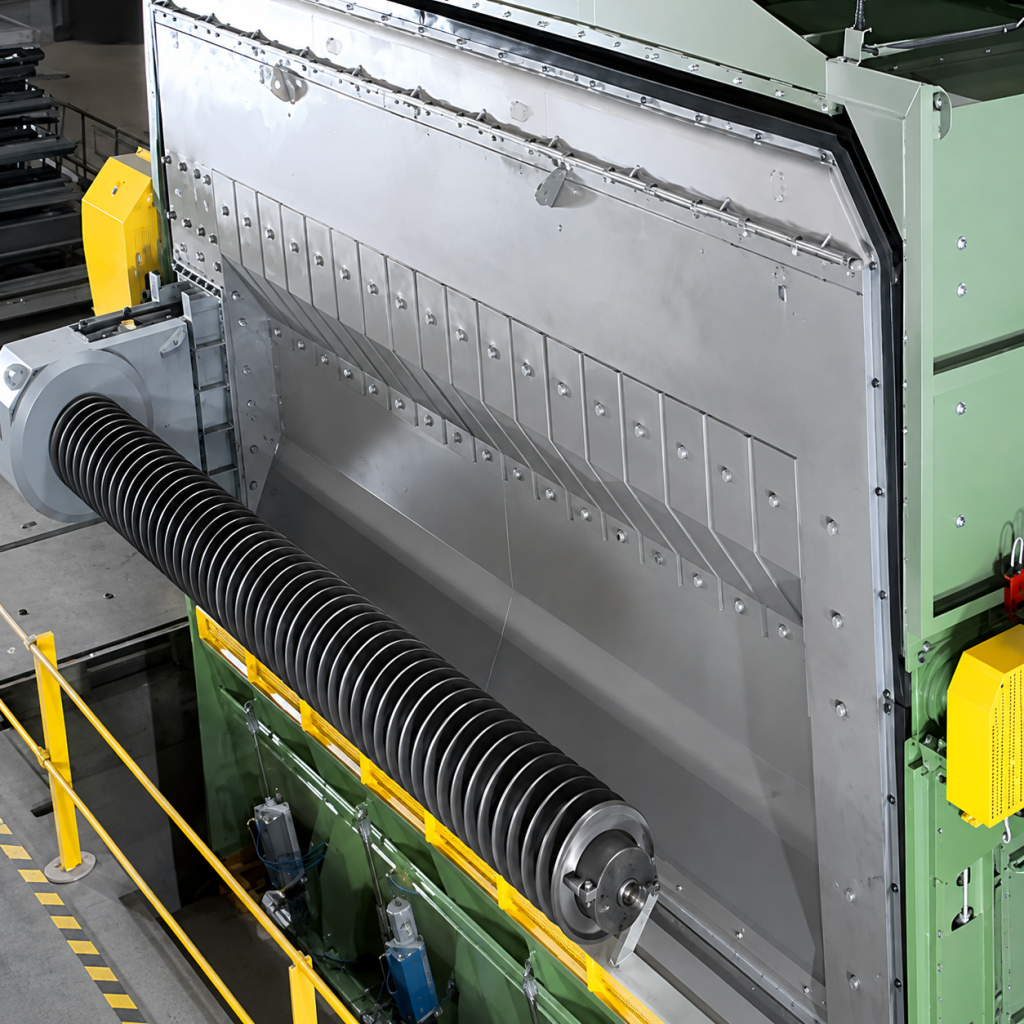
Chamber lining: High-chromium cast iron/65Mn rolled lining, modular quick-connect design, thickness 10–15 mm, quick replacement;
Shot circulation system: Bottom scraper recovery + screw conveyor + bucket elevator + air separation, separation efficiency ≥99%;
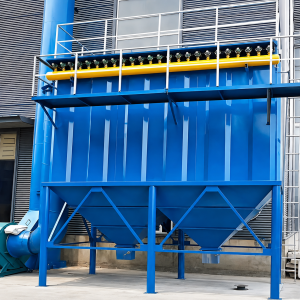
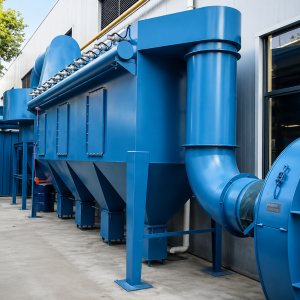
Dust removal system: Standard pulse jet cartridge dust collector (bag filter optional), dust emissions controllable to <5 mg/m³;
Electrical system: PLC control (Siemens/Mitsubishi optional), touch screen operation, supports automatic/manual modes, remote monitoring module optional.
Installation Site Requirements:
QGP500 model: Approximately 10 m × 5 m footprint (including main unit, pallet storage area, and maintenance access); factory height ≥ 6 m;
QGP2500 model: Approximately 15 m × 7 m footprint; factory height ≥ 7 m;
A loading/unloading area for pallets (forklift or overhead crane operating space) must be reserved, recommended ≥ 3 m on each side;
Concrete foundation flatness ≤ 3 mm/m; anchor bolts must be pre-embedded in the main unit area;
Power supply: 380V/3Ph/50Hz (or customized according to customer's power grid); a 20% margin in total equipment power is required.
Maintenance Points
Daily: Check the operating sound, vibration, and current of the shot blasting machine; check the smooth operation of the workstation conveyor system; check the integrity of the sealing curtain.
Weekly: Check the wear of vulnerable parts (blades, guard plates) and replenish lubricating grease; check the tension of the elevator belt/chain.
Every 3–6 months: Conduct a comprehensive inspection of the chamber guard plates and the thickness of the workstation wear-resistant plates; check the position of the shot blasting machine's directional sleeve window; check the pressure difference of the dust collector filter cartridge/bag.
Blade Replacement Standard: Replace blades when wear >5 mm or cracks appear to ensure that the blasting speed does not decrease.
Workstation Inspection: Check for deformation and wear of the hangers/brackets to ensure accurate coil positioning and prevent coil displacement during shot blasting.
Jiuchang Machinery possesses independent import and export rights, offering various trade terms such as FOB/CIF/DDP, and supporting letters of credit, wire transfers, and milestone payments. Overseas installation provides a three-tiered service model: remote technical supervision, on-site installation guidance, and turnkey projects. Global 24/7 response: Over 80% of common faults can be resolved within 4 hours through remote diagnostics; local engineers arrive on-site within 48 hours. Commonly used spare parts from core market warehouses are delivered within 48 hours.
|
Parameter Items |
Unit |
QGP500 |
QGP1000 |
QGP1500 |
QGP2500 |
|
Maximum Disk Weight |
kg |
500 |
1000 |
1500 |
2500 |
|
Applicable Disc Diameter Range (Outer Diameter) |
mm |
Φ600–800 |
Φ800–1000 |
Φ1000–1300 |
Φ1200–1500 |
|
Processing Beats (Reference) |
min/盘 |
5–8 |
6–10 |
8–12 |
10–15 |
|
Reference Daily Output (Single Shift 8 Hours) |
t |
20–30 |
30–50 |
40–60 |
50–80 |
|
Number Of Workstations |
indivual |
1–2 |
2 |
2 |
2 |
|
Number Of Shot Blasting Machines |
tower |
4 |
6 |
6–8 |
8 |
|
Power Of A Single Shot Blasting Machine |
kW |
11 |
11 |
15 |
15 |
|
Total Power Of Shot Blasting Machine |
kW |
44 |
66 |
90–120 |
120 |
|
Bullet Diameter |
mm |
Φ0.8–1.2 |
Φ0.8–1.5 |
Φ0.8–1.5 |
Φ1.0–2.0 |
|
Elevator Lifting Capacity |
t/h |
20 |
30 |
40 |
50 |
|
Separator Separation Volume |
t/h |
20 |
30 |
40 |
50 |
|
Dust Removal Air Volume |
m³/h |
6000 |
10000 |
15000 |
20000 |
|
Total Installed Power (Excluding Dust Removal) |
kW |
≈48 |
≈72 |
≈96 |
≈120 |
|
Total Installed Power (Including Dust Removal) |
kW |
≈55 |
≈85 |
≈115 |
≈145 |
Suitable for cleaning the entire surface of coiled steel bars, wire rods, steel strands, prestressed steel wire, and other wire products. Widely used in industries such as construction steel reinforcement, bridge cables, steel strand manufacturing, metallurgy, and pipe manufacturing. Particularly suitable for rust removal and cleaning of HRB400 and HRB500 grade coiled steel bars for construction, as well as scenarios requiring coiled operation for storage, transportation, and direct use.
Processable Specifications:
Coil weight range: 300–2500 kg (depending on model)
Coil diameter range: Φ600–1500 mm (outer diameter)
Wire diameter: Φ5–20 mm (usually complementary to the straight-through coiled steel type: the entire coil type is suitable for Φ5–16 mm fine wire coils)
Not suitable for: Wires coated with oil film or with adhesive substances (pre-cleaning required); loose, uncoiled wires.
Coil processing directly processes the coil in its round state, eliminating the need for unwinding and rewinding, saving equipment and space. It maintains the round shape after processing, making it suitable for scenarios with moderate surface quality requirements or where coils need to be stored and transported in their round state. Straight-through processing requires straightening the wire before passing it through, resulting in faster processing speed and higher efficiency, but it requires a matching unwinding and rewinding unit. It is suitable for high-volume continuous production and scenarios with high surface quality requirements. The two types can complement each other: coil processing is used for coil pre-processing, while straight-through processing is used for finishing lines.
It can process coiled steel bars and wire rods weighing 300–2500 kg and with an outer diameter of Φ600–1500 mm. By adjusting the specifications of the workstation frame and the spacing of the guide rollers, it can accommodate different coil diameters and weights. For extra-large coils exceeding this range, a dedicated workstation frame and a larger cleaning chamber can be customized.
The processing cycle (shot blasting + blowing) depends on the coil weight, degree of corrosion, and cleaning requirements, generally 5–15 minutes per coil. Taking QGP1000 (1 ton coil weight, 8 minutes/coil) as an example, with alternating double-station operation and an 8-hour shift, the daily output is approximately 30–50 tons; a two-shift system (16 hours) can reach 60–100 tons. Actual output is related to shift start time, worker skill level, and equipment utilization.
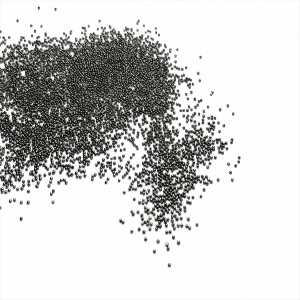
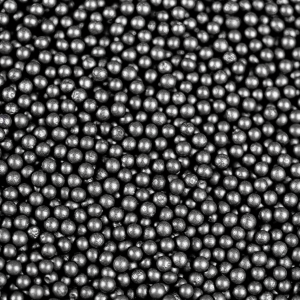
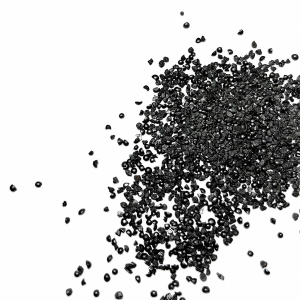
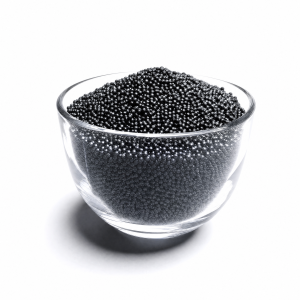
For whole-coil processing, fine steel shot or shredded shot with a diameter of Φ0.8–1.5 mm is generally used, requiring good flowability to enter the coil gap.
Carbon steel wire: Cast steel shot/shredded shot, hardness HRC 40–50;
Stainless steel wire: Stainless steel shot, avoiding iron ion contamination;
The shot diameter should be less than 1/3 of the wire gap to ensure effective entry into the inner layer of the coil. The shot can be configured according to the wire diameter, material, and cleaning grade requirements.
Under standard operating conditions, the surface cleanliness can reach Sa2.5 (ISO 8501-1), with a roughness Rz of 25–60 μm. Because the inner layer of wire is obscured by the outer layer during whole-coil processing, the cleanliness of the inner layer may be slightly lower than the outer layer. If both the inner and outer layers of the whole coil need to reach Sa2.5, this can be achieved by extending the processing time or increasing the number of shot blasters. For whole-coil rust removal of construction rebar, Sa2.0–Sa2.5 is usually sufficient to meet the subsequent concrete bond strength requirements.
Main vulnerable parts include shot blaster blades, shot distribution wheel, directional sleeve, chamber guard plate, workstation frame wear-resistant plate, and sealing curtain.
High-chromium cast iron blades: Standard operating conditions 2500–3000 h;
Chamber liner: 3000–8000 h (depending on abrasive impact angle);
Workstation frame wear-resistant plate: 4000–6000 h;
Sealing curtain: 6–12 months.
We provide a standardized spare parts list and global spare parts warehousing and distribution services.
Yes. The cleaning chamber size, workstation frame specifications, number and arrangement angle of shot blasters, conveyor system speed, etc., can all be customized according to the user's pan weight, pan diameter, and production requirements. We provide free operating condition diagnostics, 3D simulation, and solution design services.
Please provide: wire type and diameter range, pan weight and diameter range, daily or annual production capacity requirements, target cleaning grade (Sa2.5/Sa3), plant size and power supply conditions, whether auxiliary loading/unloading equipment is required, and local environmental emission standards. We offer personalized technical solutions and formal quotes.

English

Hindi

Indonesian

Russian

Spanish

Thai

Vietnamese