Global Surface Treatment Equipment & System Solutions — Since 2002

久昌机械
Get a Quote
Global Surface Treatment Equipment & System Solutions — Since 2002
久昌机械
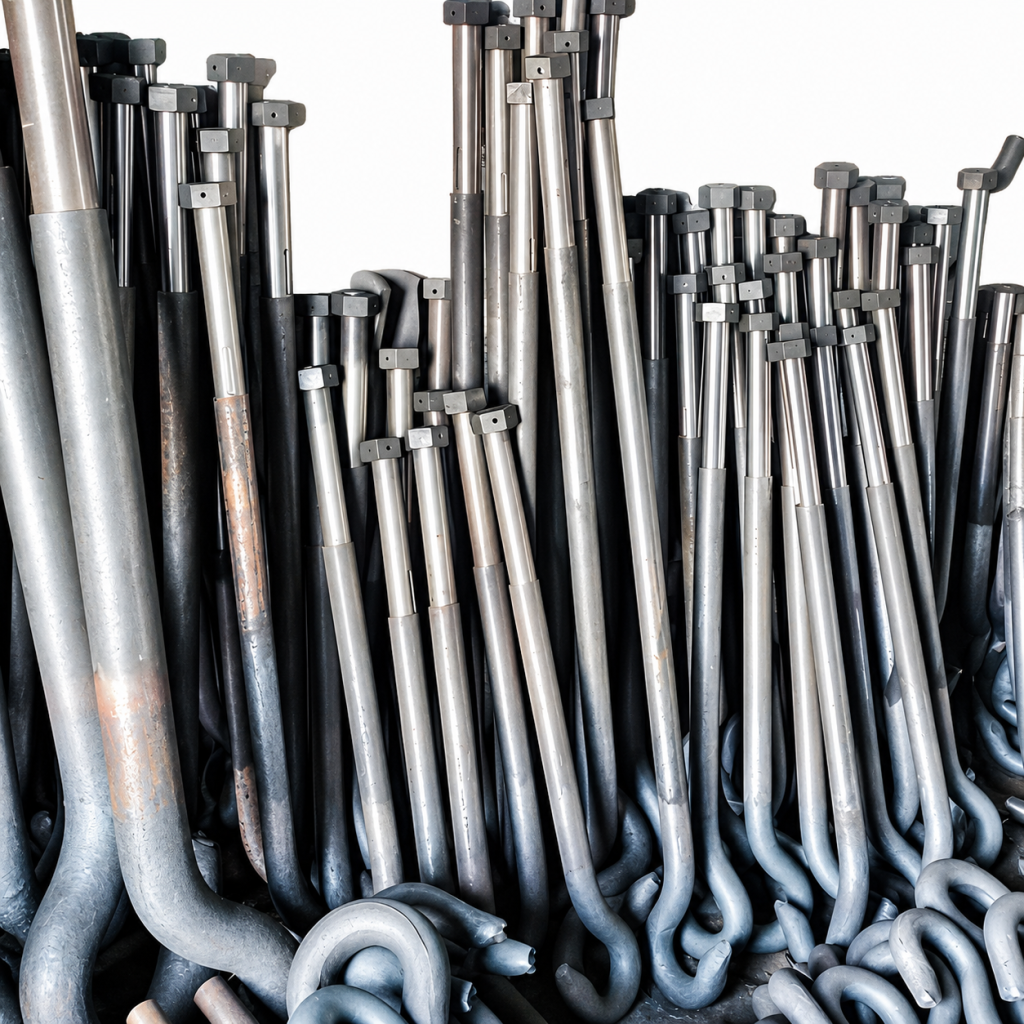
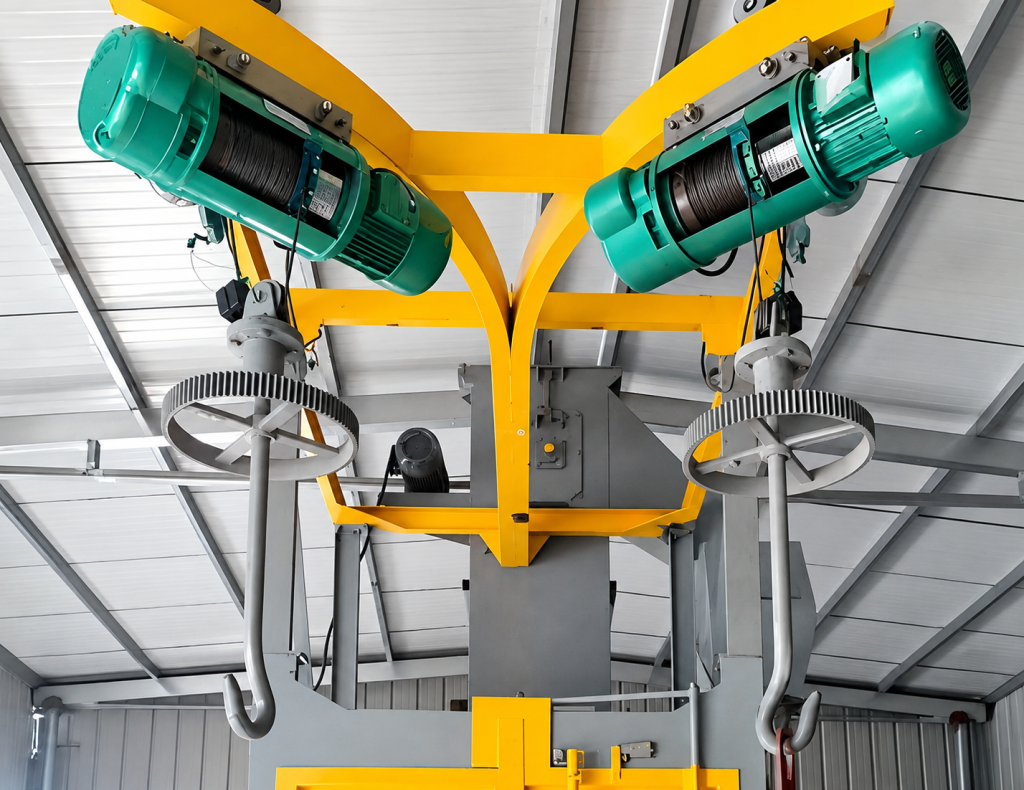
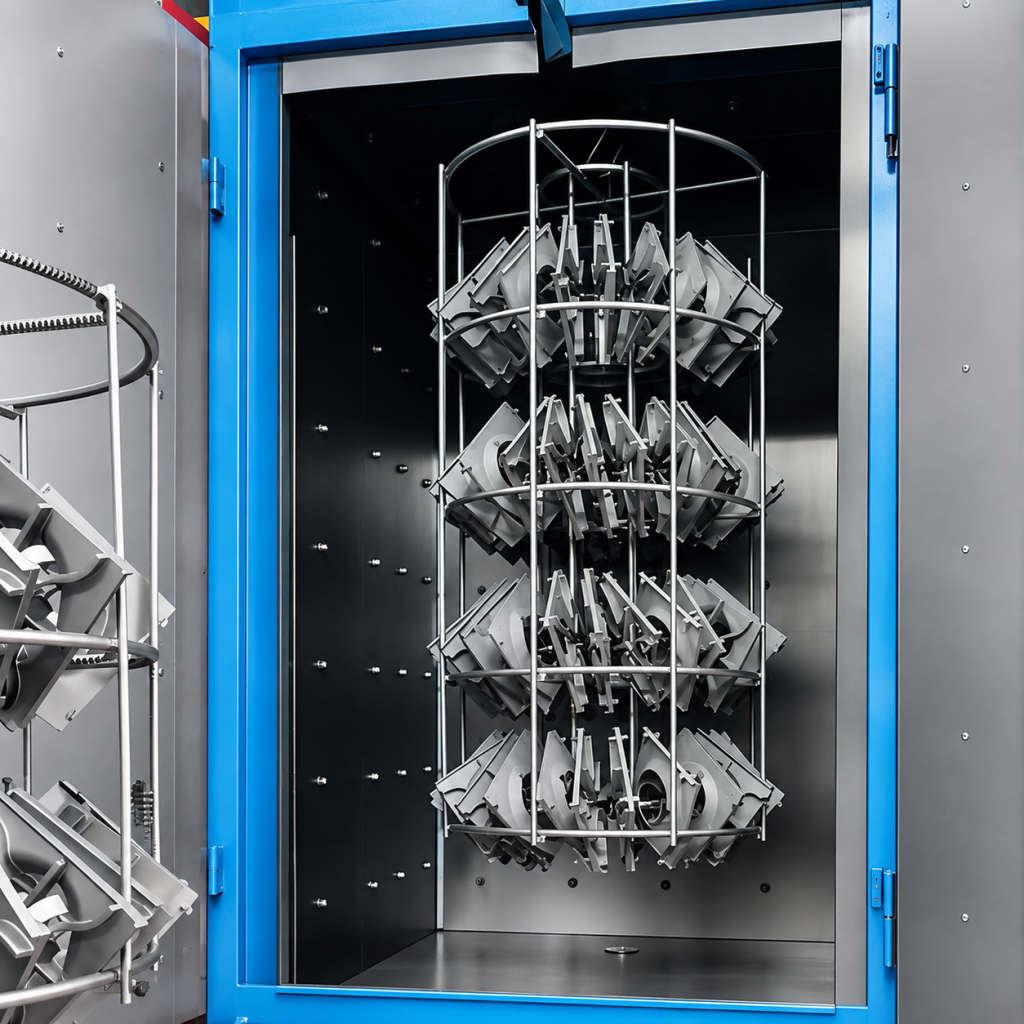
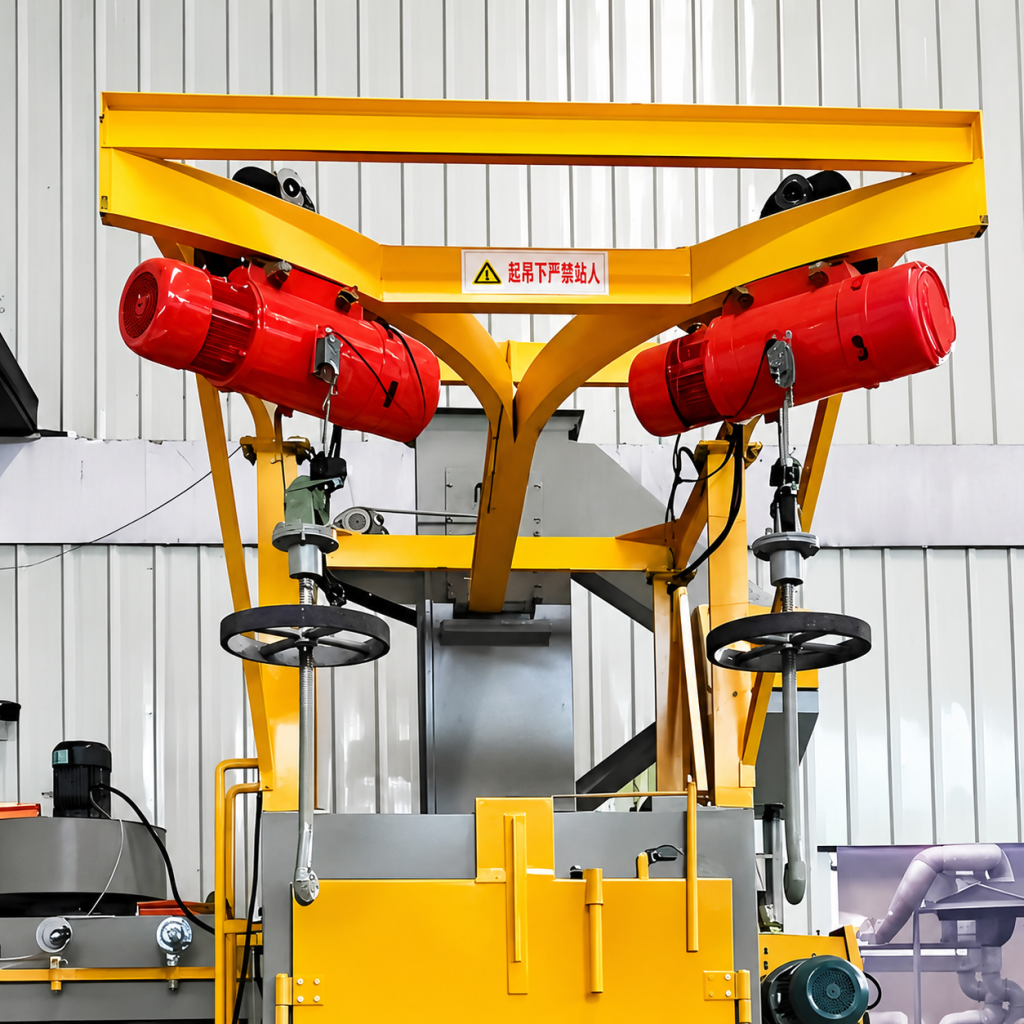
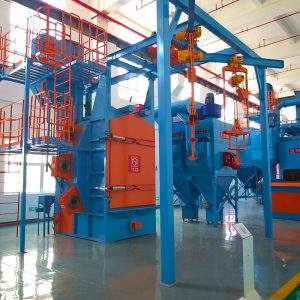
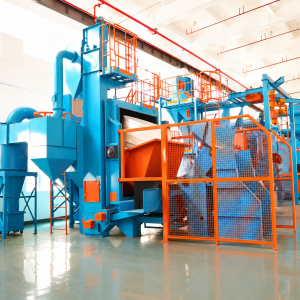
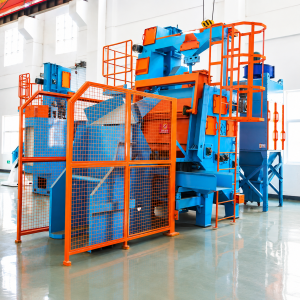
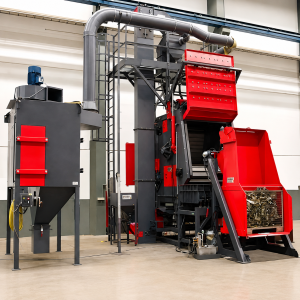
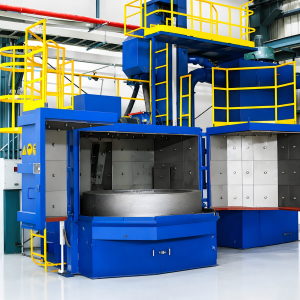
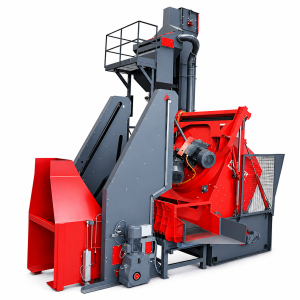
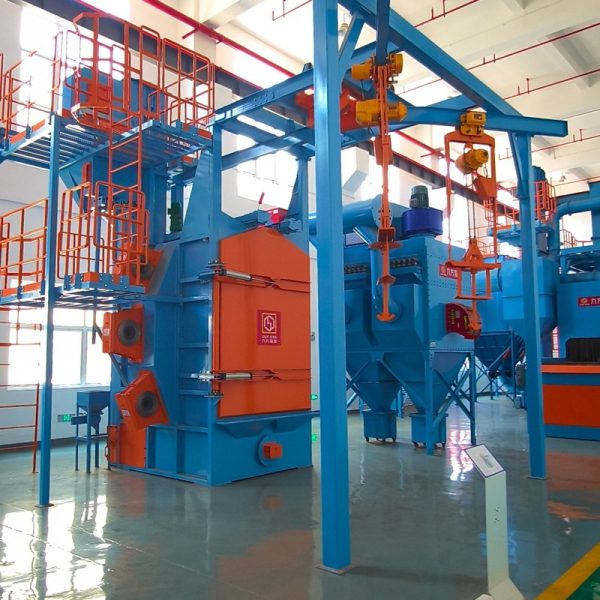
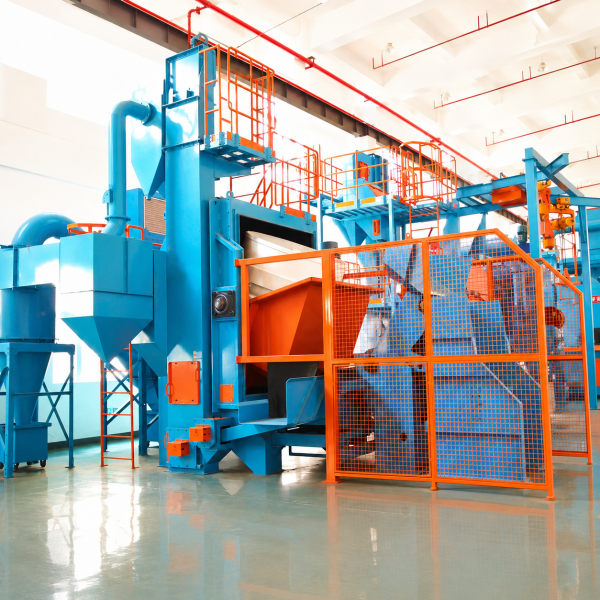
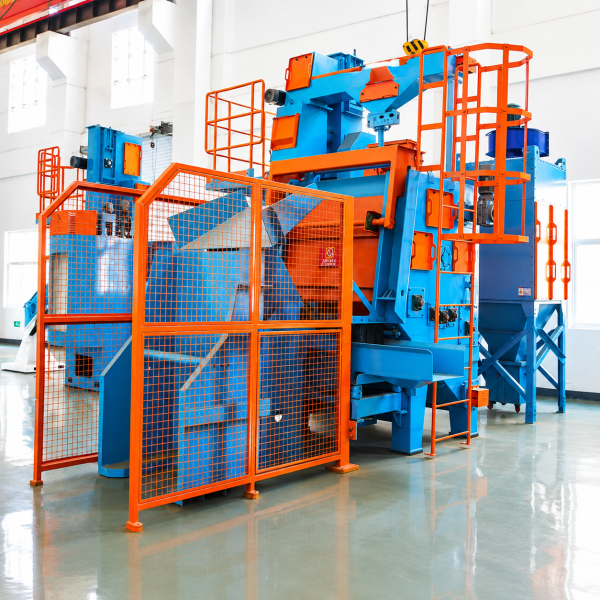
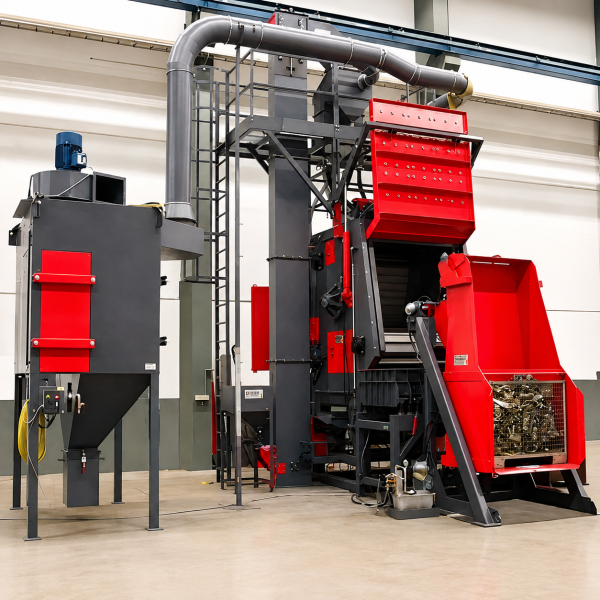
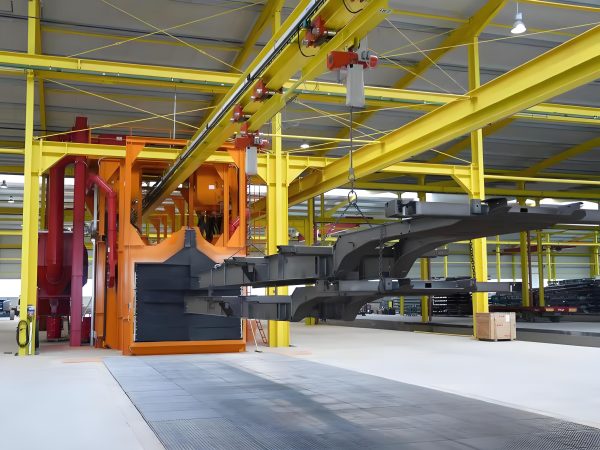
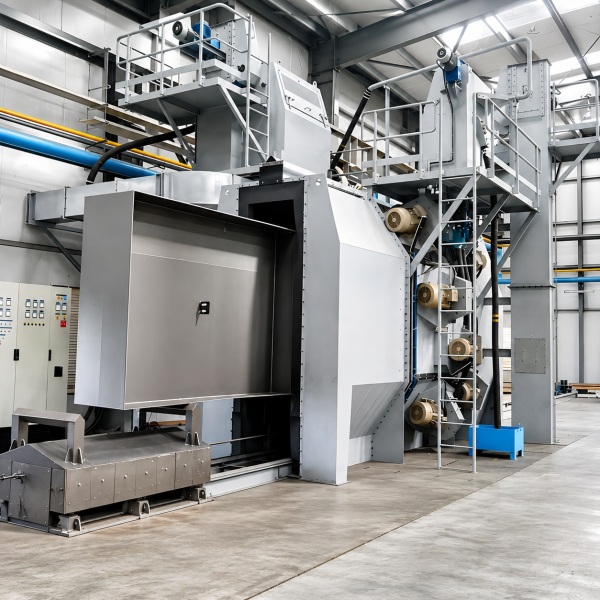
Hook-type shot blasting machines are specially designed for large, irregularly shaped workpieces that are not suitable for tumbling. By suspending the workpiece on a rotating and revolving hook, the machine achieves 360° all-around cleaning with no blind spots. It is widely used for processing valves, pump housings, vehicle frames, and welded structural components.
In some coastal countries and regions, high salt content in the air significantly increases the risk of corrosion on metal components such as hooks, rails, and conductor rails. High humidity can also cause the electric hoist chain or wire rope to jam and lead to poor contact at the current collector, which may result in hook rotation failure or even complete machine shutdown. To meet the demands of coastal and high-humidity environments, the hook system components have been specially reinforced in terms of corrosion-resistant materials and structural sealing.
Direct Shipping from the Nearest Warehouse:
Hook assemblies, hook protective sleeves, electric hoists, rails/conductor rails, current collectors, and rotation/revolution mechanisms are kept in stock at our domestic warehouse and multiple overseas forward warehouses. Standard models are shipped directly from the nearest warehouse and can typically be delivered within 3–7 days. Lifting fixtures, hanging tools, and custom tooling can be manufactured according to workpiece drawings, with delivery available within 15 days.
Material Selection & Wear Resistance:
The hook body is forged from 40Cr or 42CrMo quenched-and-tempered alloy steel and undergoes 100% magnetic particle inspection to ensure a high safety factor. Hook protective sleeves are available in two options: high-chromium cast iron wear-resistant sleeves and polyurethane cushioning sleeves. Cast iron sleeves are recommended for heavy-abrasive operating conditions, while polyurethane sleeves are suitable for protecting the surfaces of precision workpieces.
The rails are made from standard I-beams with hot-dip galvanized or powder-coated surfaces, providing salt-spray resistance of more than 500 hours. The conductor rail system uses T2 copper busbars with flame-retardant PVC insulating covers, offering excellent oxidation resistance while reducing the risk of electrical leakage.
Focus on checking whether the slewing bearing at the top of the hook is insufficiently lubricated or contaminated with steel shot and debris, a common issue in coastal and high-humidity environments. Also check whether the chain in the rotation mechanism has stretched or is skipping teeth.
Check whether moisture has reduced the motor insulation performance. Inspect the brake for rust caused by humidity, which may reduce braking force. In some countries and regions, local power grid fluctuations may also occur, so verify that the input voltage remains stable.
If the copper conductor rail surface is oxidized and blackened, lightly polish it with fine sandpaper. Check whether the current collector carbon brushes have reached their wear limit, and tighten any loose conductor rail connections.
Reduce the revolution speed appropriately. Optimize the lifting fixture design to prevent the workpiece’s center of gravity from deviating too far from the hook center. Also check for rotation mechanism failure, which may cause excessive steel shot impact on one side of the workpiece.

English

Hindi

Indonesian

Russian

Spanish

Thai

Vietnamese