Global Surface Treatment Equipment & System Solutions — Since 2002

久昌机械
Get a Quote
Global Surface Treatment Equipment & System Solutions — Since 2002
久昌机械
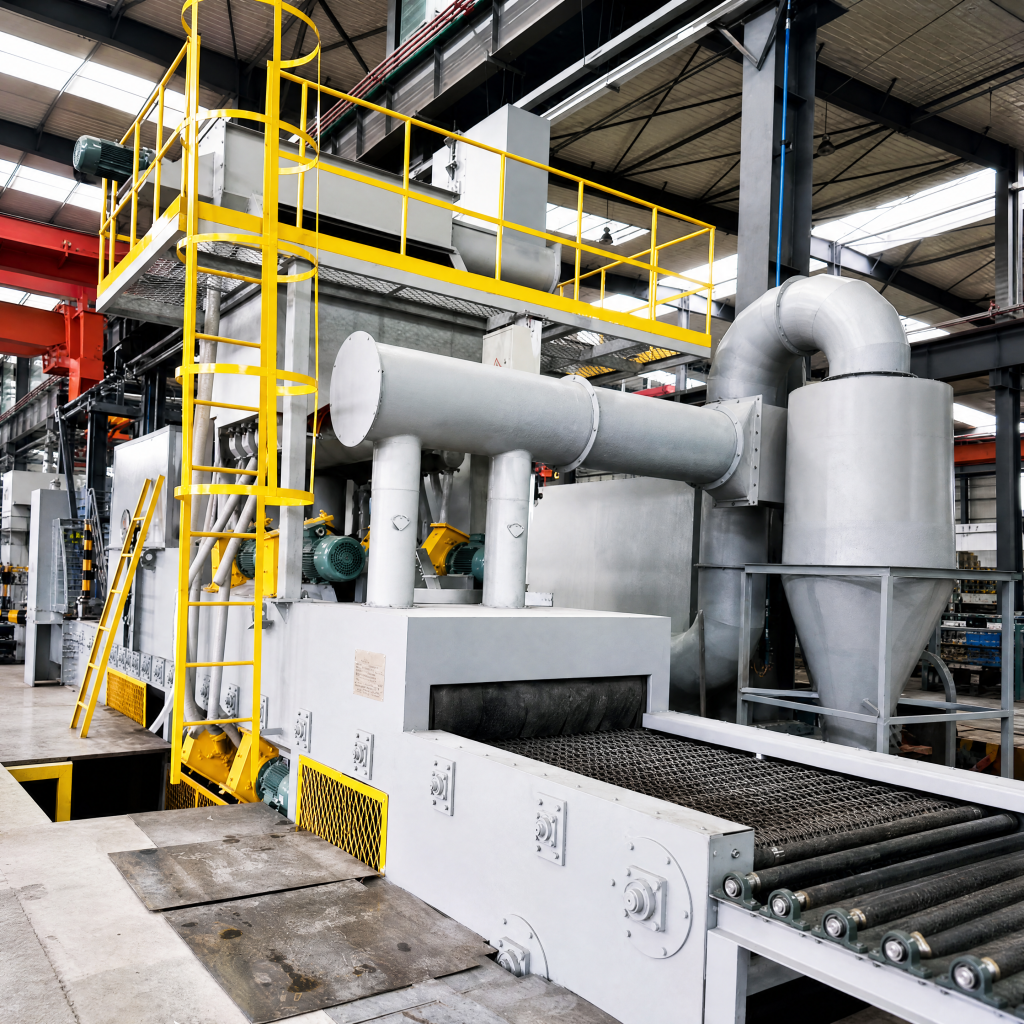
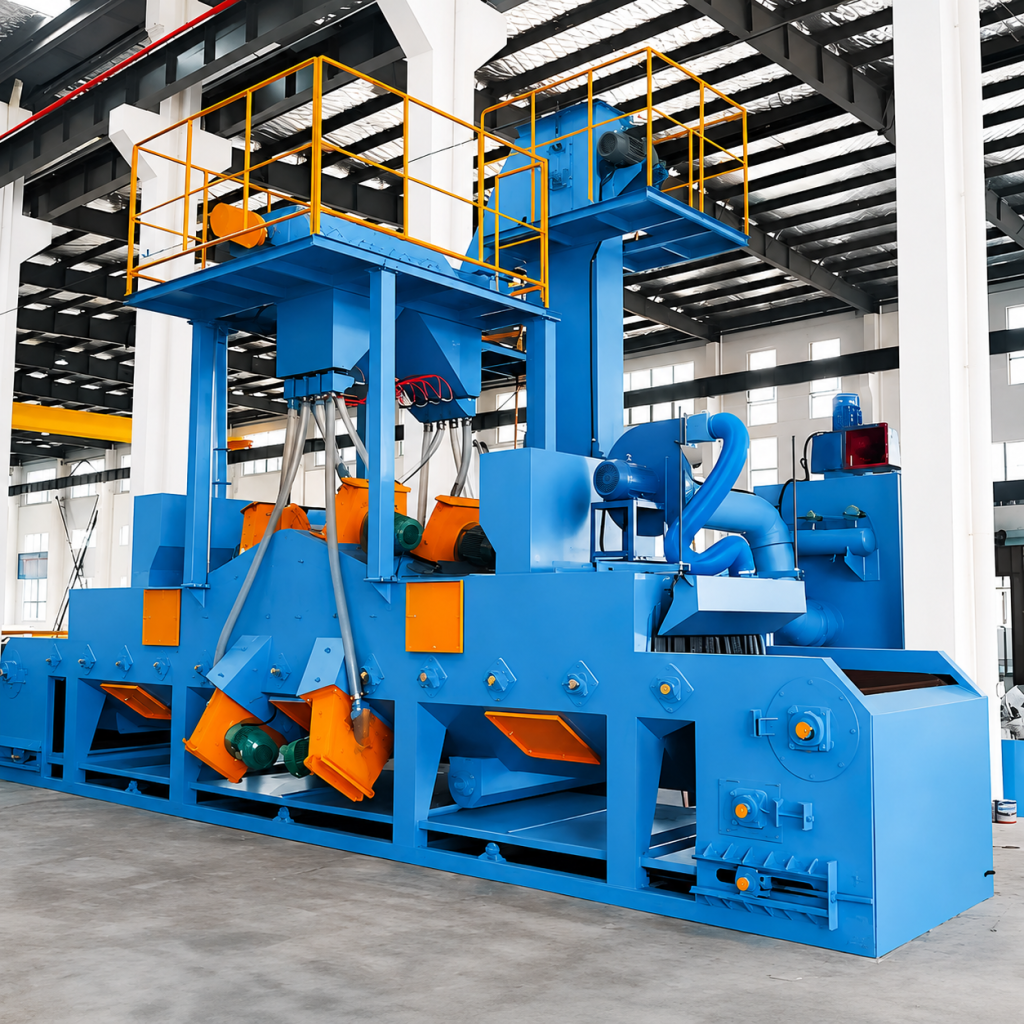
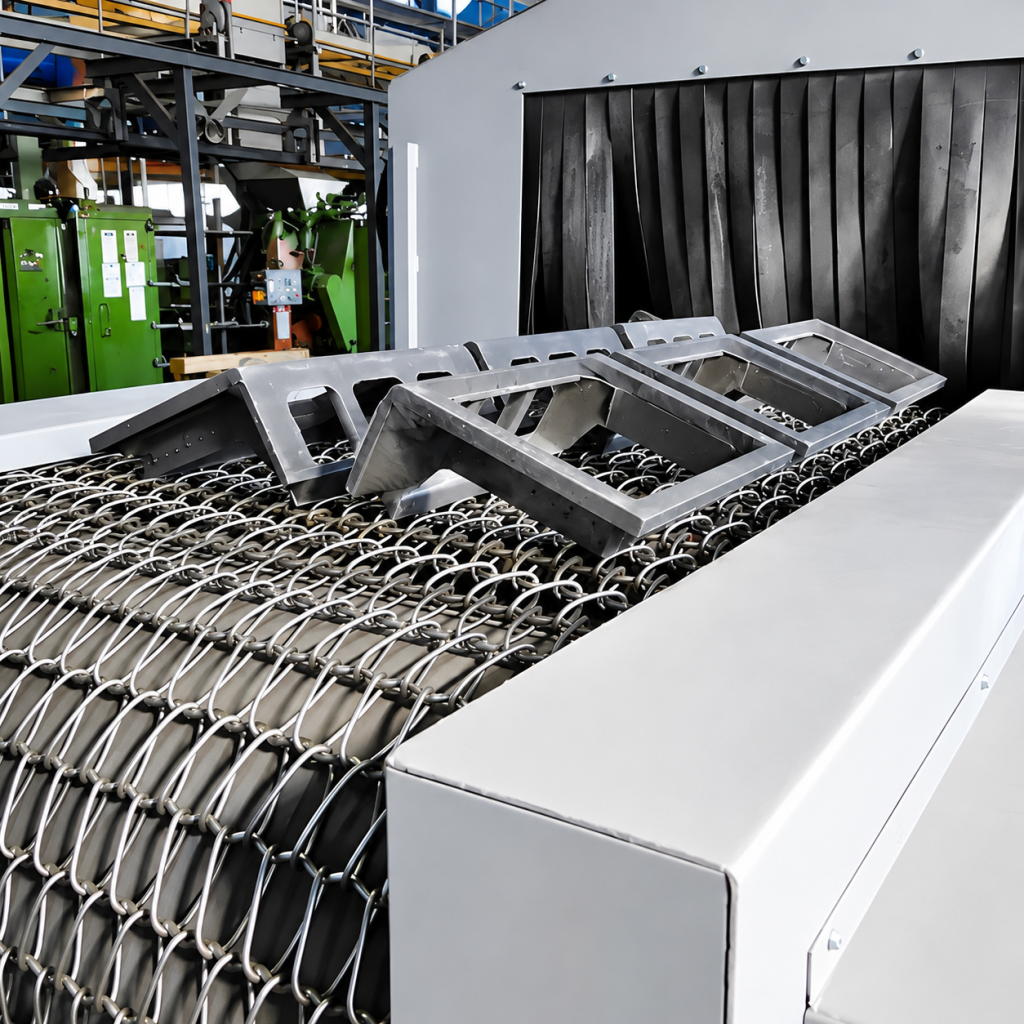
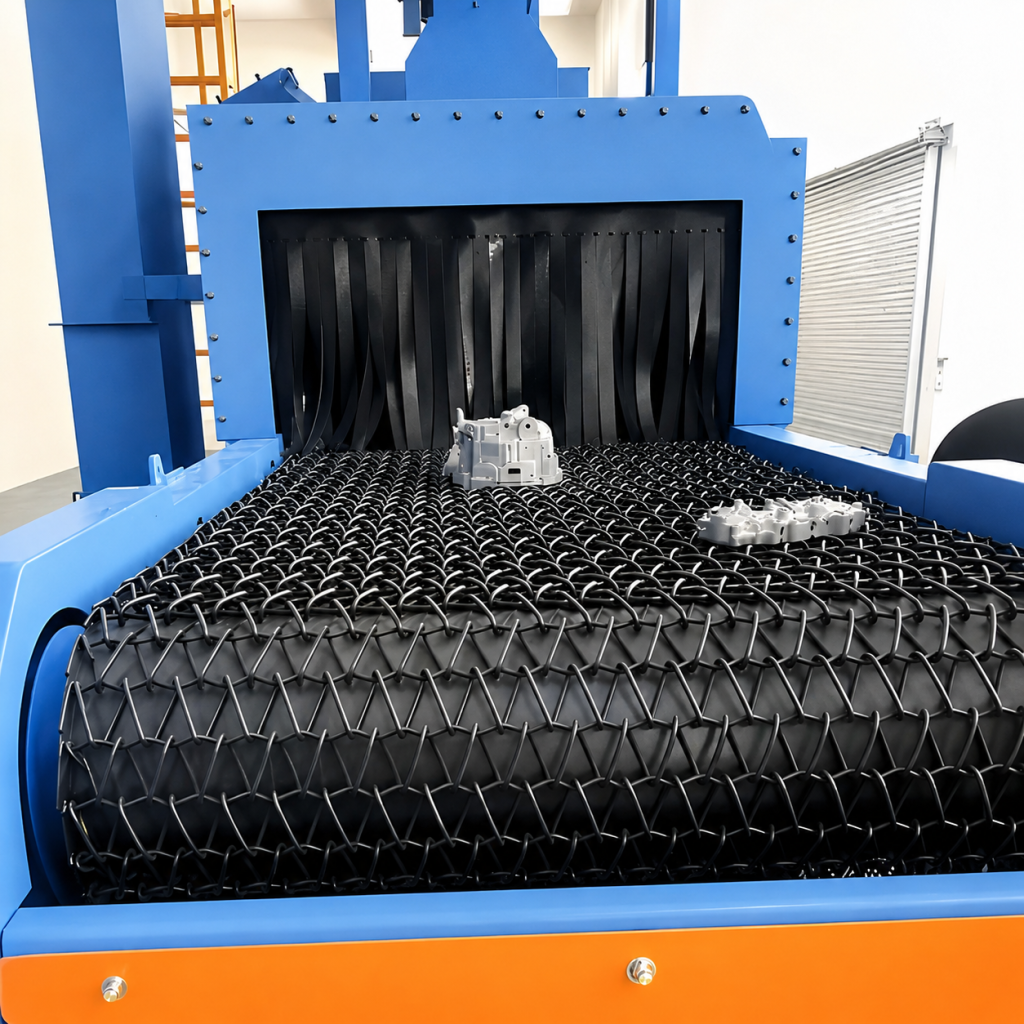
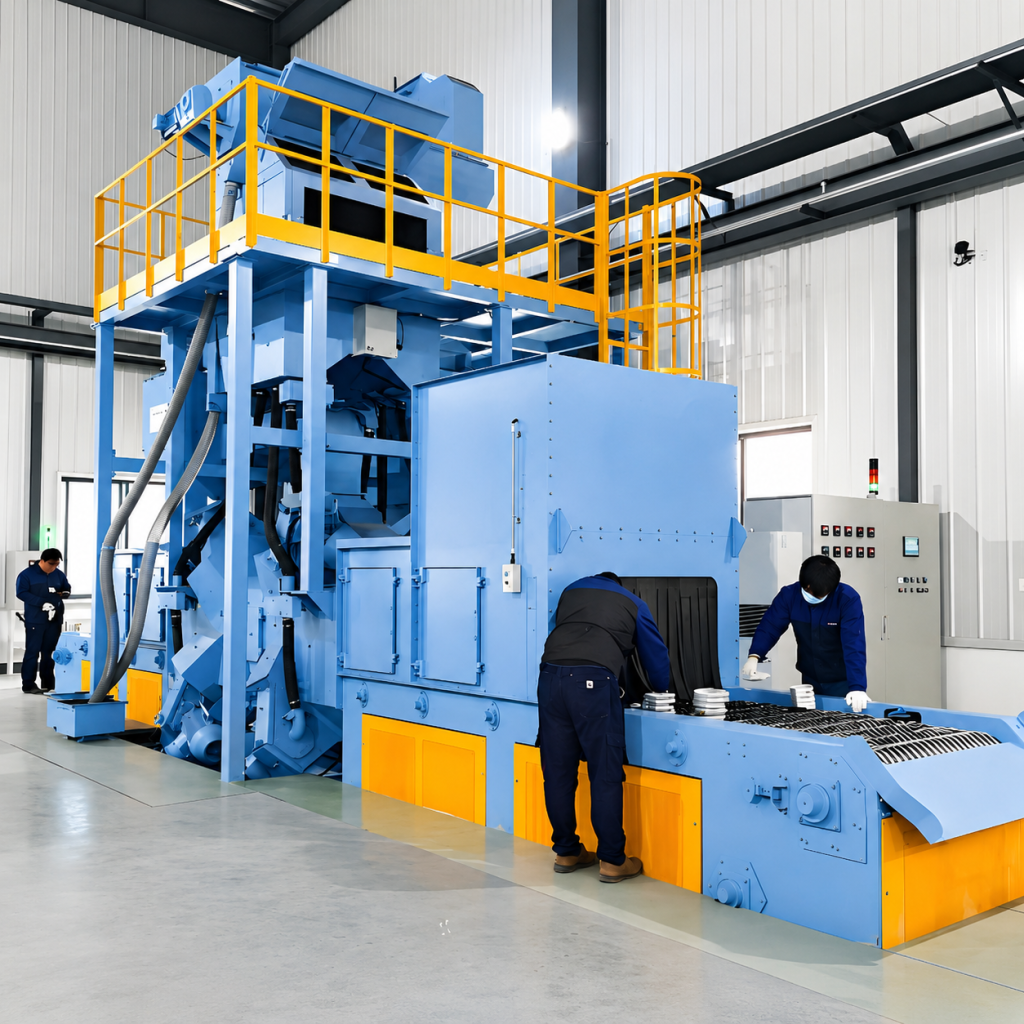
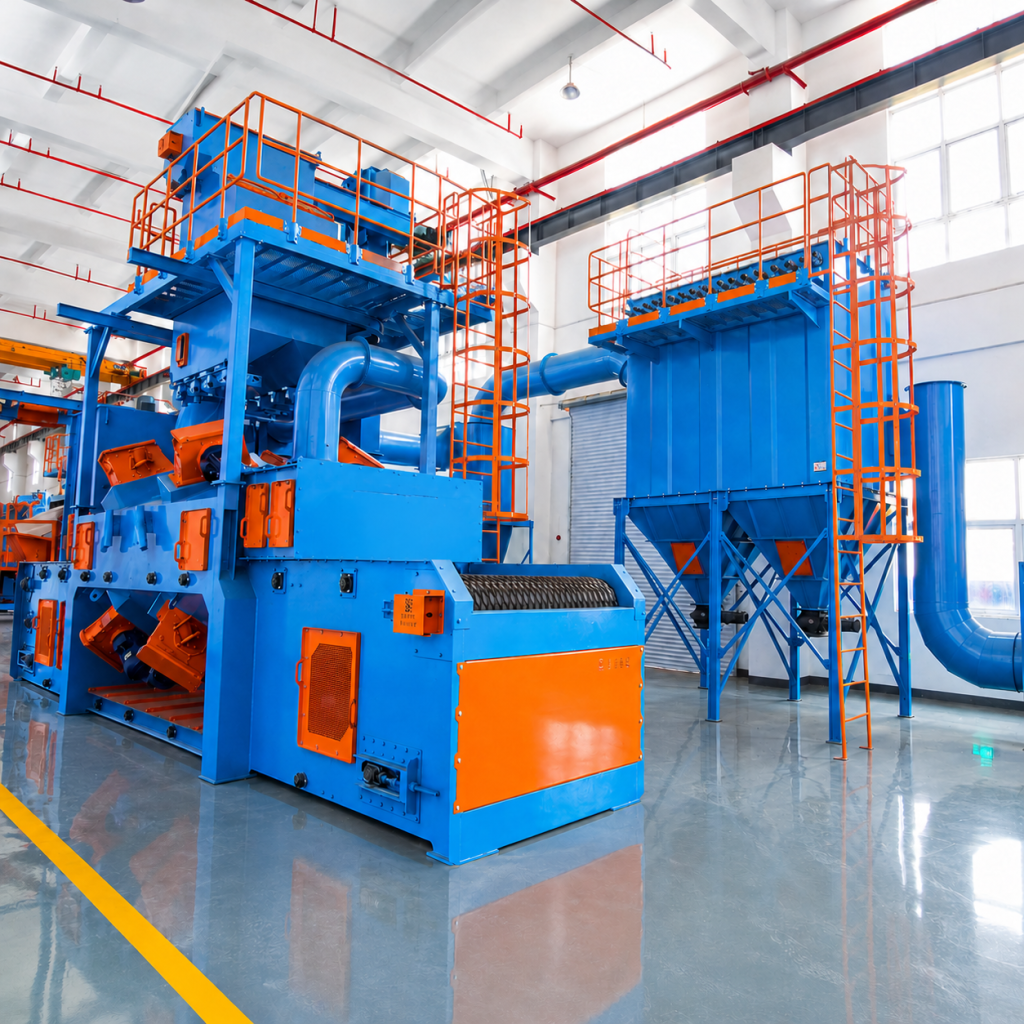
Specialized equipment for mass surface cleaning of small and medium-sized parts
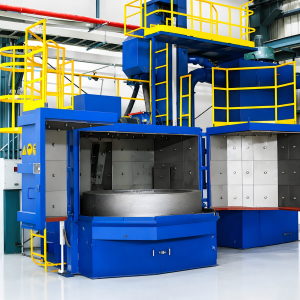
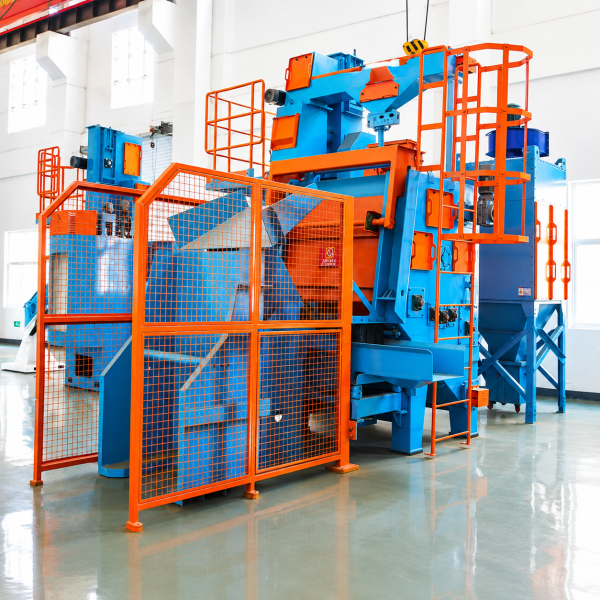
Jiuchang Machinery offers two types of batch cleaning equipment for small and medium-sized parts: Mesh Belt Type (QWD Series).
Mesh Belt Type (QWD): This type uses a steel wire mesh belt or wear-resistant rubber belt to continuously transport workpieces. The workpieces pass smoothly through the shot blasting chamber without collision or tumbling, making it particularly suitable for thin-walled, impact-sensitive cast iron and aluminum alloy parts, as well as precision machined components.
The equipment supports continuous or batch production line operations. After treatment, the surface cleanliness of the workpieces can reach Sa2.5 level (ISO 8501-1), with a roughness Rz of 25–60 μm, providing a good base surface for subsequent processes such as coating and electroplating.
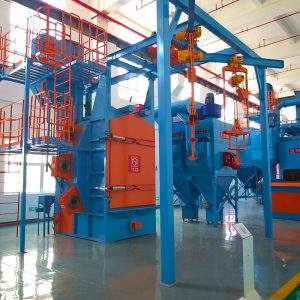
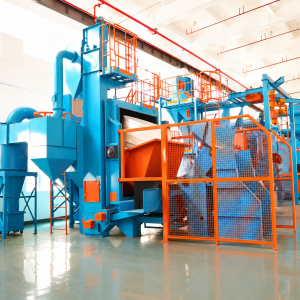
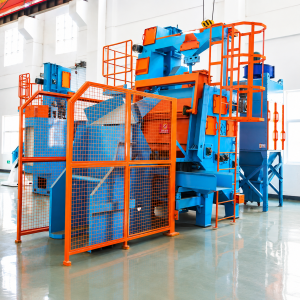
Mesh Belt Conveyor (QWD Series)
Workpieces are placed on a conveyor belt, which continuously enters the shot blasting chamber at an adjustable speed. Multiple shot blasters clean the workpiece from different angles above, below, and sides, ensuring uniform shot coverage on all surfaces. The shot is then collected via a bottom recovery system, screw conveyor, and bucket elevator into an air separator for separation and recycling. Dust and broken shot are filtered by a pulse jet/bag filter system before being discharged in compliance with standards.
Process Flow:
Feeding → Mesh Belt Conveyor into Chamber → Shot Blasting → Mesh Belt Conveyor out of Chamber → Shot Blowing → Unloading
The shot blasting machine adopts a high-efficiency direct-drive structure, with a direct-drive motor and no belt drive. The impeller is 100% dynamically balanced (dynamic balance grade G6.3) to ensure vibration ≤4.5 mm/s at high speeds. The blades, shot distribution wheel, directional sleeve, and guard plates are all made of high-chromium wear-resistant cast iron, with a chemical composition conforming to ASTM A532 standard, a hardness ≥58 HRC, and a standard blade life of 2500–3000 hours.
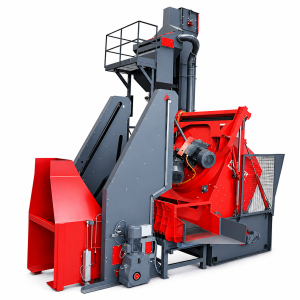
Shot blasting machine: High-efficiency direct-drive type, with layout angle optimized by 3D simulation. The mesh belt system ensures no blind spots with its top-and-bottom opposing shot, while the crawler-type system with its inclined top arrangement ensures tumbling coverage.
Mesh belt (mesh belt type): Special steel wire mesh belt or wear-resistant rubber belt, resistant to steel shot impact, ensuring smooth operation and automatic correction of deviation.
Chamber lining: High-chromium cast iron/65Mn rolled lining, modular quick-connect design, thickness 8–15 mm, quick replacement possible.
Sealing system: Multi-layer rubber curtains at inlet and outlet + labyrinth seal to prevent shot leakage.
Shot material circulation system: Bottom scraper/spiral recovery + bucket elevator + air separation, separation efficiency ≥99%.
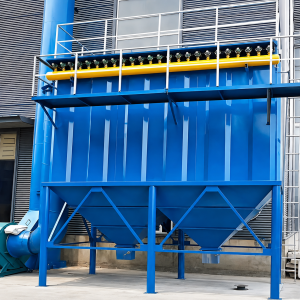
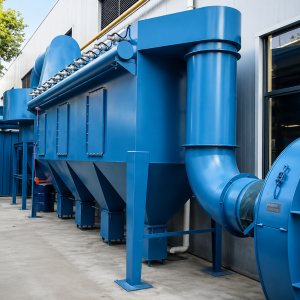
Dust removal system: Standard pulse jet cartridge dust collector (bag filter optional), dust emissions controllable to <5 mg/m³.
Electrical system: PLC control (Siemens/Mitsubishi optional), touchscreen operation, supports automatic/manual modes, remote monitoring module optional.
Installation Site Requirements:
QWD400 model: Approximately 10 m × 4 m footprint (including loading, main unit, and unloading areas); factory height ≥ 5 m.
QWD1000 model: Approximately 16 m × 6 m footprint; factory height ≥ 6 m.
Required space for workpiece placement and handling; recommended ≥ 2 m per side.
Concrete foundation flatness ≤ 3 mm/m; anchor bolts must be pre-embedded in the main unit area.
Power supply: 380V/3Ph/50Hz (or customized according to customer's power grid); Requires a total equipment power capacity + 20% margin.
Maintenance Points
Daily: Check the operating sound, vibration, and current of the shot blaster; check the smoothness of the mesh belt/track operation; check the integrity of the sealing curtain;
Weekly: Check the wear of vulnerable parts (blades, guard plates) and replenish grease; check the tension of the elevator belt/chain;
Every 3–6 months: Conduct a comprehensive inspection of the chamber guard plates and mesh belt/track wear; check the position of the shot blaster directional sleeve window; check the pressure difference of the dust collector filter cartridge/bag;
Mesh belt replacement standard: Replace when the mesh belt wire breakage rate is >5% or the rubber layer is severely cracked;
Blade replacement standard: Replace when the blade wear is >5 mm or cracks appear, ensuring that the blasting speed does not decrease.
Jiuchang Machinery possesses independent import and export rights, offering various trade terms such as FOB/CIF/DDP, and supporting letters of credit, wire transfers, and milestone payments. Overseas installation services include a three-tiered model: remote technical supervision, on-site installation guidance, and turnkey projects. Global 24/7 response: over 80% of common faults can be resolved within 4 hours via remote diagnostics; local engineers arrive on-site within 48 hours. Commonly used spare parts from core market warehouses are delivered within 48 hours.
| MACHINE TYPE | QGMA-600 | QGMA-800 | QGMA-1000 | QGMA-1250 | QGMA-1500 |
| Max. Workpiece Dimensions W × H (mm) | 600 × 400 | 800 × 400 | 1000 × 400 | 1250 × 400 | 1500 × 400 |
| Blast Wheel Quantity × Power (kW) | 4 × 11 | 4 × 11 | 4 × 11 | 4 × 15 | 4 × 15 |
| Optional Blast Wheel Quantity × Power (kW) | 4 × 15 | 4 × 15 | 4 × 15 | 6 × 7.5 | 6 × 11 |
| Foundation Pit Required | No | No | No | Yes | Yes |
| Parameters | QW1200 | QW1500 | QW1800 |
| Model | QW1200 | QW1500 | QW1800 |
| Mesh Belt Width | 1200 mm | 1500 mm | 1800 mm |
| Conveyor Speed | 3–8 m/min | 3–8 m/min | 3–8 m/min |
| Blast Wheel Power | 7.5 kW × 4 units | 11 kW × 4 units | 15 kW × 4 units |
| 7.5 kW × 8 units | 11 kW × 8 units | 15 kW × 8 units | |
| Shot Blasting Capacity | 180 kg/unit | 200 kg/unit | 250 kg/unit |
| Shot Blasting Speed | 120 m/s | 120 m/s | 120 m/s |
| Bucket Elevator | |||
| Bucket Elevator Power | 1.5 kW × 1 unit | 4 kW × 1 unit | 5.5 kW × 1 unit |
| Elevator Capacity | 22 T/h | 60 T/h | 75 T/h |
| Elevator Speed | 9.6 m/s | 9.6 m/s | 9.6 m/s |
| Separator | |||
| Separator Capacity | 22 T/h | 60 T/h | 75 T/h |
| Air Velocity | 4–6 m/s | 4–6 m/s | 4–6 m/s |
| Screw Conveyor Capacity | 22 T/h | 24 T/h | 30 T/h |
| Screw Conveyor Power | 2.2 kW | 2.2 kW | 2.2 kW |
| Dust Collection System | |||
| Pulse-Jet Dust Collector Power | 11 kW | 15 kW | 18.5 kW |
| Dust Collection Air Volume | 15,000 m³/h | 19,000 m³/h | 22,000 m³/h |
| Number of Filter Cartridges | 60 pcs | 81 pcs | 96 pcs |
| No. | Standard Configuration |
| 1 | Electrical cabinet: the standard configuration for this model includes a cooling fan; an air conditioner is optional. |
| 2 | PLC: Siemens (other brands available upon customer request). |
| 3 | Touchscreen: Siemens (other brands available upon customer request). |
| 4 | Frequency inverter: BEST (other brands available upon customer request). |
| 5 | Power supply: AC 380 V, three-phase, five-wire. |
| 6 | Low-voltage electrical components: CHINT (other brands available upon customer request). |
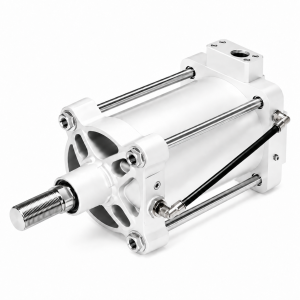
| 7 | Pneumatic components: ARITAC (other brands available upon customer request). |
| 8 | Electrical wires and cables. |
| 9 | We can also customize various non-standard shot blasting machines according to your requirements. |
Quantity Driven Belt (QWD) is suitable for: thin-walled cast iron parts, aluminum alloy parts, and precision machined parts that are susceptible to impact and deformation; parts requiring high surface quality and free from scratches and impacts (such as automotive parts, hardware tools, and kitchenware); and large- to medium-volume production scenarios requiring continuous assembly line operations.
Application Industries: Casting, automotive parts, hardware tools, railway parts, metal heat treatment, machined parts, metal surface treatment, etc.
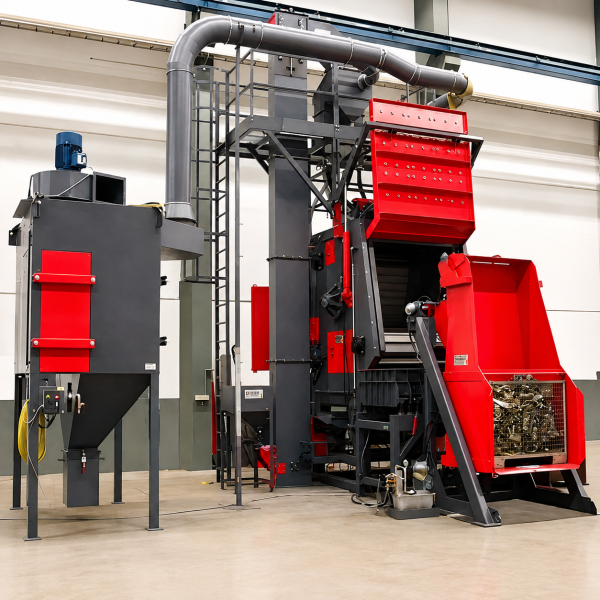
Mesh belt shot blasting machines use a continuous mesh belt for smooth workpiece passage without tumbling or collision. This is suitable for thin-walled, impact-sensitive cast iron and aluminum alloy parts, as well as precision machined parts. Crawler-type machines use rubber rollers for tumbling and bearing the load, causing the workpiece to be impact-sensitive on all surfaces. This is suitable for small cast steel parts, forgings, and stampings that are not susceptible to impact.
Selection principle: Choose mesh belt (QWD) if impact is a concern; choose crawler-type (Q32) if impact is not a concern and the structure is complex.
Mesh belt type: Small and medium-sized cast steel parts, cast iron parts, aluminum alloy parts, stampings, flanges, gears, springs, machined parts, etc. Single piece weight is generally <30 kg, maximum size <500 mm.
Crawler-type: Small cast steel parts, cast iron parts, forgings, stampings, heat-treated parts, etc. Single piece weight is generally <150 kg (Q3210C can reach 800 kg load).
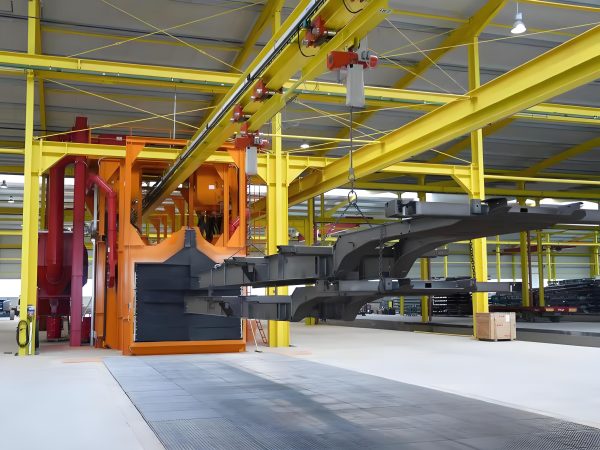
For extra-large workpieces, hook-type (Q37) or trolley-type (Q76) equipment should be used.
Under standard operating conditions, surface cleanliness can reach Sa2.5 (ISO 8501-1), with a roughness Rz of 25–60 μm. A higher finish (Sa3) can be achieved by increasing the number of shot blasters, extending the cleaning time, or using finer abrasives. Pretreatment before coating typically meets adhesion requirements at Sa2.5.
Main vulnerable parts include shot blaster blades, shot distribution wheels, directional sleeves, chamber lining plates, mesh belts/tracks, and sealing curtains.
High-chromium cast iron blades: 2500–3000 h under standard operating conditions;
Chamber lining: 3000–8000 h;
Mesh belt: 1–2 years (depending on operating intensity);
Track: 1.5–3 years (rubber track life);
Sealing curtain: 6–12 months.
We provide a standardized spare parts list and global spare parts warehousing and distribution services.
Yes. Mesh belt/track specifications, cleaning chamber dimensions, number and arrangement of shot blasters, conveyor speed, etc., can all be customized according to the user's workpiece specifications and production requirements. We provide free operating condition diagnostics, 3D simulation, and solution design services.
Please provide: workpiece type and maximum dimensions (length × width × height), maximum weight per piece, daily or annual production capacity requirements, whether the workpiece is susceptible to impact (determining whether a mesh belt or tracked conveyor belt system is used), target cleaning grade (Sa2.5/Sa3), factory dimensions and power supply conditions, and local environmental emission standards. We will provide a customized technical solution and a formal quotation.

English

Hindi

Indonesian

Russian

Spanish

Thai

Vietnamese