Global Surface Treatment Equipment & System Solutions — Since 2002

久昌机械
Get a Quote
Global Surface Treatment Equipment & System Solutions — Since 2002
久昌机械
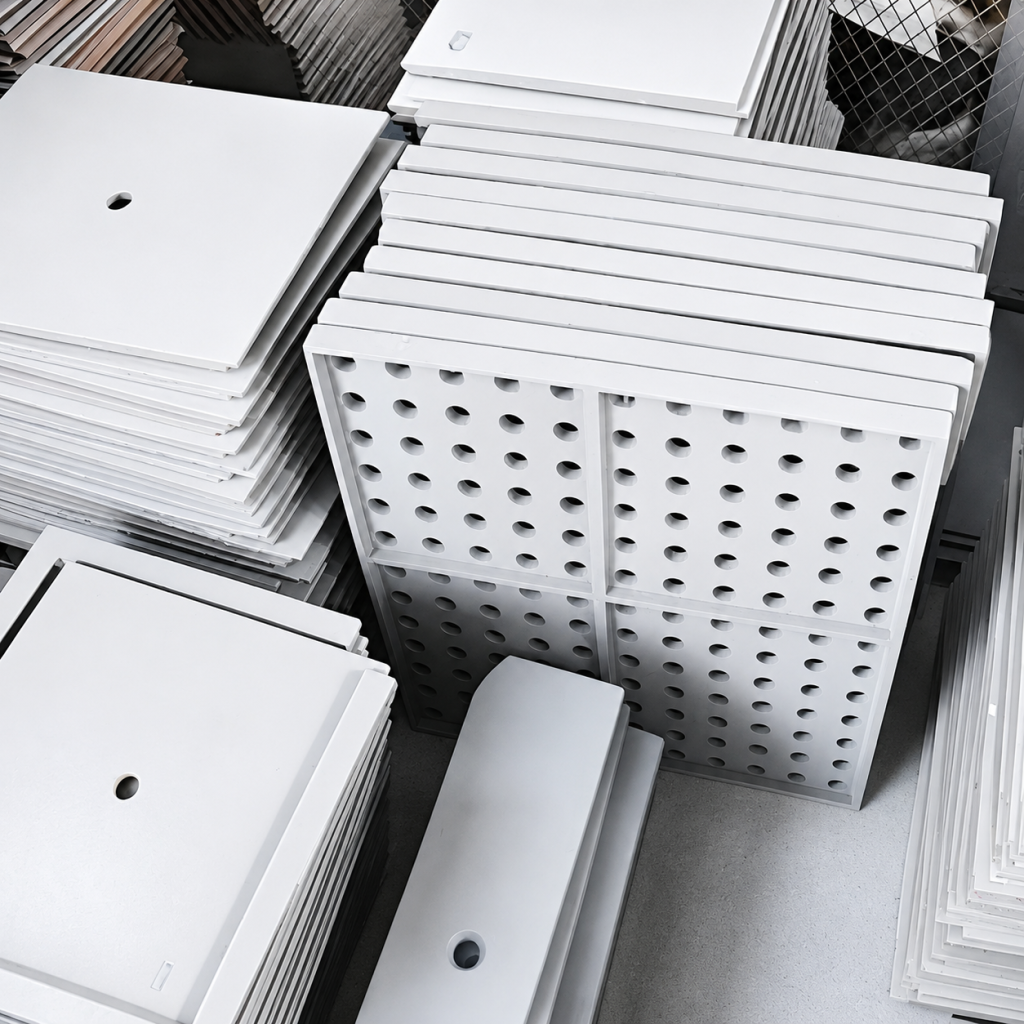
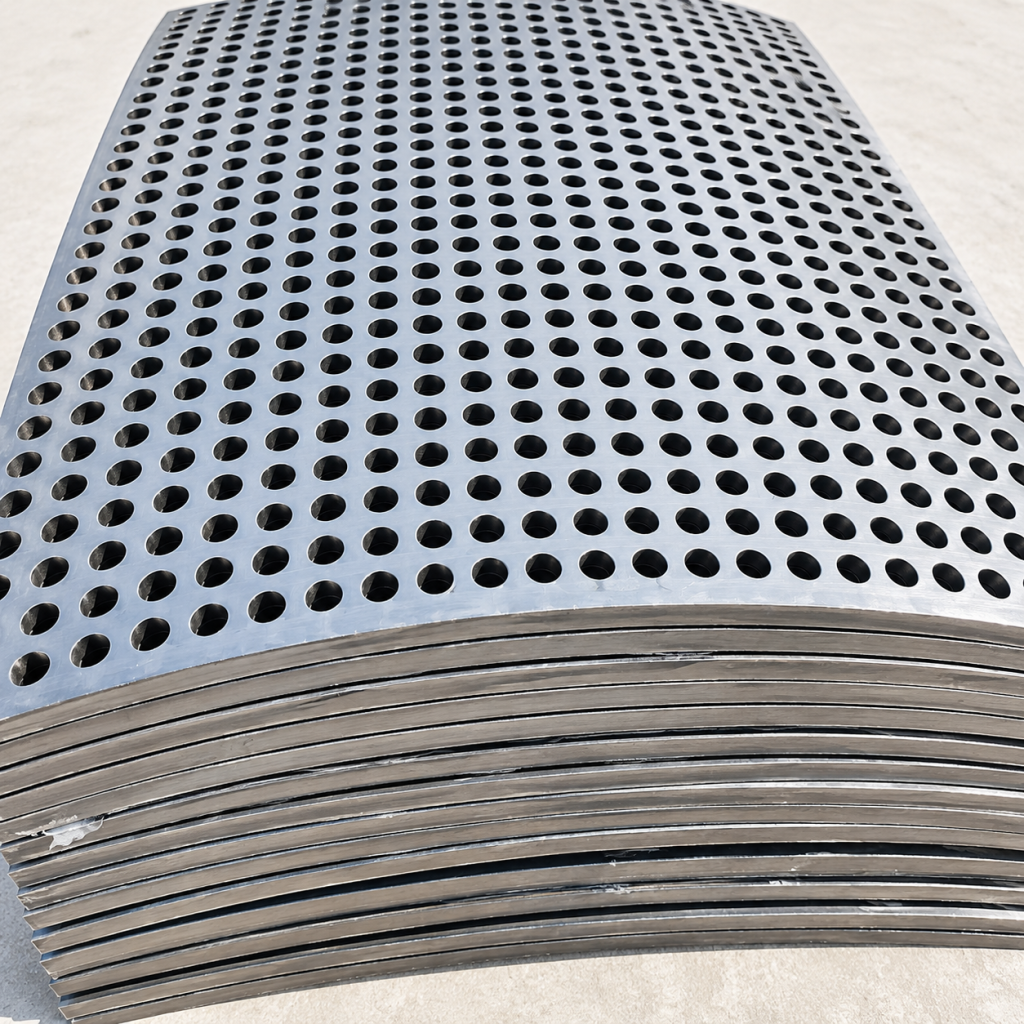
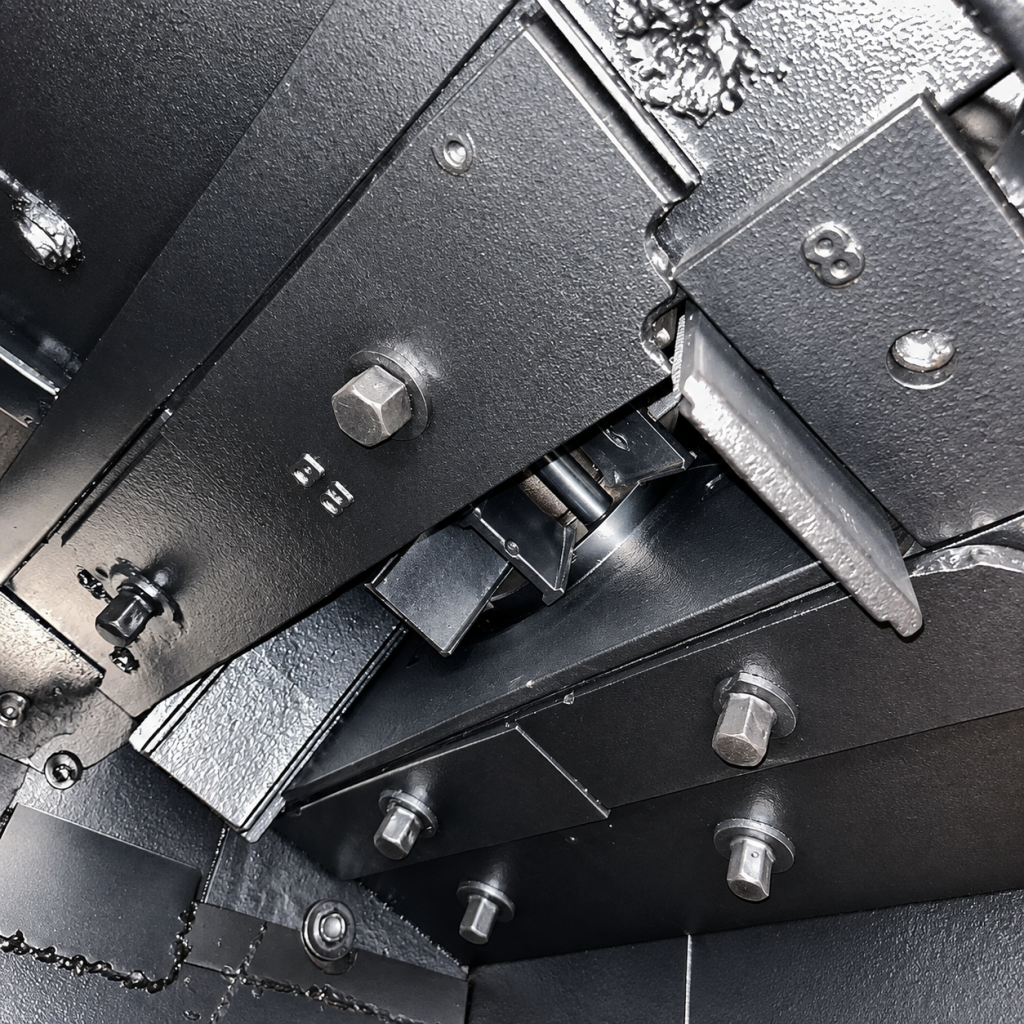
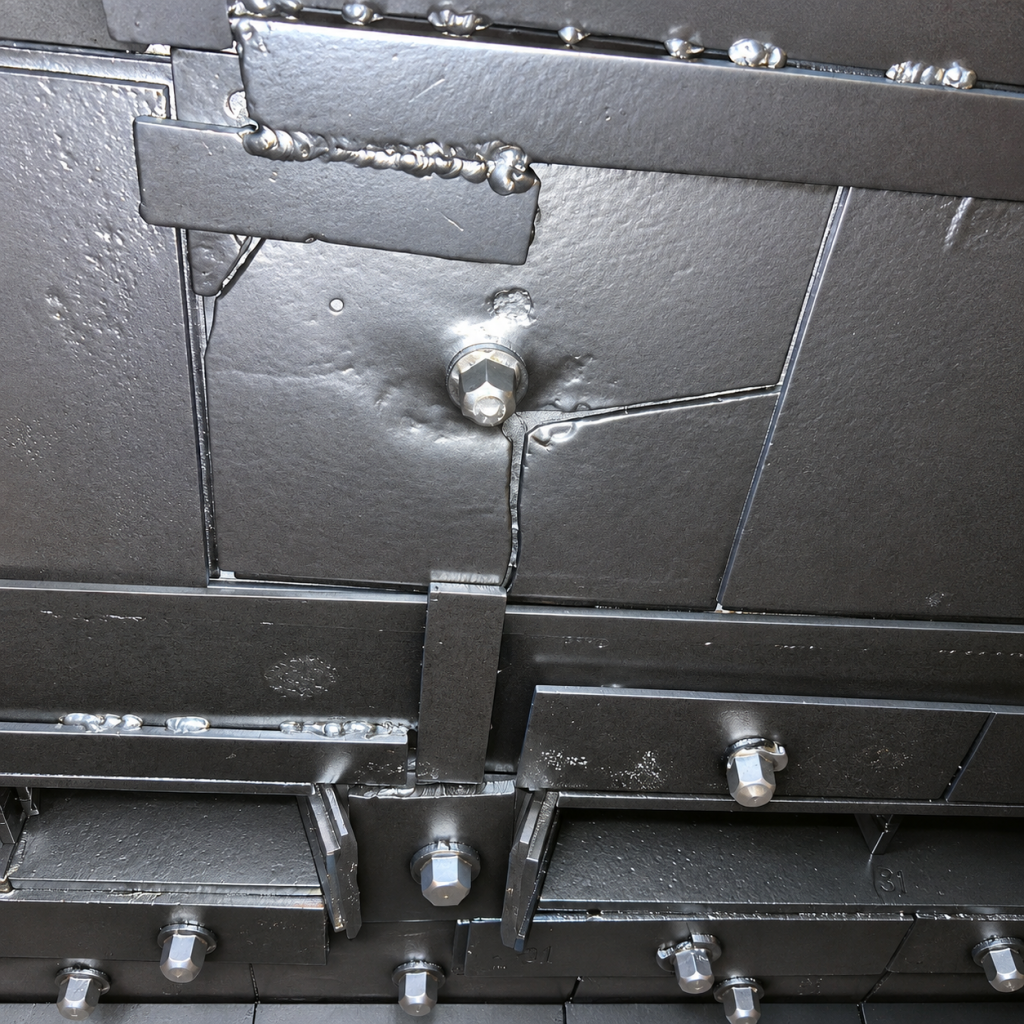
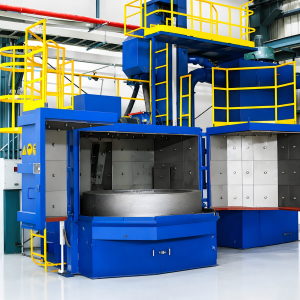
The chamber wear parts are the machine's armor. The inner walls of the blasting chamber directly withstand steel shot traveling at more than 80 m/s. Without reliable protection, the chamber's expensive steel plates can quickly be worn through.
In some countries and regions, dust levels are high and the air contains elevated amounts of salt and acidic substances, especially in coastal factories. If the back of a liner plate is not protected against corrosion, it can easily rust and become thinner from the rear, creating the abnormal situation in which the front is not yet worn out but the back has already failed. From material selection to structural design, our chamber protection system is reinforced for tropical coastal operating conditions.
Inventory and Shipping:
Liner plates for the top, sides, ends, and bottom, together with grating plates, sealing strips, observation window assemblies, and other parts, are routinely kept in stock and can be dispatched within 5-7 days. Special curved liner plates and custom-shaped inlet liners can be manufactured from drawings and delivered within 10-15 days.
Material Selection and Wear Resistance: Liner plates are supplied as standard in high-chromium cast iron (over 20% Cr) or rolled Mn13 manganese steel plate. These materials combine high hardness with sufficient toughness to resist impact without chipping or cracking. For customers in coastal areas with heavy salt spray, we offer stainless-steel-edged liner plates or thermal zinc spray treatment on the rear surface to eliminate back-side corrosion. Sealing strips are made from oil-resistant, aging-resistant EPDM rubber, providing twice the service life of ordinary rubber.
Check whether blast wheel misalignment is concentrating steel shot on a local area; and check whether the abrasive hardness is too high, such as when cast steel grit is used instead of cast steel shot.
The liner plate at that location has most likely fallen off or become severely thinned without being detected in time. Install a thicker liner or a composite wear plate in the most vulnerable area.
In regions with strong UV exposure, ordinary rubber strips may harden within three months. Use EPDM or silicone rubber instead, and check whether door deformation is causing one-sided compression of the seal.
Check whether the external protective steel plate is missing; check whether the protective film has not been replaced in time; and check whether the blast wheel is aimed directly at the observation window.

English

Hindi

Indonesian

Russian

Spanish

Thai

Vietnamese