Global Surface Treatment Equipment & System Solutions — Since 2002

久昌机械
Get a Quote
Global Surface Treatment Equipment & System Solutions — Since 2002
久昌机械
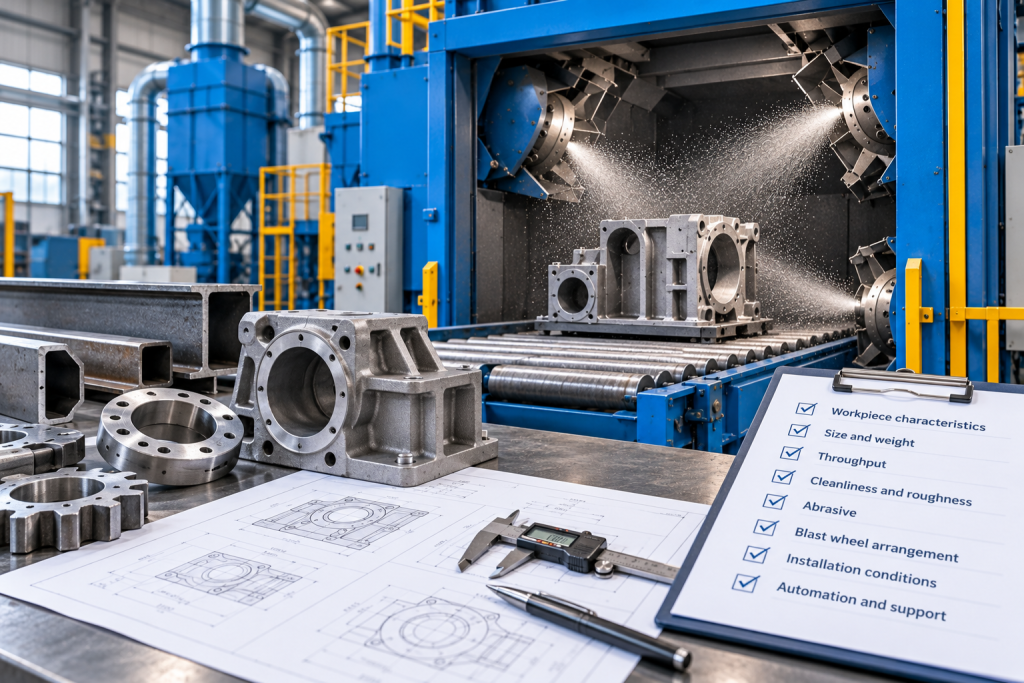
The safest way to choose a shot blasting machine is to start with the workpiece, the required surface result and the production target. Machine names come later. A hook machine, tumble belt machine and roller conveyor can all remove rust or scale, but they handle parts differently and create different limits on coverage, loading, automation and floor space.
Before requesting quotations, buyers should define eight parameters: workpiece characteristics, size and weight, throughput, target cleanliness and roughness, abrasive, blast-wheel arrangement, installation conditions, and the required level of automation and support. A supplier can then compare machine concepts on the same basis instead of quoting a chamber that is merely large enough to hold the part.
Shot blasting machine selection is a process-engineering decision. The machine must move the workpiece through an effective abrasive pattern without damaging it, missing critical surfaces or creating a bottleneck. A useful inquiry therefore describes what enters the machine, what must leave it, and how often the cycle repeats.
The following eight checks form a practical buying guide. They also give procurement teams a consistent structure for comparing quotations from different suppliers.
Record the base material, hardness, geometry and current surface condition. Ferrous castings, forgings, welded steel and structural sections commonly suit wheel-blast systems. Stainless steel, aluminum and other non-ferrous parts may require dedicated media and contamination controls. A sample trial is important when the substrate is soft, dimensionally sensitive or cosmetically critical.
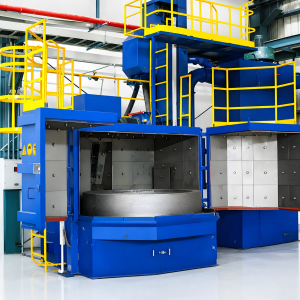
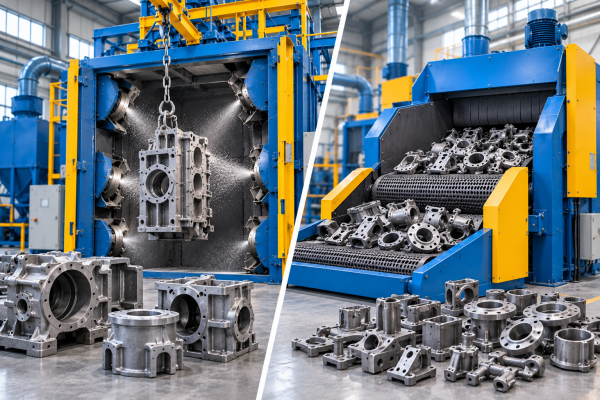
Geometry determines how the part should move. Small robust components may tumble. Large irregular parts may hang from a hook. Plate and profiles may pass through on rollers. Flat parts may rotate on a table. Note internal cavities, blind holes, deep ribs, machined faces, threads, thin walls and surfaces that must be masked. These features affect blast coverage, abrasive retention and the risk of deformation.
Provide the maximum and minimum length, width, height and diameter for every planned part family. Include fixtures, hooks, baskets and lifting clearance. A workpiece that fits inside the nominal chamber may still interfere with the blast wheels, door, seals or rotation envelope.
Weight data should cover the heaviest single part and the heaviest practical batch. For a hook machine, confirm load per hook and the center of gravity. For a tumble machine, confirm single-part weight, batch weight and whether the parts will roll freely. For roller conveyors, state load per metre as well as the total workpiece weight. The plant’s crane, forklift and floor-loading limits must support the same design load.
Define output in parts per hour, tonnes per shift or line speed. Annual volume alone is not enough because it can hide seasonal peaks, changeovers and uneven product mix. State the number of shifts, working hours, product families and the maximum demand the machine must absorb.
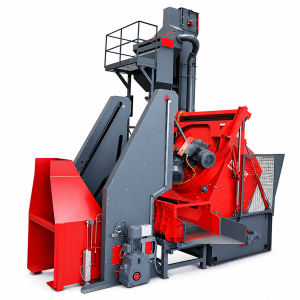
Small-batch, high-mix production often favors flexible hook, turntable or trolley equipment. Repeating batches of tumble-safe parts may suit a rubber or metal tumble belt. Stable high-volume flow may justify an overhead conveyor or roller conveyor. The correct calculation includes loading, door movement, blasting, blow-off, unloading, inspection and fixture changes.
| Production pattern | Typical handling choice | Throughput input to provide | Main design question |
| Small batch and many part types | Hook, turntable or trolley | Parts and batches per shift | How quickly can fixtures and recipes change |
| Repeated bulk batches | Rubber or metal tumble belt | Batch weight and cycles per hour | Can every part tumble without damage or jamming |
| Continuous plate or profiles | Roller conveyor | Line speed, gaps and tonnes per hour | Do wheel positions cover the full section |
| Suspended production line | Overhead conveyor | Hanger pitch and line speed | Can loading and downstream operations stay synchronized |
Write the required surface condition into the technical specification. For coated steel, the requirement may include a visual cleanliness grade such as Sa 2.5 and a roughness range suited to the coating system. The acceptance standard, comparator, measurement method, inspection frequency and test location should be agreed before the machine is built.
Cleaning grade and roughness are related but separate. A surface can look clean and still have the wrong profile for a coating. Results depend on the starting condition, abrasive shape and size, impact velocity, exposure time and coverage. Ask the supplier to process representative parts and record the settings used during the trial.
A mid-project review is useful once the workpiece data, throughput and finish are defined. At that stage, a supplier can usually narrow the choice to one or two handling concepts and propose a sample-blasting plan before detailed layout work begins.
A purchase specification should state how the result will be judged, not only how the machine will be built. Define the incoming condition, the surfaces that must be inspected, the required visual grade, the profile range where applicable, and the maximum permitted cycle time. If oil, paint, sand, heat-treatment scale or mixed contamination may be present, describe the worst normal condition and agree whether it falls inside the acceptance test.
Use representative parts rather than an easy sample. Include the largest part, the part with the deepest shadow zones and the most damage-sensitive part family. Photograph and label the inspection locations before testing. The supplier should record abrasive type, operating mix, wheel current, exposure time, loading arrangement and any masking used. These records create a reproducible baseline for commissioning and future troubleshooting.
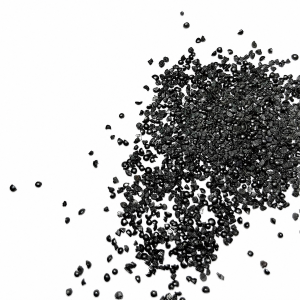
Steel shot is rounded and generally produces a different impact pattern and profile from angular steel grit. Many operations use a controlled operating mix rather than a single particle size. The correct choice depends on the contamination, substrate, target roughness, blast wheel and separator.
Confirm that the proposed abrasive is compatible with the machine and the workpiece. Media that is too large may leave a profile that is too coarse or increase impact risk. Media that is too fine may clean slowly or be carried into the dust system. Non-ferrous or contamination-sensitive parts may require a dedicated process. The separator, screens and dust collector must be configured for the chosen media.
Installed motor power is not a complete measure of cleaning performance. Buyers should compare abrasive flow per wheel, wheel diameter and speed, blast pattern, wheel angle, distance to the workpiece and the time each surface remains inside the pattern. More wheels can improve coverage or line speed, but poorly aimed wheels add energy use and wear without solving shadow zones.
Ask for a wheel-layout drawing that shows the expected blast zones around the maximum and minimum workpieces. For rotating hooks or turntables, verify the rotation path. For roller conveyors, check upper, lower and side coverage. For tumble machines, confirm that the batch turns continuously and does not bridge or form a stable pile.
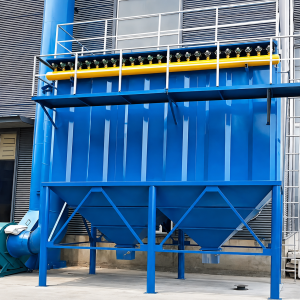
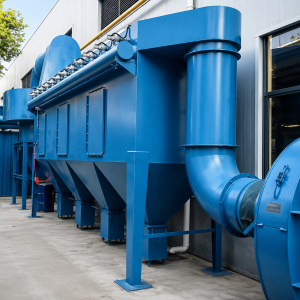
A complete quotation should include the installation conditions, not only the main machine. Confirm the dust collector, ducting, fan duty, filter access and discharge method. The design must reflect the dust generated by the contamination and coating being removed. Local workplace and environmental requirements may change the filtration or waste-handling specification.
Automation should solve a defined production need. Useful options may include automatic loading and unloading, recipe control, part detection, conveyor synchronization, wheel-current monitoring and production data exchange. Confirm which signals must connect to existing PLC, MES or line-control systems and who owns the interface design.
The acceptance plan is as important as the control system. Define the representative parts, production rate, cleaning result, inspection method, safety checks and documents required for factory and site acceptance. Request electrical drawings, manuals, wear-part lists and maintenance intervals in the agreed language.
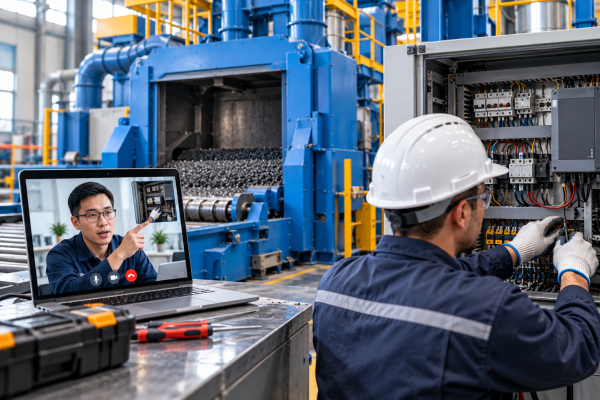
Compare after-sales support using specific evidence: recommended start-up spare parts, lead times for common wear items, remote diagnostic method, technician availability and training scope. Avoid relying on general service promises that are not reflected in the proposal or contract.
Send the same information to every shortlisted supplier so the quotations are comparable.
At minimum, provide part drawings or photos, material, size and weight range, current surface condition, required finish and target output. Installation space and utilities are also needed before a reliable layout and connected-load estimate can be prepared.
Yes. Chamber size, handling method, wheel arrangement, loading, dust collection, controls and line interfaces can be configured around the application. Customization should follow validated workpiece and process data rather than adding options without a defined purpose.
Use agreed representative parts and measure surface cleanliness, roughness, coverage, cycle time and throughput. The test should also check safety interlocks, dust control, media recovery, unloading and the documentation package. Record the machine settings so the result can be repeated at the plant.
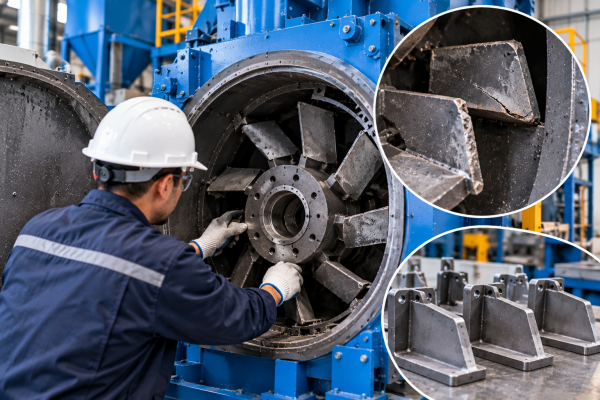
The start-up package normally focuses on high-wear and production-critical items such as blades, control cages, impellers, liners, seals, curtains, filters and handling-system components. The exact list should match the selected model, expected operating hours and local delivery time.
Upload your workpiece drawings and provide the material, dimensions, weight, current surface condition, required finish and production target. JC Blasting can compare suitable handling concepts, recommend a sample test and prepare a machine configuration and plant-layout proposal for technical review.

English

Hindi

Indonesian

Russian

Spanish

Thai

Vietnamese