Global Surface Treatment Equipment & System Solutions — Since 2002

久昌机械
Get a Quote
Global Surface Treatment Equipment & System Solutions — Since 2002
久昌机械
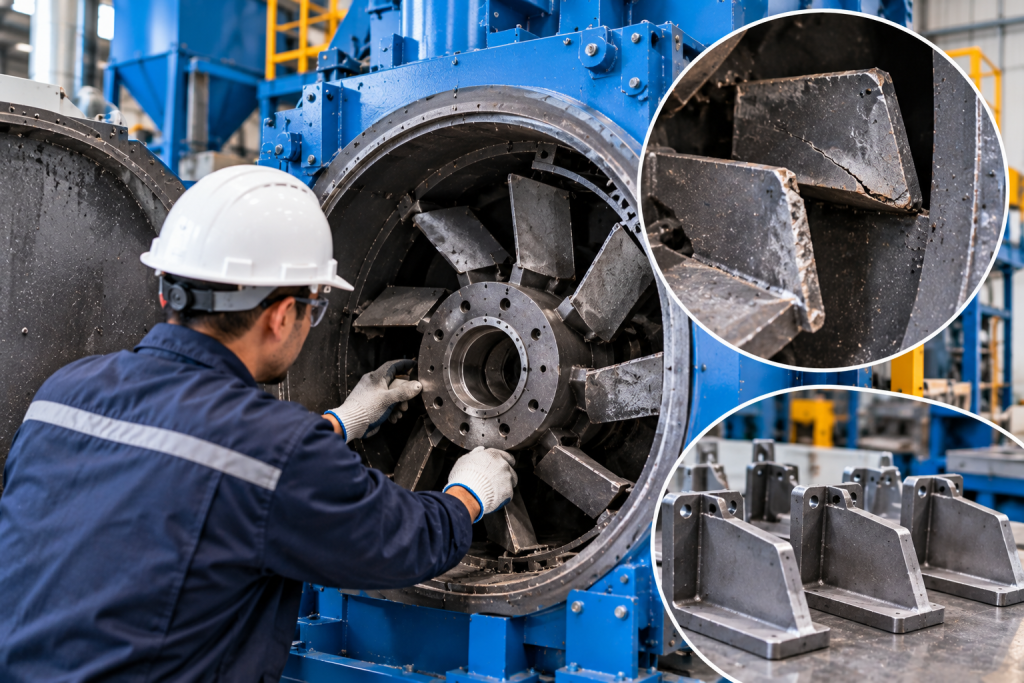
A faint rubbing noise from a customer’s shot blasting machine in the Murbad MIDC industrial area of Maharashtra had become part of the normal background sound for the operators. During a routine service inspection, a JC Blasting expert recognized that the noise could indicate contact inside the blast wheel. The machine was stopped, and inspection found severely worn blades, including several with visible cracks. Replacing the blades and checking the related wear parts prevented a possible blade fracture and major damage to the blast wheel assembly.
Our after-sales service team was conducting a routine inspection and customer follow-up when the expert heard a light scraping sound while the machine was running. The sound was easy to overlook because it was not loud, and the machine was still completing its cleaning cycle.
The operators explained that the machine had sounded this way for nearly a month. Because the change had developed gradually, they had become used to it and assumed it was normal operating noise. The inspection showed why gradual changes deserve attention: a machine can continue running even when a wear part is close to failure.
The service expert listened from a safe position, compared the sound at different operating stages and checked the machine’s running condition. The noise was concentrated around the blast wheel rather than the dust collector, bucket elevator or workpiece handling system.
Based on the rubbing pattern and the machine’s behavior, the expert suspected that the blast wheel blades had worn beyond their service limit and were contacting nearby internal components. The team recommended an immediate controlled shutdown and inspection. The machine was isolated before the blast wheel housing was opened.
The internal inspection confirmed the diagnosis. Several blades were severely worn, and some had developed cracks. Continued operation could have allowed a cracked blade to fracture at high speed. The inspection also covered the impeller, control cage, liners and other protective components that can be affected when blade wear becomes excessive.
The service team replaced the complete blade set so that the blast wheel remained balanced. They then checked the impeller, control cage and liners, tightened the accessible connection bolts and verified the bearing lubrication condition. Replacing only one visibly damaged blade would not have provided the same balance or confidence in the remaining wear parts.
Blast wheel blades rotate at high speed and experience continuous abrasive impact. When a blade becomes too thin, cracked or unevenly worn, the wheel can lose balance and generate additional vibration. A fractured blade may strike the liners or housing, damage the impeller or control cage, jam the wheel and overload the motor.
The difference in repair scope can be substantial. Replacing a planned set of wear parts is a short maintenance task. A blade release that damages the wheel assembly can require a blast wheel overhaul, motor inspection and extended line downtime. In this case, stopping when the warning sound was identified kept the repair within the wear-parts stage.
After the replacement and related checks were complete, the team performed a controlled test run. The machine operated smoothly, and the abnormal rubbing noise had disappeared. From identifying the problem to restoring production, the work took less than three hours and did not disrupt the customer’s normal production schedule.
The result also gave the operators a new acoustic reference for normal operation. The service expert explained which sounds should trigger an immediate stop and what information to record before contacting maintenance, including the operating stage, load condition, location of the sound and any accompanying vibration or temperature change.
“We had heard this sound for almost a month and had become used to it. Without the expert’s warning, we would not have realized how serious the consequences could be. This inspection was extremely valuable to us,” the customer’s equipment manager said.
The case shows the practical value of routine inspection and preventive maintenance. Experienced technicians do more than check whether the machine can start and stop. They compare current sound, vibration, wear and cleaning performance with the machine’s normal condition and look for small changes before those changes become failures.
An unusual sound does not identify a fault by itself, but it is a reason to stop and inspect the machine safely. The following patterns are common warning signs. Actual causes should be confirmed by qualified maintenance personnel after isolation and lockout.
| Sound pattern | Possible cause | Recommended response |
| Rubbing or scraping near the blast wheel | Worn or displaced blades; contact involving the impeller, control cage or liners | Stop the machine and inspect the complete blast wheel wear system |
| Metallic knocking | Loose liner fasteners, damaged internal parts or a foreign object | Shut down, isolate the machine and inspect before restarting |
| Low humming that increases with speed | Bearing wear, poor lubrication or rotating imbalance | Check temperature and vibration, then inspect lubrication and bearings |
| Strong fan vibration or roaring | Dust buildup, impeller imbalance or fan damage | Isolate the fan, clean it and verify balance and condition |
| Scraping from the bucket elevator | Belt misalignment, rubbing or component looseness | Stop and correct alignment before the belt or casing is damaged |
Blast wheel blades, impellers, control cages and liners are consumable parts. Their service life changes with abrasive type, operating hours, wheel settings, contamination and maintenance quality. A calendar interval alone is therefore not enough. Users should combine scheduled inspections with wear measurements and observations from daily operation.
Operators should never open guards or approach rotating equipment while the machine is running. Inspection and repair must follow the site’s isolation and lockout procedures. If the cause of a new sound is uncertain, keeping the machine stopped is safer than continuing until the fault becomes obvious.
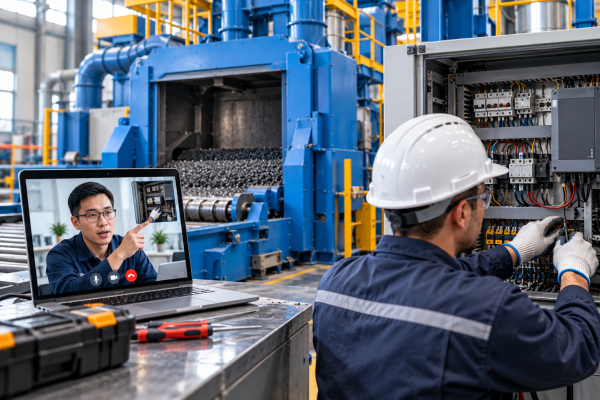
If your shot blasting machine develops a new sound, vibration, temperature rise or change in cleaning performance, contact the JC Blasting after-sales service team. Share a short video or audio recording, the machine model, operating stage, abrasive type and recent maintenance history. Our service team can help assess the risk and recommend the next inspection steps before a minor wear issue becomes a major repair.Related product pages Shot blasting machines | Wear resistant parts and supporting components

English

Hindi

Indonesian

Russian

Spanish

Thai

Vietnamese